
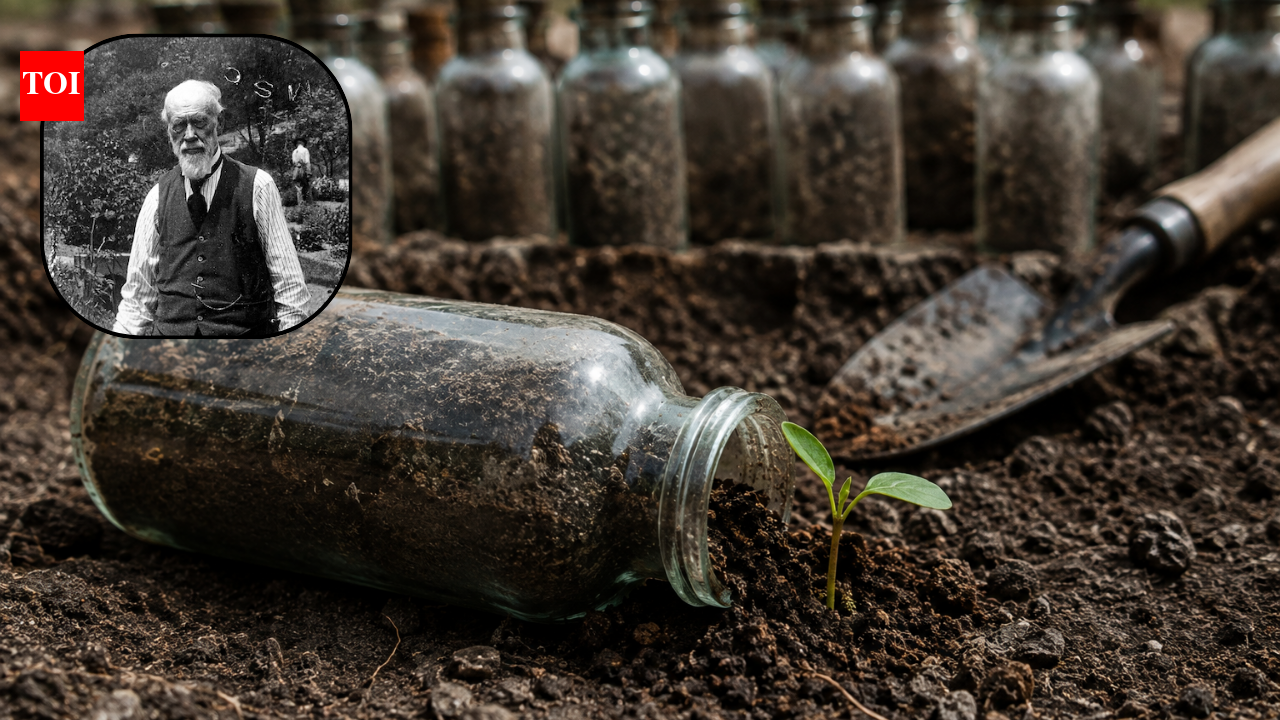
Michigan State University botanist William James Beal buried 20 glass bottles filled with seedsIn 1879, Michigan State University botanist William James Beal buried 20 glass bottles filled with seeds and sand in an effort to answer a deceptively simple question: how long could seeds remain dormant in the soil and still grow when conditions became favourable? According to Michigan State University, more than a century later, the experiment was still producing surprises. In 2021, researchers at Michigan State University unearthed one of the remaining bottles, 142 years after it was buried, and found that some of the seeds could still germinate. The discovery offered a rare glimpse into the extraordinary longevity of seeds and showed why Beal’s experiment remains scientifically relevant more than a century after it began. With bottles still underground, the experiment is scheduled to continue through 2100, making it one of the world’s longest-running scientific experiments.A question from 1879Beal designed the experiment to help farmers understand how long unwanted plants could persist in soil. His concern was practical: if weed seeds could remain dormant for decades, simply removing visible weeds would not necessarily prevent them from returning. To investigate, Beal selected 50 freshly collected seeds from each of 23 plant species. He mixed the seeds with sand and divided them among 20 pint-sized glass bottles. The bottles were left uncorked and buried with their openings pointing downward so rainwater could not collect around the seeds. They were placed on a sandy knoll on the Michigan State campus, creating conditions intended to imitate seeds remaining naturally underground.Testing the buried seedsBeal originally planned to excavate a bottle every five years. During the first decades, researchers repeatedly found that some of the buried seeds could still germinate. The schedule was later changed to preserve the remaining bottles for longer. In 1920, the interval between tests was extended to 10 years. By 1980, it had been increased again, this time to 20 years. That decision transformed the project from a relatively short agricultural experiment into a long-term scientific record of seed longevity.When researchers opened a bottle in 2021, 142 years had passed since Beal buried it. Seeds from the Verbascum group germinated, demonstrating that at least some seeds had remained viable for more than a century. The result was particularly striking because most of the other species included in the original experiment had lost their viability within the first 60 years.DNA revealed another surpriseThe 2021 experiment produced another discovery that Beal could never have anticipated. Researchers used modern genetic testing to identify the plants that emerged from the bottle. The analysis confirmed that the seedlings included moth mullein (Verbascum blattaria) and a hybrid between moth mullein and common mullein (Verbascum thapsus). Beal had recorded that he included only common mullein seeds, suggesting that the hybrid resulted from an accidental mix-up when the bottles were originally prepared. The use of DNA sequencing added a modern layer to a study that began long before genetics became a scientific field.Why the experiment mattersThe Beal Seed Experiment is more than a historical curiosity. Understanding how long seeds can remain viable can help researchers study persistent weeds, manage land restoration and understand how plant species survive in soil seed banks.This information can be particularly useful when restoring former agricultural land. Seeds left behind in soil can potentially emerge many years after cultivation stops, meaning restoration teams need to understand which species may remain dormant and which are unlikely to persist for long periods.The experiment continuesBeal’s original question has still not been completely answered. Researchers cannot simply assume that seeds that failed to germinate are dead; some may remain dormant and require different environmental conditions before they begin growing. Four bottles remain underground. The next bottle is scheduled to be unearthed in 2040, and the final bottles are expected to keep the experiment going until 2100. If seeds germinate again, researchers may consider increasing the interval between future excavations even further.More than 140 years after Beal first buried his bottles, the experiment continues to demonstrate the value of patience in science. What began as an attempt to understand troublesome weeds has become a living record of how long seeds can survive, and a scientific experiment that will outlast generations of researchers.
Michigan seed experiment began in 1879 and is set to run until 2100
Full Article
Original Source
Read the full article at Timesofindia →KhanList aggregates and links to publicly available news content. We do not host full articles from third-party sources. Always verify important information with original sources.