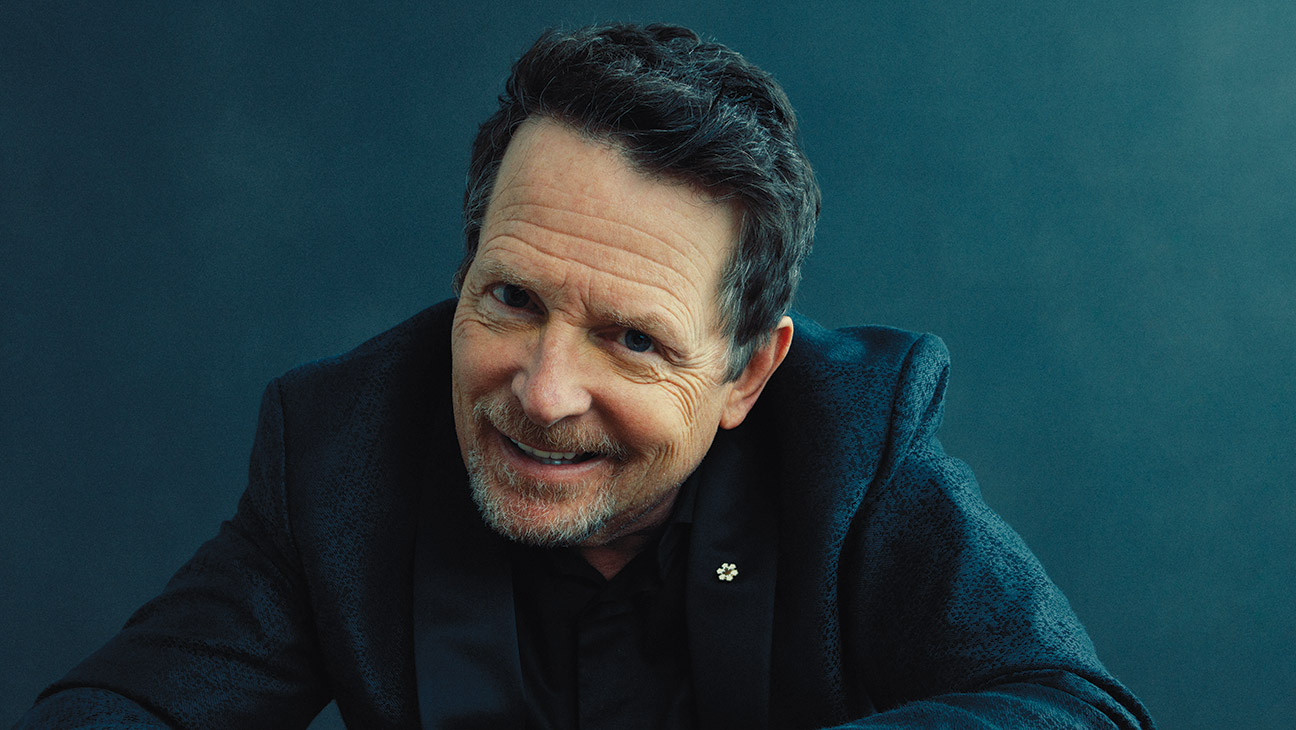
When Michael J. Fox was diagnosed with Parkinson’s in 1991, he was told he’d have another 10 years to act. Doctors said that the neurodegenerative disease’s impact would, before long, become too significant for him to perform in front of a camera. The Emmy and Golden Globe winner recounts this from his home in Long Island with a note of triumph in his voice, since he’s defied the odds and then some. He reveals he’ll be returning for season four of Shrinking, Bill Lawrence’s Apple TV comedy, a quarter century beyond his doctors’ deadline; he’s about to head to California to shoot more episodes. The 65-year-old is currently up for an Emmy for his debut on Shrinking‘s third season, which aired in the winter. Fox had previously announced he’d quit acting, during the pandemic, due to an inability to rely on his speech from day to day. It had gotten too uncomfortable. But that moratorium lasted six years before he called up his longtime buddy Lawrence — they go back to their Spin City days in the late ’90s — to get back into the game. “It’s really prolonged my life and made my life interesting in a way that I didn’t think it would be to this point,” Fox says of acting. “I’m not retired from acting, but if I didn’t act again, it would be for a very good reason. I let Parkinson’s make decisions for me.” That last fact has proved very true for a long time — and the world can thank Fox for it. He’s speaking on Zoom with his business partner of more than 25 years, Deborah W. Brooks, who’s calling in from Delaware. In 2000, Fox hired Brooks to co-run a nonprofit with him with the goal of discovering new treatments and ultimately finding a cure for Parkinson’s. The Michael J. Fox Foundation has since emerged as one of the most successful disease-focused nonprofits of the century, funding more than $3 billion in research and fundamentally shaping the current scientific landscape for Parkinson’s. Fox believes they’ll find a cure in his lifetime. “It’s a hard disease — the care is hard to get, it’s not easy at all. The scientific landscape globally is also transformed, and that’s a direct byproduct of all the research we have funded in the last 20-plus years,” co-founder and CEO Brooks says. “When we started, almost nothing had made it all the way into human testing of any kind. Today, there are 180-ish active Parkinson’s drug programs in human testing.” Fox had already been diagnosed when he won an Emmy for Spin City in 2000. SCOTT NELSON/AFP/Getty Images Fox had just wrapped his breakout run on the mega-popular NBC comedy series Family Ties as Alex Keaton, the conservative son to lefty parents, when he was diagnosed. He kept it private for seven years, launching Spin City to great success while not revealing the news. During that time period, he also went sober, having previously turned to alcohol to help numb the pain of young-onset Parkinson’s, which affects only 4 percent with the disease, who can expect to live with symptoms like tremors, impaired balance and slowness of movement for the rest of their (sometimes) near-normal life expectancy. After determining with his wife, Tracy Pollan, with whom he has four children, that he would go public, he understood that he’d become the face of a community that had been kept in the shadows and given little hope of improving their lives. He spoke extensively to the media and even testified before the Senate — without taking medication, to show the full, unmitigated physical effects of the disease and to communicate the urgent need for progress on how to treat it. “It was hell on Tracy, it was really hard on her — and it still is because it’s always changing,” Fox says of his public exposure. “But I said to her, ‘I have to go all the way here. No half measures.’ I started to understand what it was like for these people who didn’t have the options or the choices I had, didn’t have the connections and the reason to be optimistic. … I needed to normalize it and just be that all the time. I said, ‘I have to not hide this. Fuck vanity.’ “ Fox would anonymously enter chat rooms featuring Parkinson’s patients and ask what they thought of the celebrity — meaning, himself — who’d just gone public. The responses would range from encouraged to ecstatic. “I thought, ‘Well, fuck you! I have Parkinson’s and you’re celebrating,’ ” Fox recalls. Then he realized the dynamic he’d unlocked: “I got it. People back then would never in a million years tell you they had Parkinson’s.” Fox gave the community a face they knew. For reference, it’s estimated that more than 10 million people worldwide live with Parkinson’s, including approximately 1.1 million Americans. The Michael J. Fox Foundation co-founder and CEO Deborah W. Brooks (left) with former Foundation CEO Katie Hood during a 2008 benefit. Dimitrios Kambouris/Wireimage Brooks came from Wall Street, having received her MBA at Dartmouth and spent nearly a decade at Goldman Sachs & Co. and had no direct connection to Parkinson’s; she was simply looking to break into the nonprofit space and find a way to channel her experience. “I was kind of cause-agnostic, and I was a little worried that someone wouldn’t hire me — I did have a hunch that the kind of person that might hire me is someone who wasn’t in a traditional mold themselves, wasn’t looking for the status quo to be continued just as it is,” she says. Brooks came into her initial meetings with Fox promising boldness, expressing dismay at the state of the field: “I was like, ‘Why aren’t we trying to get this done?’ I knew if I was going to do it, I was going to be all in, and I was going to put everything I had into it and marshal as much energy as I could to solve the problem and to be science-first.” Fox’s main message to Brooks was: “If you do your job really well, you’ll be putting yourself out of a job.” He says now, “And she wasn’t afraid of that.” A remarkable volume of work has been accomplished over the past few decades. The MJFF is driven by funding scientific research and grants, and this year the goal is to hit $700 million in new commitments; Brooks notes that this is nearly triple what the U.S. government did in 2025. “I’m not aware of any other disease condition, that isn’t a rare disease, where individual philanthropy out-funds the U.S. government,” she says. Fox’s unabashed visibility has allowed for the organization’s exponential growth to take place: “There isn’t any other Parkinson’s patient who’s letting people see their lives 35 years into a Parkinson’s diagnosis,” Brooks says. “That is such an active choice of generosity. It’s not an ego thing. It is a willingness to just be.” This has extended to Fox’s onscreen career over the past few decades, which has turned out far richer than even his optimistic outlook could have predicted. After concluding Spin City, he left acting until reuniting with — who else? — Lawrence on Scrubs for a few episodes in 2004, going on to play recurring roles in Boston Legal, Rescue Me and more. His physical symptoms were worsening, and yet the work only got more dynamic — and playful. In his sly Emmy-nominated turn on The Good Wife — in which he appeared in 26 episodes from 2010 to 2016 — he portrayed the conniving attorney Louis Canning, who uses his battle with the iatrogenic disorder Tardive Dyskinesia to gain the favor of juries and judges. On Curb Your Enthusiasm, Fox came up with the idea to play a mercurial fictional version of himself, where the line between bad behavior and Parkinson’s mishaps is hilariously blurred. “It just made me find the truth in things,” Fox says. “I realized there was something I could tap in to. There was a vulnerability and a weakness that I was hiding generally when I was out there — before I got out there with Parkinson’s. … It’s opening up the experience of my life to inform the lives of characters. There’s nowhere I won’t go.” On Shrinking, Fox reached another milestone: “This was the first time I played someone interacting with someone else who had Parkinson’s,” he says. In this case, that person was Dr. Paul Rhoades, the character played by Harrison Ford; Fox portrays someone also contending with Parkinson’s who meets and bonds with Paul at the doctor’s office. The two actors developed an intimate, richly moving bond that translated onscreen. “He was happy that I was sharing my experience with him as a character and helping him do what he needed to do,” says Fox of acting opposite Harrison Ford (left) on Shrinking. Apple TV+ Fox felt that Ford, who does not have Parkinson’s, authentically captured the experience in his performance. “He was happy that I was sharing my experience with him as a character and helping him do what he needed to do,” he says. “He was so loving. I didn’t know what to expect with Harrison because he’s famously a stoic, curmudgeonly guy — and he’s really a sweetheart. He was so affectionate to me and so welcoming to me.” When it comes to Parkinson’s, Brooks calls Fox “the original influencer.” But she notes that through the MJFF, which has established a massive patient network in addition to its funding apparatus, so many more stories are out there now. “Not everybody, but enough people make an active choice to say, ‘I just got diagnosed,’ ” she says. “Amazing people come forward by their own choice — even couples talking about their life together, or people who are talking about how it impacts their jobs.” Brooks thinks back to the state of the field when she got into this. She had to learn from Fox and other patients directly since the medical community was sorely behind. “Individuals didn’t know part of what was going on with them was actually part of their Parkinson’s — because the doctors didn’t acknowledge it,” she says. They didn’t have the information, or motivation, to interrogate symptoms they assumed were unrelated to Parkinson’s, like constipation and loss of smell. These are now commonly associated with the disease. “Some of them were debilitating and nobody would acknowledge that it was a real thing.” Fox with Foundation co-founder and CEO Brooks. Mark Seliger So much has changed since — with Brooks’ and Fox’s eyes remaining squarely on finding the cure. “There’s no guarantee that the next breakthrough will be enough, but they’re adding up,” Brooks says. “Scientific insights that come directly from patient experience and patient data, they are the real accelerators — and it looks more promising now than it ever has.” Stem cell research has helped drive innovative drug testing and disease modeling, while the biomarker test — in which Parkinson’s can be diagnosed in advance of symptoms — has been hailed as a groundbreaking advancement during the past few years. Fox speaks of the state of their work from that deeply personal and ever-human perspective that has carried him and this foundation for so many years. “We have to find a way to get through every day, and if we can find a way to get through every day and at the same time be fueling for our actions and our deeds and our philanthropy, then that’s a great thing,” he says. “It’s individually elevating lives. So it’s not just the money, it’s not just the science — it’s the humanity.” Read more about the Philanthropists of the Year:– Catching Up With the Currys: The Busiest Couple in Basketball Is Ready to Conquer Hollywood– John Mayer on Why He Keeps Quietly Funding Brain Research Studies This story appeared in the July 22 issue of The Hollywood Reporter magazine. Click here to subscribe.
Michael J. Fox: Getting Back to Acting “Really Prolonged My Life”
Full Article
Original Source
Read the full article at Hollywoodreporter →KhanList aggregates and links to publicly available news content. We do not host full articles from third-party sources. Always verify important information with original sources.