
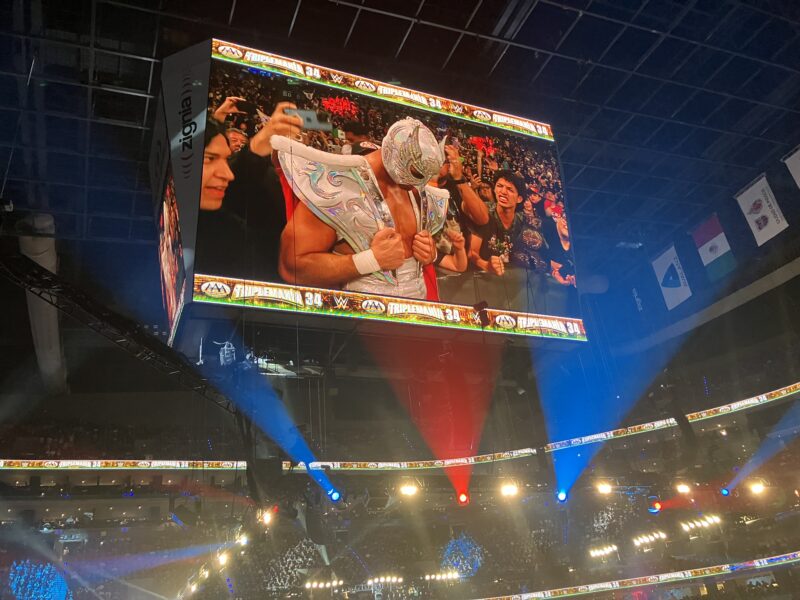
MEXICO CITY (CN) — Last year, El Grande Americano debuted as an exaggeratedly patriotic American character who claimed to be from the Gulf of America, inciting jeers from the crowd.But now portrayed by a different WWE wrestler who speaks fluent Spanish during fights, dons authentic Mexican lucha libre costumes and uses Mexico’s unofficial national anthem, the wrestler earned a roaring ovation Sunday night in Mexico City as he beat Dominik Mysterio to become the new AAA megachampion at WWE’s Triplemania.Originally portrayed by WWE wrestler Chad Gable, Ludwig Kaiser has filled El Grande Americano’s mask since June 2025. He soon began to win over his audiences, culminating Sunday night with his first world heavyweight title.“The impact of lucha libre, the cultural impact that it has had, it resonates through generations. It cannot be overstated; it is incredible. We look to further that tradition,” said Paul Levesque, WWE’s chief content officer, during the announcement last year. Levesque is also known as the wrestler Triple H.Gerardo Garduño Rivas and his son, Santiago Gerardo, from Ixtapaluca in the state of Mexico, said Sunday they were most excited to see El Grande Americano at their first Triplemania event.“Well, since about his age — around 8 — I’ve been watching AAA,” said Gerardo Garduño Rivas. “It’s a completely different generation now, compared to the old ones. But you still come to enjoy it. If you’re a wrestling fan, you come, and you’re always going to be a fan.”“Vamos Grande!” the crowd chanted at the beginning of his match against Mysterio, a well-known heel, or villain, in the wrestling world. The showdown featured highly technical, choreographed moves before Mysterio started using his belt as a weapon against El Grande Americano. The crowd jeered Mysterio with chants of “Peso Pluma” in reference to his similar appearance to the Mexican singer of the same name.El Grande Americano’s win was not easy. Multiple fighters came to the aid of Mysterio, including Nigerian luchador Omos, who injured Rey Mysterio a couple nights earlier in Las Vegas. Rey Mysterio is Dominik’s father in real life.Rey Mysterio ran into the ring Sunday in a neck brace to replace a referee who had been hit and taken out of commission. He counted the pin that made El Grande Americano the champion in an act of revenge against his own son, escalating their familial feud.After El Grande Americano’s victory, a mariachi band played “Cielito Lindo” and the crowd stayed to sing along.Luchadores at Arena Lopez Mateos "Duele Extremo" event on Aug. 23, 2026. (William Savinar/Courthouse News)When not the focus of a WWE event, lucha libre can be found every Sunday at Arena López Mateos, one of Mexico’s oldest and most iconic arenas in the major industrial hub of Tlalnepantla in the state of Mexico.Héctor Guzmán Jr., promoter and owner of Arena López Mateos, said luchadors need a license recognized by the boxing and wrestling commission of each state where they are from. Each luchador must complete an accredited training school for at least two years, though four is more the custom.“The promoter needs to notice a luchador so they can keep him on the roster and book him more often, allowing him to gain experience. The important thing is that the audience identifies with his character, with his personality and that the luchador himself discovers his own stardom. In other words, when their temperament is recognized, they know how to connect with the audience, how to make them love or hate them, so that they achieve their goal of being seen,” said Guzmán Jr.Crowd participation is essential to the lucha libre experience. Especially at local, historical arenas in and around Mexico City, the crowd is heavily involved in the fight.“It’s a sort of social — or rather, mass — psychology at play; people have fun, sure, but by shouting and everything, they also release all those emotions — the very emotions that wrestling is meant to stir up. It triggers intense feelings that make you want to scream or feel anger, and sometimes even deep emotion when your idols lose. It’s a catharsis — a way to let it all out,” said Guzmán Jr.He said many wrestlers like to be a heel because people identify with them more, and that’s how they stick in the public’s mind. The same goes for the “babyfaces” — or good guys, like El Grande Americano.Jorge Gael Valdeñana Jiménez went to his first lucha libre event at Arena López Mateos in August with a group of friends who go nearly every Sunday. They all sat in the front row, yelling at the luchadors.“Not just watching, but also shouting and participating, that’s what it’s all about, right?” said Valdeñana Jiménez in front of the arena after the event.His friend, Ximena Esquivel, agreed.“For me, it means family time and the chance, just for one day, to say things that are socially unacceptable. To swear at each other, to make fun of each other. And I think it’s a time to destress, to spend time together, to have fun and laugh at each other,” said Esquivel.A kid heckling a luchador on Aug. 23, 2026, in Tlalnepantla. (William Savinar/Courthouse News)Subscribe to our free newslettersOur weekly newsletter Closing Arguments offers the latest about ongoing trials, major litigation and rulings in courthouses around the U.S. and the world, while the monthly Under the Lights dishes the legal dirt from Hollywood, sports, Big Tech and the arts.Additional Reads
Lucha libre popularity on display at WWE’s Triplemania
Full Article
Original Source
Read the full article at Courthousenews →KhanList aggregates and links to publicly available news content. We do not host full articles from third-party sources. Always verify important information with original sources.