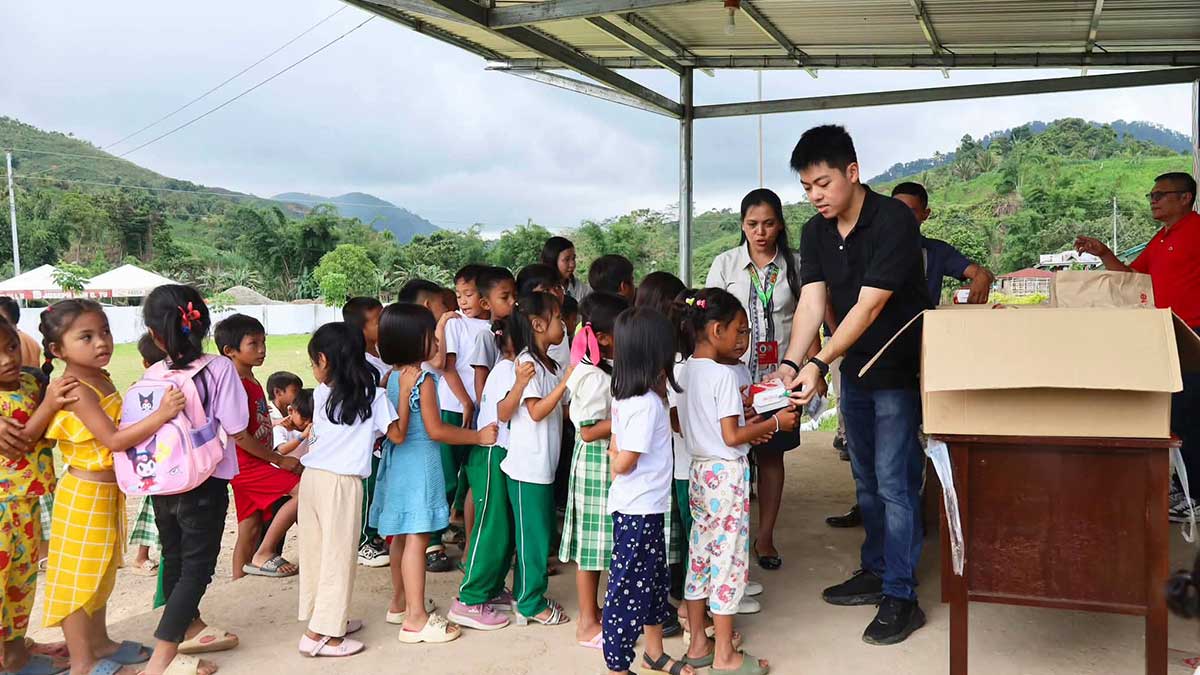
Zamboanga del Sur 1st District Rep. Joseph Kim Yu visits Pisompongan Integrated School in Barangay Pisompongan, Midsalip town, one of the identified last mile schools in Zamboanga del Sur. (Photo from Yu’s social media page) PAGADIAN CITY, Zamboanga del Sur — In the rugged uplands and coastal sitios of Zamboanga del Sur, where children often walk for hours on foot to reach the nearest classroom, a new law promises to change the learning landscape. Republic Act 12321, or the Last Mile and Geographically Isolated and Disadvantaged Areas (GIDA) Schools Act, signed by President Ferdinand Marcos Jr. on July 22, institutionalizes government support to upgrade public schools in the country’s most underserved communities. Zamboanga del Sur 1st District Rep. Joseph Kim Yu co-authored the law and supported its passage in the House of Representatives. Article continues after this advertisement During his sponsorship speech for House Bill 1820 before the Committee on Basic Education and Culture last year, Yu painted a vivid picture of the struggles faced by students in his province’s remote barangays. “Our dear Filipino children are forced to face the hard realities of life, just to obtain the education they deserve,” he said, stressing the urgency of building schools in geographically isolated and conflict-affected areas. The law mandates the construction of proper classrooms, provision of electricity and clean water, connecting roads, and internet access for last-mile schools. It also grants teachers in GIDA schools extra pay, allowances, housing assistance, and transport aid — a recognition of their service in communities far from urban centers. Yu emphasized that the measure requires inter-agency cooperation, with the Department of Education leading implementation, the Department of Public Works and Highways building access roads, the Department of Energy providing electricity, and the Department of Information and Communications Technology ensuring connectivity. Article continues after this advertisement For Zamboanga del Sur, where indigenous communities and rural families live in some of the most difficut terrains, the law is expected to be transformative. Yu said the measure is “one big step in our mission to provide an accessible means of achieving progress, including ones as basic as getting the first formative education.” Article continues after this advertisement With RA 12321 now enacted, classrooms are set to rise in sitios long deprived of learning facilities, offering hope that children in Zamboanga del Sur will no longer have to endure exhausting journeys just to study, according to Yu. /apl Your subscription could not be saved. Please try again. Your subscription has been successful.
Last Mile Schools Act seen as lifeline for Zambo del Sur’s remote learners
Full Article
Original Source
Read the full article at Newsinfo →KhanList aggregates and links to publicly available news content. We do not host full articles from third-party sources. Always verify important information with original sources.