
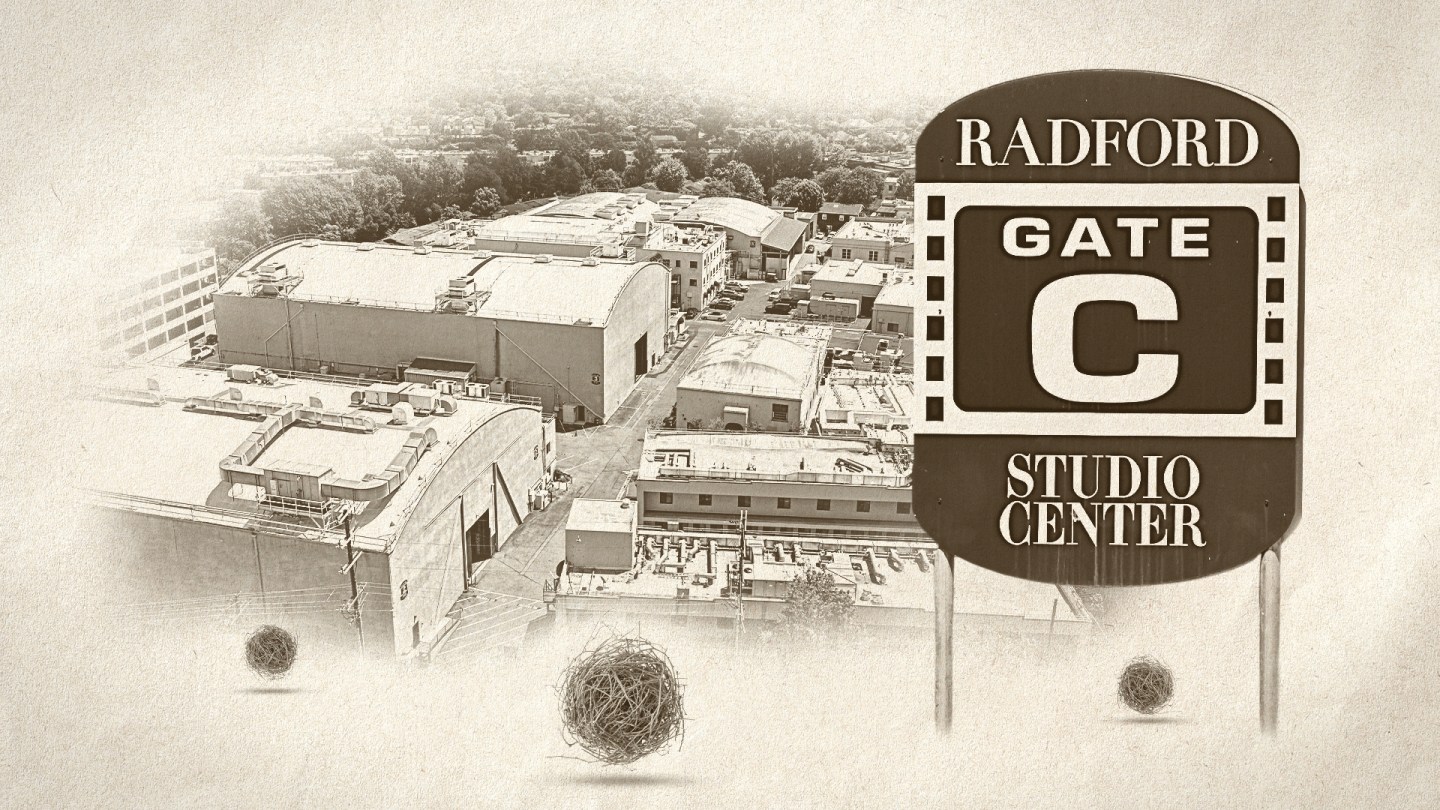
Six years ago, Los Angeles soundstages emerged as some of the most coveted properties in real estate. Studios were pouring money into original movies and TV shows, and seemingly every square foot of production space appeared to be spoken for, as it had been for a long time. Big institutional investors saw an opportunity in 2020, when cheap capital, a streaming-fueled content bonanza and a shortage of soundstage capacity converged (plus, office space was seen as riskier — it was the COVID era, after all). So the investors, led by Hackman Capital Partners, Blackstone and Bain Capital, piled in to buy studio space, betting that the streaming boom and Wall Street’s collective shrug at profits would keep facilities humming. Stages looked like the perfect Hollywood asset: essential, in short supply and leased to deep-pocketed tenants. Some paid eye-popping prices. Now, some of those same properties are sitting in foreclosure as the region sees historically low film and TV production levels. Consider Radford Studio Center. The Studio City lot where Seinfeld and Gilligan’s Island filmed is close to changing hands for the second time since 2021 after Hackman defaulted earlier this year on more than $1 billion in debt tied to the property. Goldman Sachs then led a lender takeover, stripping the lot from the real estate giant that had held it out as the crown jewel of its Hollywood portfolio. Michael Hackman’s firm paid nearly $2 billion for Radford in 2021, at the height of the bidding war for production space, financing much of the purchase with debt underwritten when lenders were still betting that demand for soundstages would keep climbing. Less than five years later, Netflix is closing in on a deal at about a fifth of that price — one of the steepest markdowns in recent commercial real estate and a window into the reset playing out across the rest of Hackman’s portfolio. Of its five major L.A. studio properties, four are being shopped, including Television City, the storied lot in the central Fairfax Avenue corridor. “In L.A., I think it’s a curtain call for Hackman,” a source familiar with the company’s dealing tells The Hollywood Reporter. Television City Studios on May 6, 2025, in Los Angeles. Jon Kopaloff/Getty Images The repricing isn’t limited to independent studio operators. Property tax records obtained by THR, covering every appeal filed by the companies that control Hollywood’s major production campuses since 2020, show owners arguing that their lots are worth far less than the county says. They have filed 269 appeals with the L.A. County Assessment Appeals Board, clawing back roughly $319 million in the cases that have been decided. The four biggest legacy studio owners, Warner Bros. Discovery, Paramount, Universal and Sony, account for more than $245 million of that amount. Many of those appeals center on cratering valuations of lots. In the reassessment tug-of-war, Sony came out a big winner. Across four appeals over Sony Pictures Studios in Culver City, the county cut an estimated $166.3 million off its valuation, an 84 percent reduction in the initial $198 million assessment of the property. So did Warner Bros. Discovery. The David Zaslav-led company has fought the assessed value of its Burbank lot every year since 2020, arguing the $700 million appraisal of the property should be as low as $212 million. The county pushed back but shaved roughly $51.7 million. Universal has been even more aggressive. It argued in a 2023 appeal that the county had overvalued its 400- acre, 30-stage lot by nearly $900 million, asking that the assessment be cut from $951 million to $60 million. And in a handful of appeals over the Fox Studios lot, the Lachlan Murdoch-led company has asserted that certain parcels are worth as little as $2. Yes, there’s not a missing “million” after that $2. Paramount did not go quite that far, though it argued in a 2022 filing that its lot on Melrose should be assessed at $2 million, a fifth of what the county claims. It has won roughly $15.6 million in reductions across 14 appeals in the past six years. A review of the records show that appeals spiked in 2023 when it became clearer that filming levels in the region might not return to historic norms. That year, L.A. saw soundstage occupancy rates fall off a cliff (69 percent in 2023 versus 90 percent in 2022). By 2025, the downturn had become impossible to ignore. Soundstage occupancy fell to 62 percent — the lowest level FilmLA has ever recorded — after years above 90 percent. The problem is not simply that there are fewer productions; the traditional, high-volume soundstage tenants are changing. Episodic television, the backbone of L.A.’s soundstage business, accounted for about a fifth of production on stages and backlots in 2023, down from roughly 30 percent in previous years, according to FilmLA. Scripted television shoot days then fell another 23 percent on participating stages in 2024. The major studios have not been immune to the downturn, but some cashed in at the height of the production boom. ViacomCBS sold Radford to Hackman Capital Partners and Square Mile Capital for $1.85 billion in 2021. And Warner Bros. ultimately sold its Ranch Lot for $175 million in 2023 under a deal struck four years earlier, part of a broader restructuring of its Burbank real estate. The correction is creating a divide between indie stage operators and the studios that can treat their lots as part of a much larger business. The major studios can tolerate periods of higher vacancy in a way their counterparts cannot: When production fell 30 percent, Hackman faced an immediate hit while still having to service the debt it used to buy the property. The studios, on the other hand, can absorb that cost since they do not need every stage to pay for itself. Control over the production pipeline is another deciding factor. Warner Bros. Discovery, for example, has been consolidating shooting whenever possible on its production campus in Burbank, according to Simon Robinson, president of global experiences and studio operations. Stage operators have increasingly been fielding calls by showrunners in the Warner Bros. family, who’ve been receptive to filming on company stages. The entrance to Warner Bros.’ Ranch Lot Studios in Burbank, California. Warner Bros. Last year, the studio saw a 91 percent occupancy rate — nearly 30 percent higher than the average for the first half of 2025. “We were at highs effectively for all of last year,” Robinson tells THR. “The reality is that a lot of the time, someone asks if we have three stages and we can’t instantly says yes.” So will Hollywood see more deals like Netflix moving in on Radford at a generational discount? Warner Bros., Paramount and Disney already control extensive studio infrastructure, but Amazon MGM and Apple Studios spent years building L.A. operations while relying largely on leased space. Amazon MGM’s L.A. productions are anchored in a six-stage Culver Studios campus, with Apple expanding its physical production footprint in the same area. If prices drop far enough, they could find themselves considering ownership. Still, the supply of stages is not exactly shrinking. East End Studios launched its $230 million Mission Campus in January, while Cinespace unveiled a six-stage facility in Woodland Hills in March. FilmLA is tracking another seven planned studio builds or renovations. An art rendering of the in-development Echelon Studios Hollywood. A big test for independent stage operators will come later this year, when Echelon, a luxe $450 million studio offering, opens its doors. BARDAS Investment Group founder David Simon, who’s spearheading the development, isn’t concerned with bleak headlines over production plummeting in the region. “When you pay a lot for stuff, it’s hard to hold on to it when you’re weathering the downturns,” he says. Adds Echelon head of studio operations Jamie Crosby, “The correction was overdue.” The pair understand they cannot depend on the shows that would shoot 26 episodes per season. The new Hollywood, they say, will require a different mix of tenants — social media creators, microdramas and whatever comes next. The question is whether that yet-to-be-seen generation of content is enough to support the billions of dollars that have already been poured into L.A.’s stages. For years, the bet was that Hollywood would need more production space. Now the bet is whether it needs quite as many — and who can afford to wait to find out. This story appeared in the Oct. 7 issue of The Hollywood Reporter magazine. Click here to subscribe. THR Newsletters Sign up for THR news straight to your inbox every day Subscribe Sign Up
L.A.’s Studio Lot Values Are Cratering
Full Article
Original Source
Read the full article at Hollywoodreporter →KhanList aggregates and links to publicly available news content. We do not host full articles from third-party sources. Always verify important information with original sources.