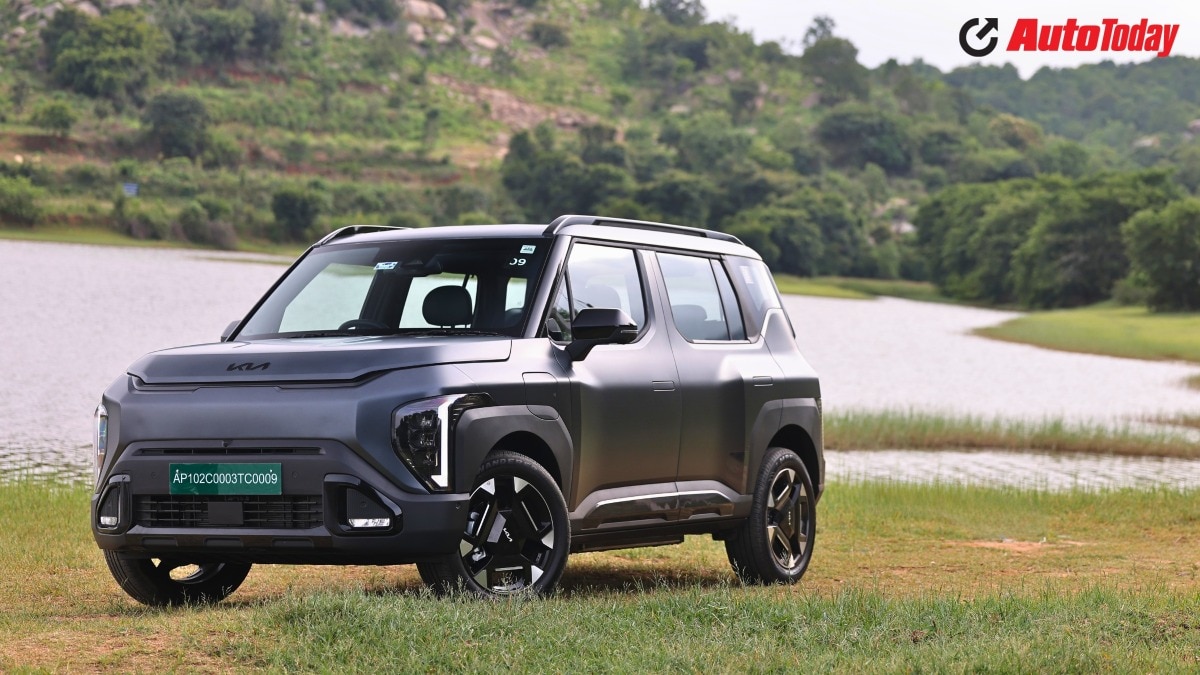
The Syros always had the space, features and practicality to succeed. Can an electric powertrain finally transform Kia's sub-4m offering into the success story it deserves?The Kia Syros arrived with plenty going for it. It looked unlike anything else in the compact SUV segment, squeezed an astonishing amount of space from its compact footprint and came loaded with features that many rivals could only dream of. Yet, despite ticking all the right boxes on paper, it never really caught on. Buyers continued to gravitate towards more familiar names, leaving the Syros somewhat overlooked. Perhaps it simply arrived at the wrong time. Fast forward to 2026 and the landscape looks very different. Electric vehicles are no longer niche products bought by early adopters. Every major manufacturer is doubling down on electrification, charging infrastructure is improving steadily, and buyers are far more willing to consider an EV as their primary family car than they were even two years ago. Kia clearly believes the timing is right.Enter the Kia Syros EV, the Korean manufacturer’s most affordable electric vehicle in India. Rather than designing an all-new electric SUV, Kia has chosen a more sensible route. It has taken a package that was already practical, spacious and feature-rich, and replaced the combustion engine with an electric powertrain while making thoughtful changes to suit its new purpose. The question, then, is straightforward, and one that I asked in the headline. Can electrification finally unlock the potential the Syros always promised? After spending time behind the wheel, the answer appears more interesting than you might expect. First, let’s tackle the similarities and differences between the internal combustion and electric versions of the Kia Syros.What’s the difference?One of the nicest things about the Syros EV is that Kia hasn’t fallen into the trap of trying too hard to make it look futuristic. Unlike some electric cars that almost scream for attention, the Syros EV wears its electric identity with restraint. Unless you know exactly what to look for, you could easily mistake it for the petrol or diesel version. That’s not a criticism. If anything, it works in the Syros EV’s favour. The familiar upright stance, squared-off proportions and distinctive LED lighting signature remain untouched. The biggest visual giveaway is the closed-off front fascia. Since an electric motor doesn’t require the same cooling as an internal combustion engine, the traditional grille has been replaced by a cleaner panel that also improves aerodynamic efficiency. The lower air intake has been reduced in size, giving the front end a cleaner appearance without fundamentally changing its character.Move to the side, and the differences remain subtle. The EV rides on newly designed 17-inch dual-tone aerodynamic alloy wheels that help reduce drag while adding a touch of distinction. Hidden away on the left front fender is the charging port, positioned conveniently for both home charging and public charging stations. Kia has also revised the proportions ever so slightly. Ground clearance now stands at 197mm, 7mm more than the ICE version, while overall height has increased by around 10mm. The extra bulk underneath also means the Syros EV weighs roughly 200 to 250kg more than the equivalent petrol DCT, most of which comes from the battery pack integrated into the floor. Around the rear, however, familiarity returns. Apart from the ‘Syros EV’ badging and variant-specific detailing, very little has changed. Lift the bonnet, and you’ll discover something the ICE version could never offer: a compact 16-litre frunk. It’s hardly large enough for a weekend’s luggage, but it is useful for storing charging cables and keeping them separate from everything else inside the boot. Step inside, and it’s immediately apparent that Kia hasn’t reinvented the cabin either. Instead, it has improved where it matters. The first thing you’ll notice is the new three-spoke steering wheel on higher variants, replacing the rather unconventional two-spoke unit found in the ICE Syros. It feels better to hold and suits the cabin’s premium ambience. The biggest functional change lies between the seats.With no conventional gear lever to accommodate, Kia has moved the drive selector to a stalk behind the steering wheel, similar to what we’ve already seen in the Carens Clavis EV. That simple change frees up a surprising amount of storage space. The floating centre console now houses a wireless charging pad, concealed cupholders and additional cubby spaces that make everyday usability even better. The cabin itself continues to impress with its sense of space. Rear seat accommodation remains among the best in the segment, and despite the battery pack sitting beneath the floor, there isn’t a dramatic compromise in comfort. Yes, your knees sit slightly higher than they do in the ICE version because the floor has been raised by around 10mm, but it isn’t nearly as intrusive as expected. What continues to stand out is just how versatile the rear seat is. The bench slides, the backrest reclines and, on higher trims, rear passengers even get ventilated seats; something that remains almost unheard of at this price point. Add rear sunshades, USB Type-C charging ports, rear AC vents and an expansive panoramic sunroof, and the Syros EV begins to feel quite premium. The X-Line variant receives a unique black-and-green leatherette upholstery, while ambient lighting now offers 64 colours with synchronised footwell illumination. Vehicle-to-Load (V2L) functionality also joins the equipment list, allowing owners to power laptops, small appliances and other electronics directly from the car. Importantly, none of these additions come at the cost of practicality. Visibility remains excellent, storage spaces are plentiful, and the cabin retains the airy, family-friendly character that made the original Syros so appealing in the first place.How’s the driving experience?The Syros EV may share its platform with the ICE model, but the moment you pull away, it becomes clear that Kia hasn’t simply swapped an engine for a battery pack and called it a day. A considerable amount of engineering has gone into ensuring the electric version feels like a complete product in its own right, and those changes are immediately noticeable from behind the wheel. Let’s start with the fundamentals. The Syros EV continues to use the Hyundai Motor Group’s K1 platform, which was conceived as a modular architecture capable of accommodating both internal combustion and electric powertrains. That flexibility has allowed Kia to package the battery neatly beneath the floor while retaining the practicality that made the standard Syros one of the roomiest compact SUVs in its class. However, adding a battery pack inevitably changes the way a car behaves. The Syros EV weighs roughly 200-250kg more than the equivalent petrol DCT variant, and the larger 51.4kWh battery extends slightly below the floor. Rather than letting that extra mass dictate the driving experience, Kia has gone back and reworked the chassis.The steering is one of the beneficiaries of the updates made for the EV version. Kia has introduced a revised system featuring a new Torque and Angle Sensor (TAS), lighter steering effort at lower speeds and an improved ball-slider U-joint assembly aimed at reducing vibrations and improving refinement. On the road, the steering feels light enough to make city driving effortless, while remaining predictable and reassuring once speeds begin to climb. It may not be the most communicative steering setup in the segment, but it suits the Syros EV’s relaxed character perfectly. The suspension has received an equally thorough overhaul. Spring and damper settings have been recalibrated specifically for the EV, with revised spring stiffness to better manage the altered weight distribution and updated damper valve specifications designed to improve stroke feel and isolate sharper impacts. These aren’t merely brochure talking points; they translate into a noticeably more mature ride. Around town, the Syros EV absorbs potholes and expansion joints with impressive composure, while at highway speeds it feels planted and reassuring. The additional battery weight lowers the centre of gravity, helping the SUV remain remarkably stable through sweeping bends and during high-speed cruising. Broken roads taken at speed are dispatched with confidence, although slower-speed impacts still make themselves felt inside the cabin. It’s a comfortable setup overall, but there remains scope for a little more compliance over sharper imperfections.Powering the Syros EV are two battery options. The entry-level variants receive a 42kWh NMC battery with a claimed MIDC range of 443km, while higher variants like the one we drove get a larger 51.4kWh battery with a claimed range of 526km. Those are impressive figures on paper, but more importantly, they appear realistic. Our test car began the day with 89 per cent charge and an indicated range of around 450km, suggesting that a real-world figure close to 500km is certainly achievable with a measured driving style. Of course, we’ll reserve our final judgement until we spend more time with the car. The larger battery pack is paired with a front-mounted electric motor producing 171bhp and 255Nm. Those numbers may not sound extraordinary in today’s EV landscape, but in a compact SUV weighing under two tonnes, performance is more than adequate. Kia claims a 0-100kmph time of 8.1 seconds, which is a more than respectable number. Overtaking slower traffic requires little planning, while quick bursts of acceleration merge seamlessly into fast-moving highways.There are three drive modes on offer, Eco, Normal and Sport, each with a distinctly different personality. Eco mode dulls throttle responses in favour of maximum efficiency and is best suited to city commutes. Normal strikes the ideal balance and will likely become the default choice for most owners. Sport, meanwhile, unlocks the motor’s full potential, delivering brisk acceleration that feels surprisingly lively for what is, at its core, a practical family SUV. Regenerative braking is equally well judged. Multiple levels allow drivers to tailor the experience according to personal preference. Level 1 mimics the coasting behaviour of a conventional petrol car, making the transition to an EV almost seamless. Increase the regeneration and the Syros EV progressively slows itself more aggressively, with the strongest setting allowing near one-pedal driving in stop-start traffic. It’s intuitive, smooth and easy to adapt to. If there is one area where the Syros EV still leaves room for improvement, it is refinement. Ironically, the absence of engine noise makes tyre roar and wind noise more noticeable than before. Even the ICE-powered Syros wasn’t the quietest in this respect, and those traits continue here. They’re not intrusive enough to spoil the experience, but improved sound insulation would have elevated the cabin’s premium feel further.One small grip I have is with the slightly oversized steering wheel size. The steering action is pleasant enough, but a marginally smaller wheel would have made tight manoeuvres feel that little bit more natural. It’s a minor ergonomic complaint rather than a dynamic shortcoming. The front seats continue to impress with their comfort and support, although a little more lumbar support would have been welcome on longer journeys. Ventilation is available for both the seat base and backrest up front, while rear occupants only get it for the seat base. Charging is another area where Kia has covered the basics well. The Syros EV supports 100kW DC fast charging, allowing the battery to charge from 10 to 80 per cent in around 39 minutes. An 11kW AC charger completes a full charge in under five hours, while the supplied 7.4kW portable charger replenishes the battery in about seven hours or so.Kia has also attempted to ease the biggest concerns surrounding EV ownership. Buyers are offered an assured buyback programme after the first three years for 80 per cent of the Syros’ value, helping address worries around resale, while the 15-year warranty on the high-voltage battery is among the most comprehensive currently offered in the Indian market. For anyone making the leap to electric for the first time, those ownership benefits could prove just as reassuring as the car’s impressive range figures. Ultimately, what stands out most about the Syros EV is that it doesn’t try to reinvent the compact SUV. Instead, it builds on the strengths of an already capable package with the smoothness, refinement and effortless performance that electric propulsion naturally brings.VerdictThe Syros EV enters one of the most fiercely contested segments in the Indian market. With prices ranging from Rs 13.49 lakh to Rs 19.99 lakh (ex-showroom), it squares off against established rivals like the Tata Nexon EV and MG Windsor, both of which are hot sellers. On paper, it isn’t the most affordable option in the class. But value isn’t measured purely by the sticker price. The Syros EV combines a genuinely spacious cabin, top-notch practicality, generous equipment levels, strong claimed range and polished road manners into a package that feels remarkably complete. More importantly, it addresses many of the anxieties that still surround EV ownership. Competitive real-world range, rapid charging capability, Vehicle-to-Load functionality, an assured buyback programme and that 15-year battery warranty all contribute to a compelling ownership proposition.The ICE-powered Syros always felt like it was missing an essential part of the puzzle. It had the space, the features and the practicality, but somehow set the sales chart on fire. The Syros EV arrives at a time when the market is finally ready to embrace electric mobility in a much bigger way, and that could make all the difference. We’ll reserve our final judgement until we’ve spent more time with the car and tested its efficiency and usability over an extended period. But after this first drive, one thing is clear: the Syros EV doesn’t simply electrify an existing SUV; it enhances it. If there was ever a version capable of changing the Syros’ fortunes, this is the one. Bottom line, this is Kia’s most important EV to date, and if you’re planning to buy a Nexon or Windsor, test drive the Syros right away!Subscribe to Auto Today Magazine - EndsPublished On: Jul 30, 2026 13:00 IST
Kia Syros EV review, first drive: Can electrification finally unlock its true potential?
Full Article
Original Source
Read the full article at Indiatoday →KhanList aggregates and links to publicly available news content. We do not host full articles from third-party sources. Always verify important information with original sources.