
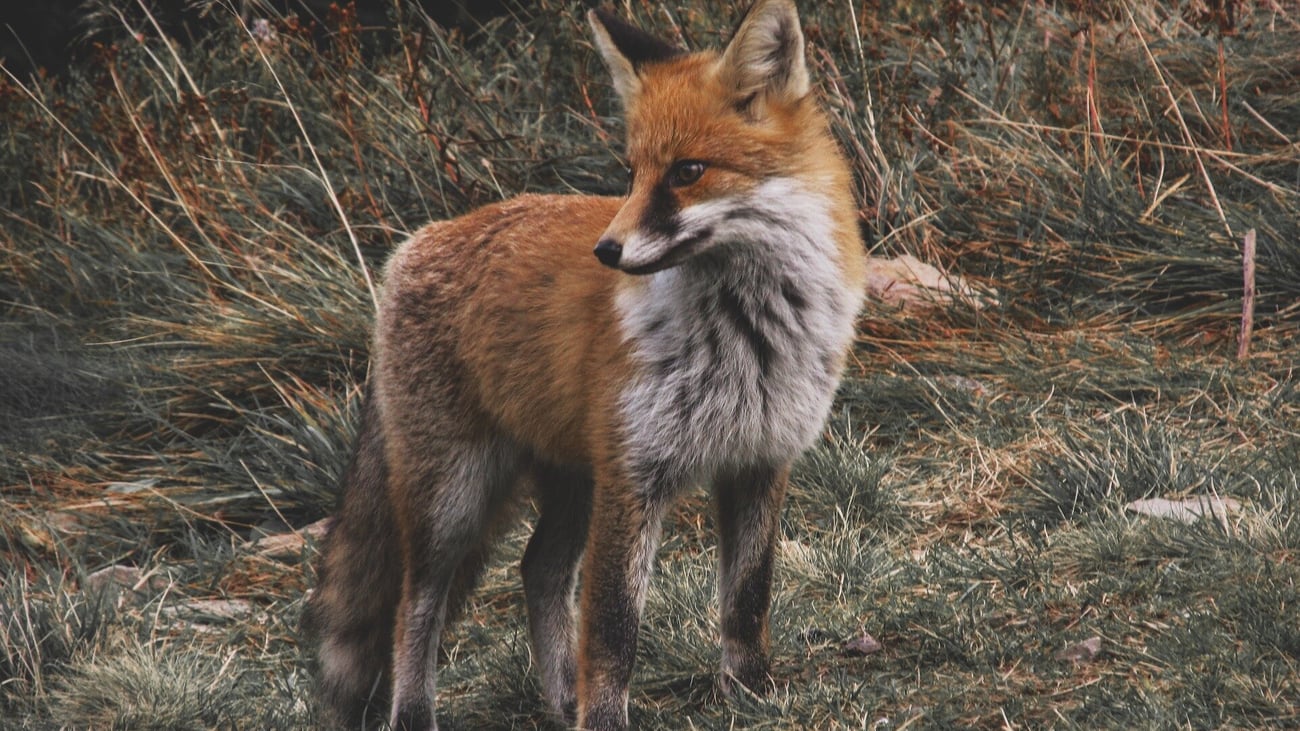
The judge said the U.S. Fish and Wildlife Service committed three errors when it refused to designate a critical habitat for the species, despite listing a segment of the foxes' population as endangered.(CN) — The U.S. Fish and Wildlife Service violated the Endangered Species Act when it failed to provide critical habitat protection for the endangered Sierra Nevada red fox, a federal judge ruled Wednesday.In a pair of nearly identical rulings, U.S. District Judge Dale A. Drozd found the service committed three errors in its 2021 decision listing the Sierra Nevada Distinct Population Segment of the fox as endangered, while at the same time concluding that the designation of a critical habitat for this population was not prudent.“In sum, the court concludes that defendant has erred in three ways, any one of which would entitle plaintiff to summary judgment — failing to weigh the benefits of designating critical habitat, failing to consider the potential effect on the recovery of the species, and in applying an incorrect ‘significant threat’ standard,” Drozd, a Barack Obama appointee, wrote in his ruling granting the Center for Biological Diversity’s motion for summary judgment.The Sierra Nevada red fox is among the rarest and most endangered mammals in North America. The species is uniquely adapted to high-elevation, cold and snowy environments and was historically found throughout the Sierra Nevada and southern Cascade ranges in California and Oregon, according to the Center for Biological Diversity.After decades passed with very few verified sightings of the fox in its namesake Sierra Nevada range, an individual Sierra Nevada red fox was observed near Sonora Pass in the Stanislaus National Forest in 2010, prompting extensive surveys for the species throughout the high Sierra.These surveys confirmed the existence of a small, isolated population of 18 to 39 foxes in the Sierra Nevada, including the first Sierra Nevada red fox documented south of Yosemite National Park in nearly a century.The Center for Biological Diversity sued Fish and Wildlife in December 2024, claiming the service’s decision — that it wasn’t “prudent” to designate critical habitat for the endangered species — unlawfully expanded an exception to the rule requiring critical habitats to be designated when species are declared endangered beyond the limits of the Endangered Species Act.A similar lawsuit challenging the service’s designation of the Sierra Nevada red fox was filed by nonprofit Defenders of Wildlife in January 2025.Addressing both cases, Drozd noted in his rulings that the government seemingly conceded it did not consider the benefits of designating a critical habitat, which it is required to do under the Endangered Species Act. The judge also agreed with both organizations that the purpose of the act is not only to ensure species’ survival, but also their recovery.Drozd further concluded Fish and Wildlife unlawfully expanded the “not prudent” regulation by requiring the threat to habitat be “significant.”“Here FWS’ addition of the word ‘significant’ in describing the degree of threat to the species impermissibly expands the regulation that governs the ’not prudent’ determination despite clear congressional intent that in most situations, FWS is to designate critical habitat at the same time that a species is listed as either endangered or threatened," he said in his ruling granting summary judgment to Defenders of Wildlife. “Further, it is this unauthorized ‘significant’ standard that appears to pervade the agency’s analysis as set out in its proposed and final rule.”The judge ordered Fish and Wildlife to draft a new critical habitat designation and told the parties to come up with a briefing schedule on remedies within 14 days.Brian Segee, a senior attorney and legal director of the Center for Biological Diversity’s endangered species program, praised the court ruling, calling it a “huge victory for one of California’s rarest and most beautiful animals.”“Critical habitat is one of the Endangered Species Act’s most important safeguards because animals and plants can’t recover if the places they depend on disappear,” he said. “This ruling makes clear that the government can’t turn the law on its head by demanding that habitat threats cross some invented threshold before endangered wildlife get the protections Congress intended.”A representative of the Fish and Wildlife Service did not immediately respond to a request for comment.Subscribe to our free newslettersOur weekly newsletter Closing Arguments offers the latest about ongoing trials, major litigation and rulings in courthouses around the U.S. and the world, while the monthly Under the Lights dishes the legal dirt from Hollywood, sports, Big Tech and the arts.Additional Reads
Judge slams feds for failing to protect Sierra Nevada red fox
Full Article
Original Source
Read the full article at Courthousenews →KhanList aggregates and links to publicly available news content. We do not host full articles from third-party sources. Always verify important information with original sources.