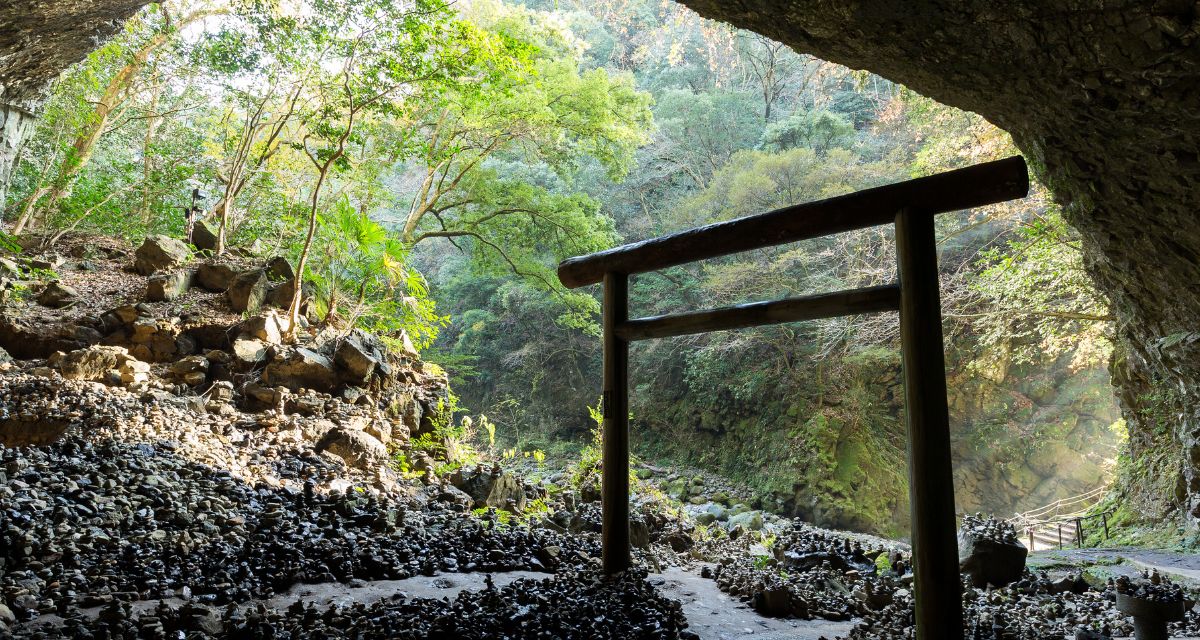
Every day, scientists and environmentalists search for new and inventive ways to restore forests as ecosystems around the world continue to disappear. But often, the most impactful solution isn’t all that cutting-edge. Rather, it comes from seeking answers from our history. Akira Miyawaki, whose research transformed the way many people think about reforestation, understood this truth all too well. Born in 1928 in Okayama, Japan, Miyawaki dedicated his life to studying plant communities and the way forests naturally develop. His work focused on how plants would naturally grow in a particular area if humans had not altered the landscape. Through his research, Miyawaki began noticing something that would eventually reshape his entire approach to reforestation. Ancient temples hiding important clues While studying Japan’s forests, he learned that some of the most resilient and diverse ecosystems were found around ancient Shinto shrines and Buddhist temples. These densely populated areas looked nothing like traditional man-made plantations, where only some species of trees were planted in carefully spaced rows. To Miyawaki, these sacred sites became the foundation for his most groundbreaking idea: Instead of planting large, mature trees with vast spacing, Miyawaki planted small, bare-root native saplings and shrubs closely together (often three to five plants per square meter) to create “pocket forests.” Hands holding a sapling. Canva Because the plants were so densely packed, they’d be forced into competition for sunlight and nutrients, causing them to grow up to ten times faster than usual and naturally create a layered, rapidly growing, self-sustaining ecosystem. Not everyone was convinced Woman planting saplings. Canva The concept would eventually become known as the Miyawaki Method, but when he first introduced the approach, many people doubted whether his vision could succeed. Planting so many young trees close together defied all conventional wisdom, leaving experts to question whether such forests could survive without constant human management. And yet, Miyawaki set out to prove they could. The experiment that changed reforestation As Miyawaki’s forests began to grow, the results challenged those early doubts. Just as he predicted, the densely-planted forests developed quickly, with trees and plants forming their own interconnected ecosystems. These new forests improved soil conditions, helped retain water, and created habitats for wildlife. Before long, interest in Miyawaki’s approach expanded beyond Japan. Communities, environmental groups, and organizations around the world began using the method to restore forests in urban areas and damaged landscapes. Even after Miyawaki’s passing in 2021 at the age of 93, his method continues to inspire new reforestation projects across the globe. His research changed how many people think about rebuilding forests, and continues to remind us that the future of environmental restoration can often be discovered by looking back at what nature has already taught us.
Japanese botanist found the secret to reforestation in ancient shrines. The results were undeniable.
Full Article
Original Source
Read the full article at Upworthy →KhanList aggregates and links to publicly available news content. We do not host full articles from third-party sources. Always verify important information with original sources.