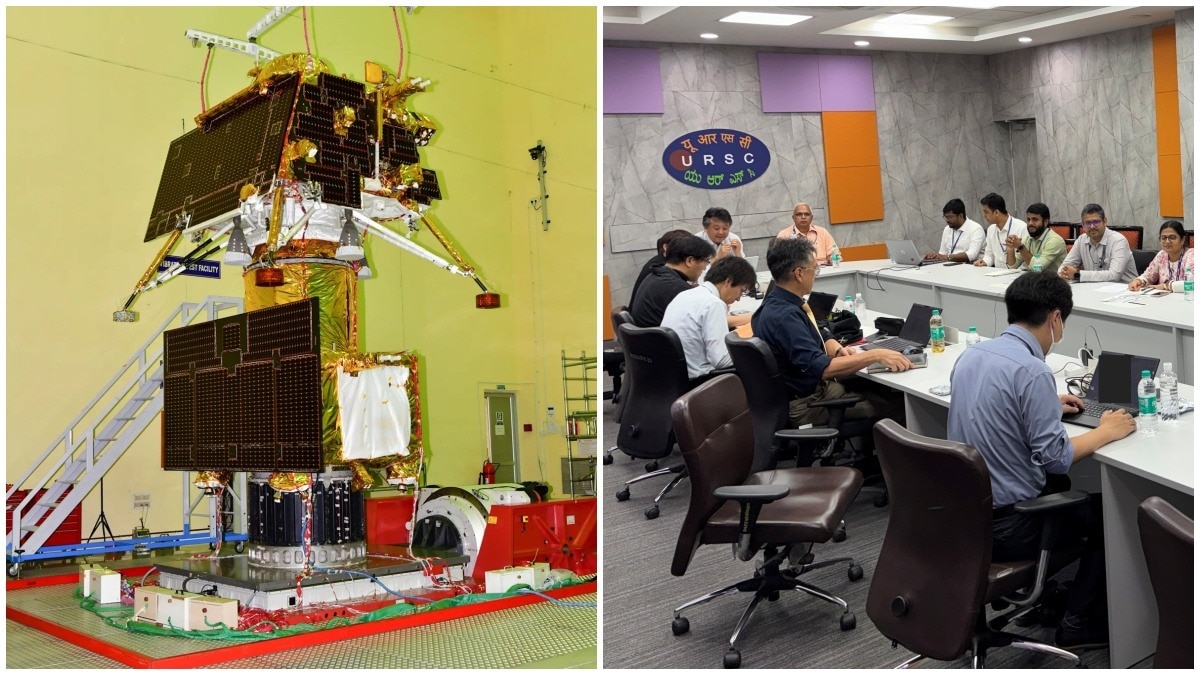
Isro and Jaxa scientists met in Bengaluru to firm up Chandrayaan-5 lander-rover interfaces and payload plans. The work will shape LUPEX's search for lunar water ice and broader Moon studies.The teams are reviewing the suite of science instruments that will be carried aboard the Japanese rover. (Photo: Jaxa)India's ambitious Chandrayaan-5 mission has taken another step forward as scientists from the Indian Space Research Organisation (Isro) and the Japan Aerospace Exploration Agency (Jaxa) met in Bengaluru to advance technical preparations for the joint lunar exploration mission.Technical coordination is currently underway at Isro's U R Rao Satellite Centre (URSC), where engineers and scientists from both agencies are working on key mission interfaces and scientific instruments that will fly aboard the Lunar Polar Exploration (LUPEX) mission, also known as Chandrayaan-5.Discussions are centred on the Interface Control Specification (ICS) between the Indian-built lunar lander and the Japanese rover, a critical component that will ensure seamless communication, power exchange and operational compatibility between the two spacecraft after landing on the Moon. The teams are also reviewing the suite of science instruments that will be carried aboard the Japanese rover.These payloads are expected to investigate the lunar surface and search for water ice deposits in the Moon's south polar region, one of the most scientifically important locations for future human exploration. The meeting highlights the growing collaboration between Isro and Jaxa, with engineers from both space agencies working closely to integrate hardware and mission operations ahead of the launch.LUPEX will build on the success of Chandrayaan-3, which made India the first nation to achieve a soft landing near the Moon's south pole in August 2023.While Chandrayaan-3 demonstrated landing technology and conducted short-duration scientific experiments, Chandrayaan-5 is expected to carry a larger, more capable rover designed to travel longer distances and perform detailed investigations of permanently shadowed regions.Scientists believe these regions may contain frozen water accumulated over billions of years, a resource considered vital for future lunar bases and long-duration human missions.The mission aims to study the quantity, distribution and accessibility of lunar water ice while improving understanding of the Moon's geological history.With technical coordination progressing at URSC, the Isro-Jaxa partnership continues to move closer to one of the most ambitious robotic lunar exploration missions planned by the two countries, paving the way for deeper international cooperation in future space exploration.- EndsPublished By: Sibu Kumar TripathiPublished On: Jul 29, 2026 13:33 IST
Isro, Jaxa teams meet to decide what Chandrayaan-5 will do on the Moon
Full Article
Original Source
Read the full article at Indiatoday →KhanList aggregates and links to publicly available news content. We do not host full articles from third-party sources. Always verify important information with original sources.