
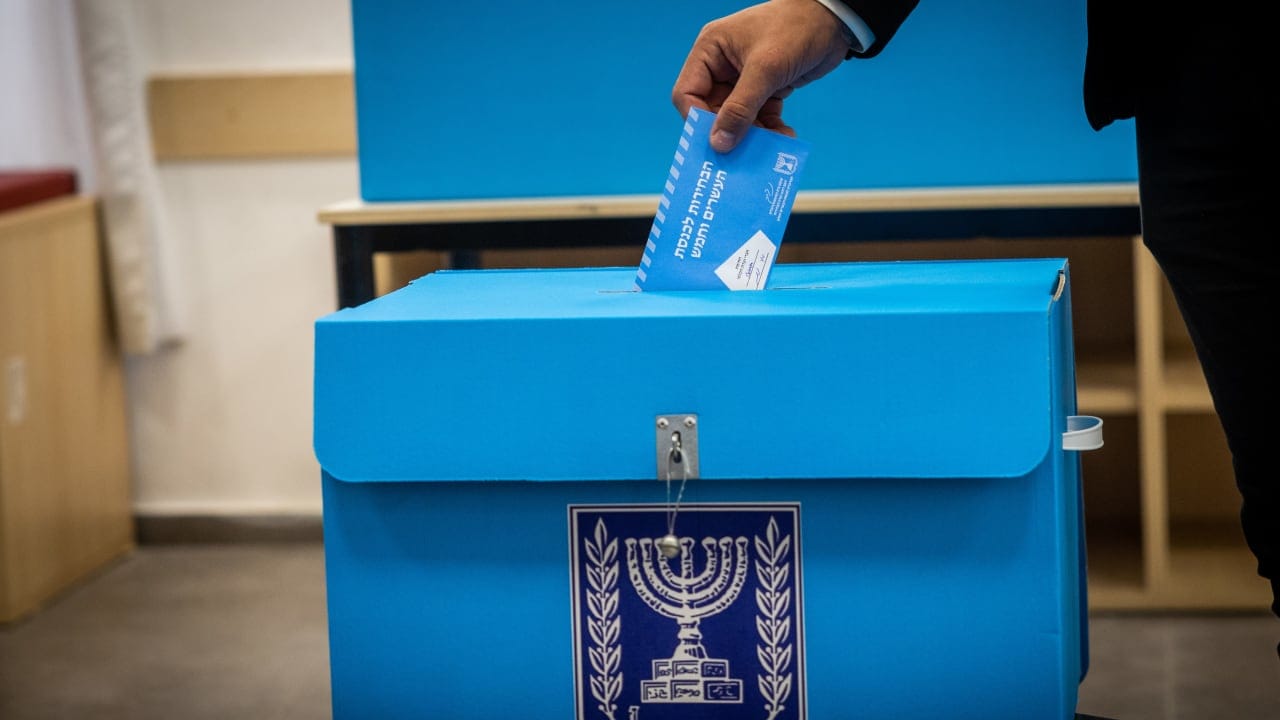
SEPTEMBER 6, 2026 18:40On October 27, Israelis will once again choose a government.We will spend the coming weeks arguing about Gaza, Iran, the haredi draft, the economy, judicial reform, the Palestinians, and the consequences of the Hamas-led October 7, 2023 attacks. We will scrutinize party platforms, coalition possibilities, and opinion polls.But perhaps we should be asking: What sort of person wants to be prime minister in the first place?It is a peculiar ambition. The hours are appalling. Privacy mostly disappears. Every mistake becomes public property. Your appearance, your family, your finances, and sometimes even your choice of lunch become legitimate subjects for discussion. Roughly half the country may regard you as the person qualified to save the nation, while much of the other half regards you as the person most likely to destroy it.Why would anybody want the job?Israeli prime minister Benjamin Netanyahu and his wife Sara arrive to cast their vote at a polling station in Jerusalem on August 17, 2026, as party members vote in the Likud primary elections to determine the party’s Knesset list ahead of the Israeli general elections. (credit: CHAIM GOLDBERG/FLASH90)Many politicians still motivated by public servicePolitical psychologists have been asking versions of this question for years, and their findings are fascinating. Research into “political ambition” suggests that politicians are not simply power-hungry egomaniacs, as the popular stereotype would have it. Many are strongly motivated by public service. Studies of political candidates have found genuine evidence of what psychologists call “self-transcendence,” the desire to improve society and help others.That is worth remembering in an age when cynicism about politicians comes so easily.But alongside the desire to serve sits something else: the desire to influence. Political leaders tend to have a greater “need for power” than the rest of us. Again, that is not necessarily bad. If you are convinced that your country is heading in the wrong direction, it is perfectly reasonable to want the authority to change course.Then there is a third characteristic: unusually strong self-belief. Research has associated political ambition with traits including extraversion and grandiose narcissism. That does not mean that every politician is a narcissist, still less that we should diagnose politicians we dislike with psychiatric disorders.It means something simpler. To seek the premiership requires an extraordinary degree of confidence in yourself.Israel has almost 10 million inhabitants. To seriously aspire to become prime minister requires believing that, among all those people, you possess some combination of judgment, ability, and vision that makes you particularly suited to lead them. Most of us never have that thought.Those who do are, almost by definition, psychologically unusual.Pirkei Avot (Ethics of the Fathers) understood the danger long before anyone invented political psychology. Shmaya teaches: “Love work, hate authority, and do not become overly familiar with the government.”“Hate positions of power.” It is a striking instruction. Judaism clearly does not oppose leadership. The Torah is filled with leaders. Jewish communities cannot function without people willing to take responsibility. The warning is not against exercising authority. It is against falling in love with it. And that distinction ought to matter to us as voters. Does a candidate want power because there is something that they believe desperately needs doing, or has acquiring and retaining power become the objective itself?How can we possibly know? Not from campaign advertisements. Every candidate will assure us that they seek office only out of devotion to the people of Israel.We have to watch their behavior. How does this person react when contradicted? Can they admit a mistake? Can they tolerate talented people around them, or does everyone eventually have to demonstrate personal loyalty? Do they distinguish between criticism and betrayal? Do they listen to advice that they do not want to hear?When something goes badly wrong, is the first instinct to ask, “What did I get wrong?” or “Whom can I blame?”Perhaps above all: can this person distinguish between what is good for the country and what is good for his or her political survival?This is not an argument for timid leadership. In fact, Pirkei Avot gives us the opposite warning as well. Hillel says: “In a place where there are no people, strive to be a person.”The traditional commentators understand this, among other things, as an instruction to step forward when nobody else is capable of taking responsibility.Leadership sometimes requires enormous confidence. Moses’ humility did not prevent him from confronting Pharaoh. David’s greatness did not consist of avoiding difficult decisions. There are moments when standing back is not modesty but cowardice.So Judaism presents us with a beautiful tension. Do not crave leadership. But when leadership is needed, do not run away from it.Perhaps that is exactly the personality we should be looking for in October. Someone who wants the job enough to do it, but not so much that possessing the job becomes an end in itself.Someone confident enough to make terrible decisions under pressure, but humble enough to wonder whether somebody else might know better. Someone strong enough to withstand public hostility, but not so insulated from criticism that they stop hearing it. Someone ambitious for Israel, rather than merely ambitious for themselves.Our electoral system encourages us to think primarily about parties. Formally, we vote for lists rather than directly for a prime minister. In reality, personalities dominate Israeli elections. Faces stare at us from billboards. Campaigns revolve around leaders. Pollsters constantly ask which individual is “most suitable” to be prime minister.If personality is already part of the election, we should examine it more seriously. Not whether we like the candidate, or if they gave a good speech, or if they performed brilliantly in a television interview.Character is revealed most clearly when things go wrong. How did this person behave after failure? How did they treat an opponent once the cameras were switched off? Did they keep people around who disagreed with them? Have they ever publicly accepted responsibility for anything?These questions matter in every election. In Israel in 2026, they matter enormously.The next prime minister will inherit a country still carrying the wounds of the October 7 massacres and the Israel-Hamas War that ensued. Israeli society remains divided, bereaved, and exhausted. Enormous decisions lie ahead concerning security, the economy, the haredi draft, our relationship with the Palestinians, our relationship with the wider world and, perhaps most difficult of all, our relationship with one another.Policies matter enormously. But policies do not make decisions. People do. Sometimes, the intelligence is incomplete, advisers disagree, and every option carries terrible risks.What remains is the person; their judgment, temperament, humility, courage, and ego. Their capacity to listen; their ability to say, “I was wrong.” So by all means, before October 27, let us ask our politicians what they intend to do. But perhaps we should spend more time asking who they are.Shmaya warned us to distrust the love of power. Hillel reminded us that good people must sometimes step forward and exercise it. Somewhere between those two teachings lies the leader that Israel needs.The writer is a rabbi and physician. He writes and teaches on Jewish ethics, leadership, and resilience. His work appears on rabbidrjonathanlieberman.substack.com and youtube.com. @rabbidrjonathanliebermanFollow us on Google
Israel’s next leader must be ambitious for Israel, not themselves - opinion
Full Article
Original Source
Read the full article at Jpost →KhanList aggregates and links to publicly available news content. We do not host full articles from third-party sources. Always verify important information with original sources.