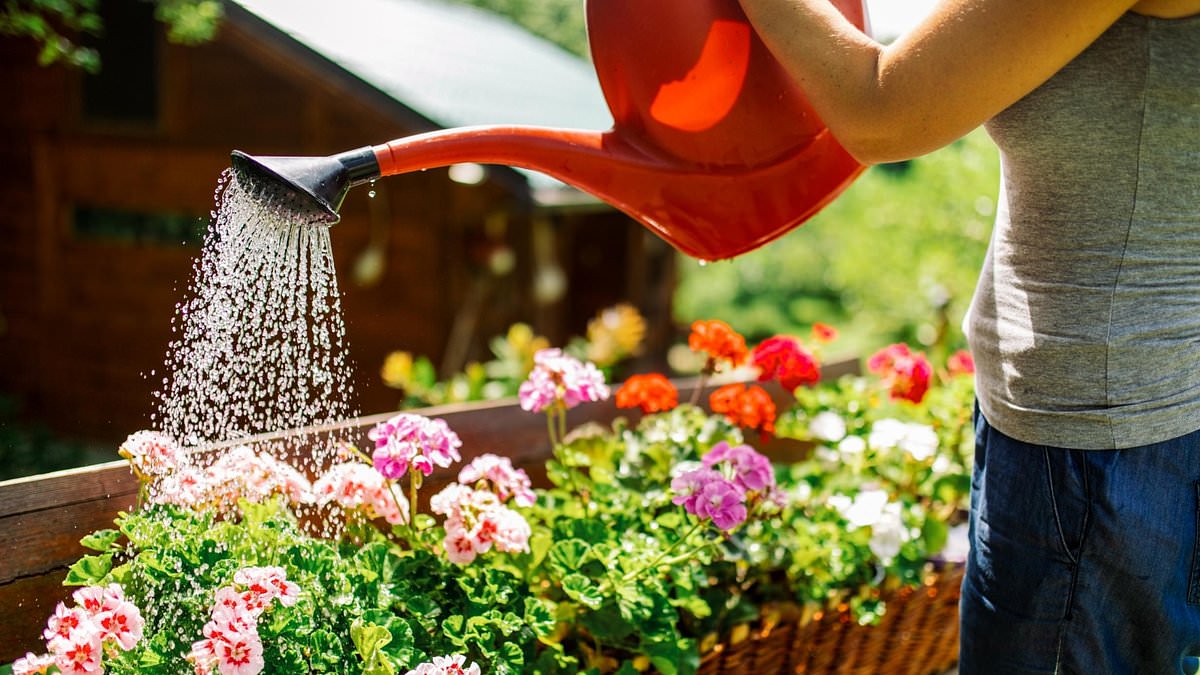
Daily Mail journalists select and curate the products that feature on our site. If you make a purchase via links on this page we will earn commission - learn moreThe UK has endured multiple heatwaves since May - and forecasts suggest another could be just around the corner. With soaring temperatures and dry conditions, hosepipe bans have been introduced across parts of the country, leaving many gardeners wondering how to keep their outdoor spaces thriving. But a heatwave combined with a hosepipe ban doesn't have to spell disaster for your garden. The key is to prioritise plant health, conserve moisture and make every drop of water count. To find out how, the Daily Mail spoke to Jo McGarry, a leading luxury garden design expert at Caragh Nurseries, who shared her top tips for protecting your plants and keeping your garden looking its best during hot, dry weather. But a heatwave combined with a hosepipe ban doesn't have to spell disaster for your garden. The key is to prioritise plant health, conserve moisture and make every drop of water countWater wiselyEven during a hosepipe ban, you can usually still water your garden with a watering can, although it's worth checking your local water supplier's rules first.Jo advises gardeners to water deeply at the base of plants early in the morning rather than giving them frequent light sprays. This encourages roots to grow deeper into the soil, where moisture is retained for longer.'Prioritise anything planted this year, along with shallow-rooted and moisture-loving plants such as hydrangeas and ferns. Already established shrubs and trees will usually cope better with short dry periods,' she says.Mulch to lock in moistureApplying a layer of mulch helps keep the soil cool, reduces evaporation and suppresses weeds, meaning you'll need to water less often.'Adding bark, compost, straw or grass clippings to damp flower beds can help the soil hold on to water for longer and keep plant roots cooler during hot weather,' Jo notes.'A layer around 5 to 7 centimetres deep can help the soil stay damp for longer by slowing down water loss and protecting it from the heat.'Leaf mould and straw are also effective mulches, particularly around vegetable plants.Protect plants from the hottest sunYoung plants and vegetables can quickly become stressed during prolonged periods of hot weather.Jo recommends moving pots and hanging baskets into a shadier part of the garden during the hottest part of the day. Shade netting can also be used to protect vegetable beds and more delicate plants from intense afternoon sun.Give containers extra attention'Container plants will need particular attention because pots dry out faster than flower beds,' Jo says.'To see whether they need watering, check the compost a few centimetres below the surface and give it a slow, thorough soak if it feels dry.'Check containers every morning and evening, and group pots together to create a more humid microclimate. Where appropriate, place pots on saucers to collect excess water.Collect rainwaterInstalling a water butt is one of the best long-term investments for any garden, allowing you to collect and store rainwater for use during dry spells.'Collecting rainwater gives gardeners an extra supply to use on lawns, flower beds and plants when the weather turns dry.'Adding compost or other organic matter to the soil can also help it hold water for longer, meaning less moisture is lost between watering.'Reduce plant stress - and don't panic if your lawn turns brownAvoid heavy pruning, planting, replanting and feeding until temperatures drop, as these tasks encourage plants to use more water and energy.Jo explains: 'Plants use a great deal of water and energy to produce new growth, so heavy feeding during a heatwave can put them under even more pressure.'There's also no need to worry if your lawn starts to lose its colour.'Brown or yellow grass during a heatwave is often dormant rather than dead and will usually recover when cooler, wetter weather returns.'Avoid mowing when the lawn is dry and brittle. If cutting is unavoidable, raise the mower blades and cut off no more than a third of the grass so the longer blades can shade the soil and protect the roots.'Jo also advises waiting until temperatures have fallen or rain has returned before applying fertiliser, and always watering the soil before feeding.Weed little and often'Weeds compete with plants for limited moisture, so removing them while they are still small can reduce pressure on flower beds and vegetable plots,' Jo explains.She recommends avoiding deep digging in hot, dry soil, as this can increase water loss and disturb plant roots. Instead, hand-pull young weeds or cut them off at the surface.
Is your garden dull and dry? Expert reveals how to look after your lawn, flower beds and plants during the summer heatwaves - as UK's new hosepipe ban kicks in
Full Article
Original Source
Read the full article at Dailymail →KhanList aggregates and links to publicly available news content. We do not host full articles from third-party sources. Always verify important information with original sources.