
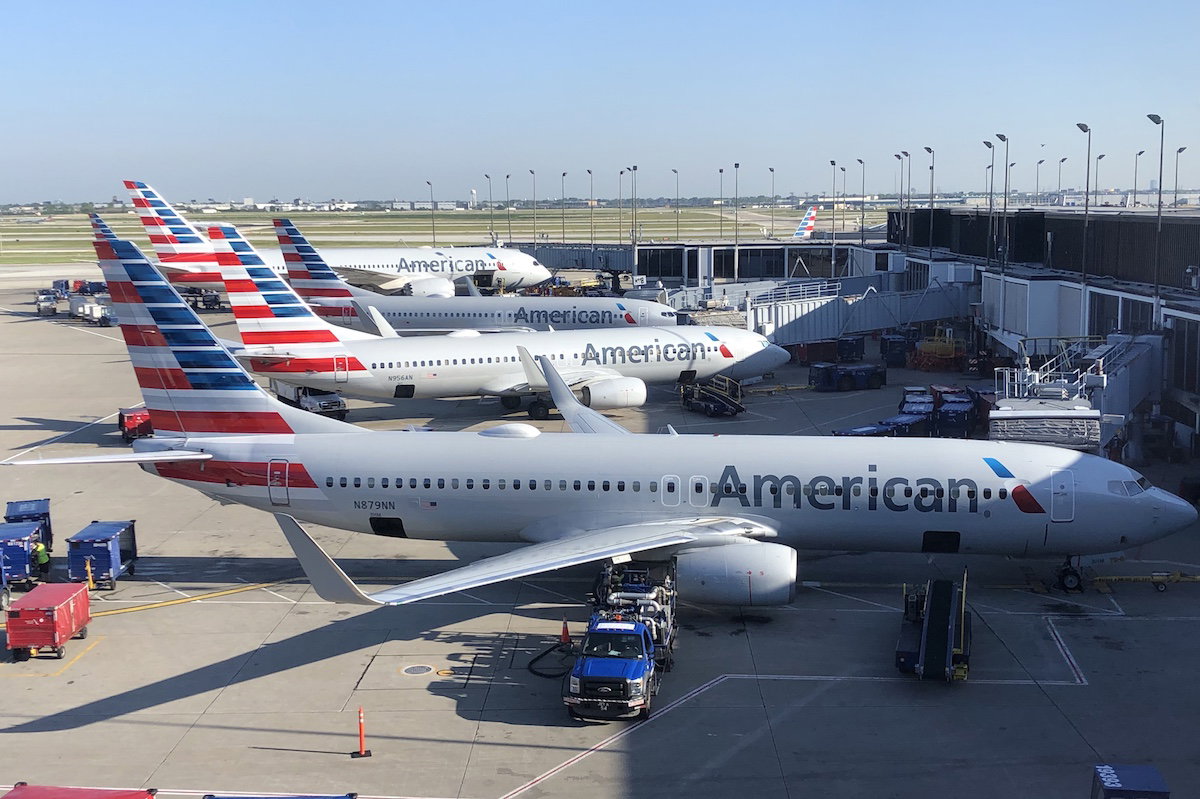
Currently, Chicago O’Hare Airport (ORD) is probably the most fiercely competitive airport in the country. Both American and United have hubs there — United has gained a huge advantage in recent years, though American is now trying to win back some of the market share it has lost. United CEO Scott Kirby does endless trash talking about American, especially as it relates to Chicago. He suggests American is losing around $1 billion per year in Chicago, and predicts American will eventually have to pull out of the airport, leaving it solely as a hub for United. Kirby has thrown out a lot of numbers about American’s finances in Chicago, though are any of them actually true? Well, here’s an interesting analysis on that. American is probably losing lots of money in Chicago, but…This is a tough hole for American to dig itself out ofBottom line American is probably losing lots of money in Chicago, but… X user bentboolean has posted an interesting analysis about the likely economic reality of the Chicago O’Hare hub for both American and United. He used AI for the analysis, and points out how every article he read about the American vs. United fight in Chicago was surface-level. While this is an excellent analysis, I think it has to be pointed out that it’s not actually conclusive. That’s because any data-based analysis takes into account domestic yields for ticket sales, and that doesn’t account for things like loyalty revenue, which is nowadays a major source of revenue for airlines. You can see part of the analysis below, but here’s the gist of it: United’s domestic revenue per air seat mile out of Chicago is 10.5% better than American’s; United is at 26.6 cents, while American is at 24.0 cents United’s domestic cost per air seat mile out of Chicago is 4.6% better than American’s, largely because United flies a higher percentage of mainline aircraft out of Chicago; United is at 11.19 cents, while American is at 11.73 cents (this is only direct aircraft operating costs, and doesn’t factor in a lot of other expenses) Based on this research, the annualized aircraft operating margin in Chicago is $2.82 billion for United, and $1.84 billion for American, but this doesn’t include all kinds of expenses, like gate and terminal rent, ground handling, allocated corporate overhead, etc. If you assume that United is in fact breakeven in Chicago (which is what Kirby essentially seems to be hinting at), then American would indeed be incurring around $1 billion in annual losses there The catch is that this doesn’t include things like ancillary fees, loyalty and co-brand revenue, cargo, etc. And those are things that massively contribute to a carrier’s bottom line. After all, we often joke that airlines essentially operate as loss leaders for their loyalty programs. The claim: Kirby says AA is losing $800M–$1.1B/yr at O'Hare and can't sustain its schedule. AA's CFO says every hub contributes positively. No airline publishes hub-level P&L, so it's officially unfalsifiable. But there's enough federal data to build an estimate.— late stage capitalist (@bentboolean) August 29, 2026 REVENUE SIDE. Pulled 2025 Q2 DB1B (2.1 GB, 8.5M rows), filtered to 203k ORD-origin domestic tickets, attributed to the ticketing carrier so regional flying (Envoy, Republic, SkyWest) rolls up to AA and UA correctly. pic.twitter.com/Wk1ozmKLyb— late stage capitalist (@bentboolean) August 29, 2026 On the 18 largest ORD nonstop markets, UA out-yields AA on 16 of 18. The premium is 25–33% on UA's core business routes (SFO, EWR, DEN, IAH). AA only wins its own hub feeders (MIA, CLT). This isn't a mix effect. It's pricing power UA has and AA doesn't.— late stage capitalist (@bentboolean) August 29, 2026 UA runs 86% of ORD passengers on mainline metal. AA runs 76%. Convert to departures and it's ~69% vs ~58% mainline.Now apply Form 41 CASM by aircraft type: pic.twitter.com/5qpbqJClAz— late stage capitalist (@bentboolean) August 29, 2026 Full picture:• UA margin: 22.3¢ − 11.2¢ = 11.1¢/ASM• AA margin: 20.2¢ − 11.7¢ = 8.5¢/ASMUA's per-ASM margin is 31% higher. Two-thirds of the gap is revenue, one-third is cost.— late stage capitalist (@bentboolean) August 29, 2026 If we assume UA is running ORD at breakeven — all their "everything else" (SG&A, station, gates, allocated overhead) exactly consumes the $2.8B gross margin and that AA's "everything else" is a similar 2.8B (it's likely worse for AA because they have < scale + less ancillary)— late stage capitalist (@bentboolean) August 29, 2026 CAVEATS — many:• No ancillaries (bags, seats)• No loyalty / co-brand (huge for AA-Citi)• No cargo• No international (bigger for UA)• Fleet mix within each operator is modeled — BTS gates T-100 route data behind an interactive form• "UA at breakeven" is an assumption— late stage capitalist (@bentboolean) August 29, 2026 Summary:1) UA has meaningfully better ORD economics — on both revenue AND cost sides.2) The $1B loss claim isn't crazy — it's what the math gives you if UA is roughly breakeven.3) It's not proof — the biggest missing pieces (loyalty, cargo) live outside public data.— late stage capitalist (@bentboolean) August 29, 2026 This is a tough hole for American to dig itself out of The above research more or less matches what I was expecting the situation in Chicago to be between American and United. I figured Kirby’s $1 billion number was based purely on operating results, and that overlooks a major source of airline margins nowadays. So I suspect American’s actual loss in Chicago, once factoring everything in, is in the hundreds of millions, rather than in the 10 figure range. While the situation for American probably isn’t quite as dire as Kirby is trying to make it look, it’s also not good at all. American has lower revenue and higher costs, and that’s a really bad combination. If American increasingly flies larger aircraft (with lower per seat operating costs), odds are that it would make margins worse, rather than better. So I really don’t know how this will all play out. I don’t think American is giving up in Chicago, but I also don’t think that United is willing to give up any ground at the airport, even if it costs the airline dearly. The issue is, how can American really make up ground in Chicago? The airline currently has an inferior product, and while positive changes have been announced, it’ll be well into the 2030s before they’re fully implemented. Meanwhile by the end of 2027, United will have its new narrow body interiors on virtually all planes, along with Starlink Wi-Fi. I’d be fascinated to know what American’s strategic vision here is. Obviously the airline isn’t just going to throw the towel in on Chicago, but how do you even begin to make the economics better, rather than worse? How is American supposed to make up ground in Chicago? Bottom line American and United are currently battling it out in Chicago. United CEO Scott Kirby claims that American is losing $1 billion per year at the airport, and will eventually be forced to pull out, leaving the airport exclusively as a hub for United. An analysis suggests that the $1 billion amount might actually be based in reality, though only factors in direct operating revenue and costs, and not the overall impact that the presence in Chicago has on the loyalty program. Nowadays even the most profitable US carriers barely directly make money transporting passengers, and instead, largely earn their profits through their loyalty programs. So while there might be some truth to the $1 billion number, it definitely doesn’t tell the full story, which would have to factor in the loyalty upside from having a hub there (and I imagine that upside is in the hundreds of millions). What do you make of this analysis on the American & United financial performance in Chicago?
Is American Really Losing $1 Billion A Year At Chicago O’Hare? Here’s What The Data Shows
Full Article
Original Source
Read the full article at Onemileatatime →KhanList aggregates and links to publicly available news content. We do not host full articles from third-party sources. Always verify important information with original sources.