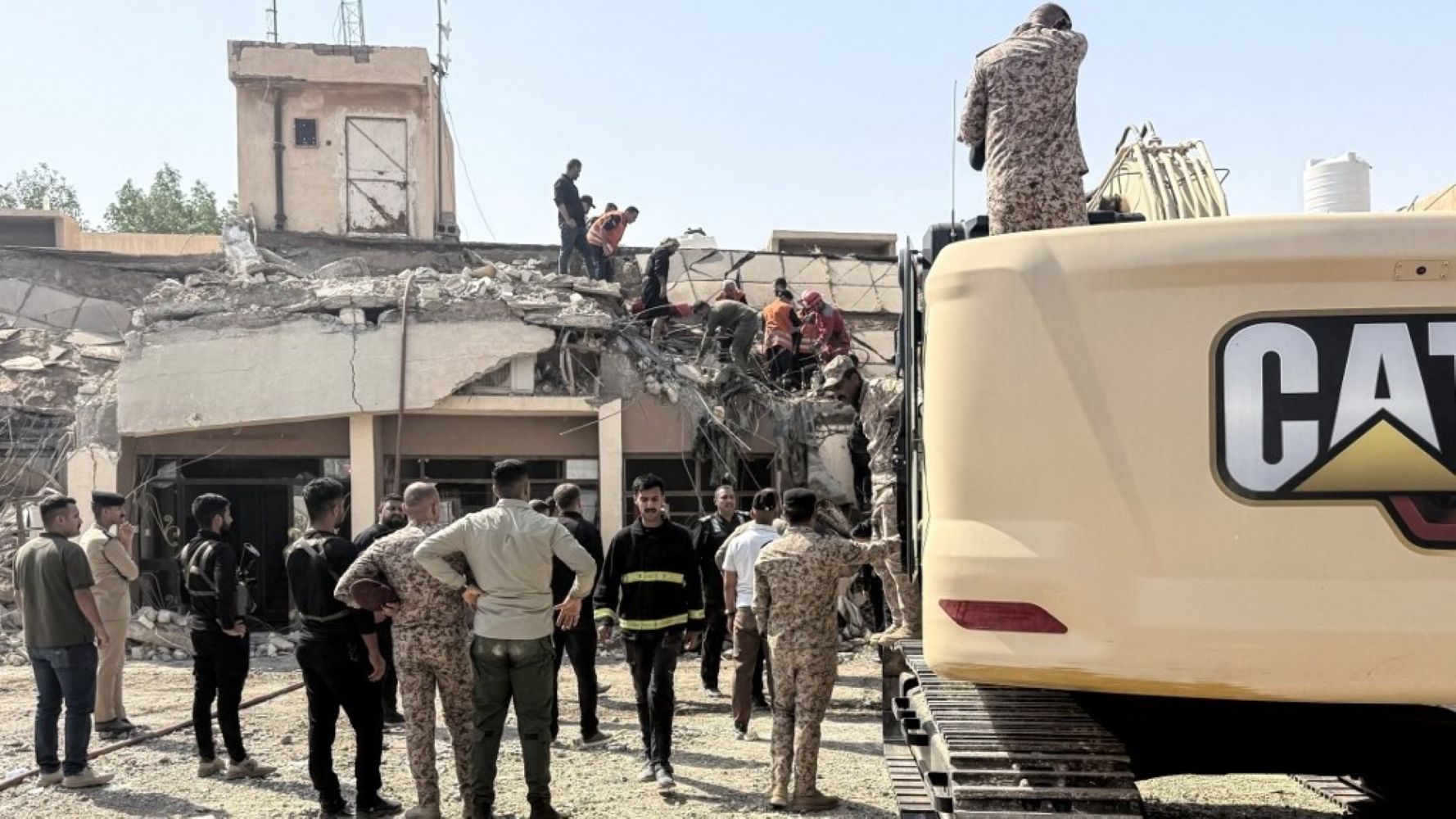
Riyadh's participation in strikes follows drone and missile attacks on its oil facilities from Iranian-allied forces in Yemen and Iraq Iraqis inspect damage on 29 July after overnight Saudi and American air strikes in Diyala (Younis al-Bayati/AFP) Published date: 29 July 2026 10:22 BST | Last update: 10 sec ago Iraqi Prime Minister Ali al-Zaydi has called for an urgent security meeting on Wednesday after a joint US-Saudi attack on pro-Iranian forces in the country. Earlier, the US Central Command (Centcom) said it conducted "precision strikes" alongside Saudi Arabian Armed Forces against Iran-aligned groups. In the past week, Iranian allies in Iraq have launched drone attacks targeting Saudi energy infrastructure. Yemen's Houthis on Monday launched drone attacks on Saudi Arabian oil infrastructure after an attack by Riyadh on Sanaa airport earlier this month. At least 10 members of Iraq’s Popular Mobilisation forces were killed in the US-Saudi strikes across the country, two members of the military grouping told the AFP news agency. New MEE newsletter: Jerusalem Dispatch Sign up to get the latest insights and analysis on Israel-Palestine, alongside Turkey Unpacked and other MEE newsletters One official added that there were reports of several others wounded in other provinces, with the death toll expected to rise. An Iranian military source has denied accusations of Iran's involvement in the firing of projectiles from other countries at targets in Saudi Arabia, according to state media. Saudi Arabia has been a reluctant participant in the US conflict with Iran, having given some airspace and logistical help for the Americans to operate and strike Iran but largely avoiding full involvement. Iran has so far not prioritised attacks on Saudi infrastructure, instead focusing on US military assets in the country. Bab al-Mandeb: US war on Iran gives Houthis new leverage over Saudi Arabia Read More » Yemen's Ansarallah, or Houthi movement, began attacking Saudi Arabia after Riyadh bombed Sanaa airport on 14 July. That attack was in order to prevent the landing of an Iranian aid flight, which managed to land anyway. The Houthi administration has coupled attacks on Saudi infrastructure with a partial blockade of the Bab al-Mandeb Strait in the Red Sea, targeting only Saudi vessels. The blockade of the strait, which connects the Indian Ocean to the Red Sea and the Mediterranean through the Suez Canal, adds to Riyadh's energy export woes. Tehran is already enforcing a blockade of the Strait of Hormuz, which allows exports through the Gulf out into the Arabian Sea and the Indian Ocean. Middle East Eye delivers independent and unrivalled coverage and analysis of the Middle East, North Africa and beyond. To learn more about republishing this content and the associated fees, please fill out this form. More about MEE can be found here.
Iraq calls urgent security meeting after US and Saudi attacks
Full Article
Original Source
Read the full article at Middleeasteye →KhanList aggregates and links to publicly available news content. We do not host full articles from third-party sources. Always verify important information with original sources.