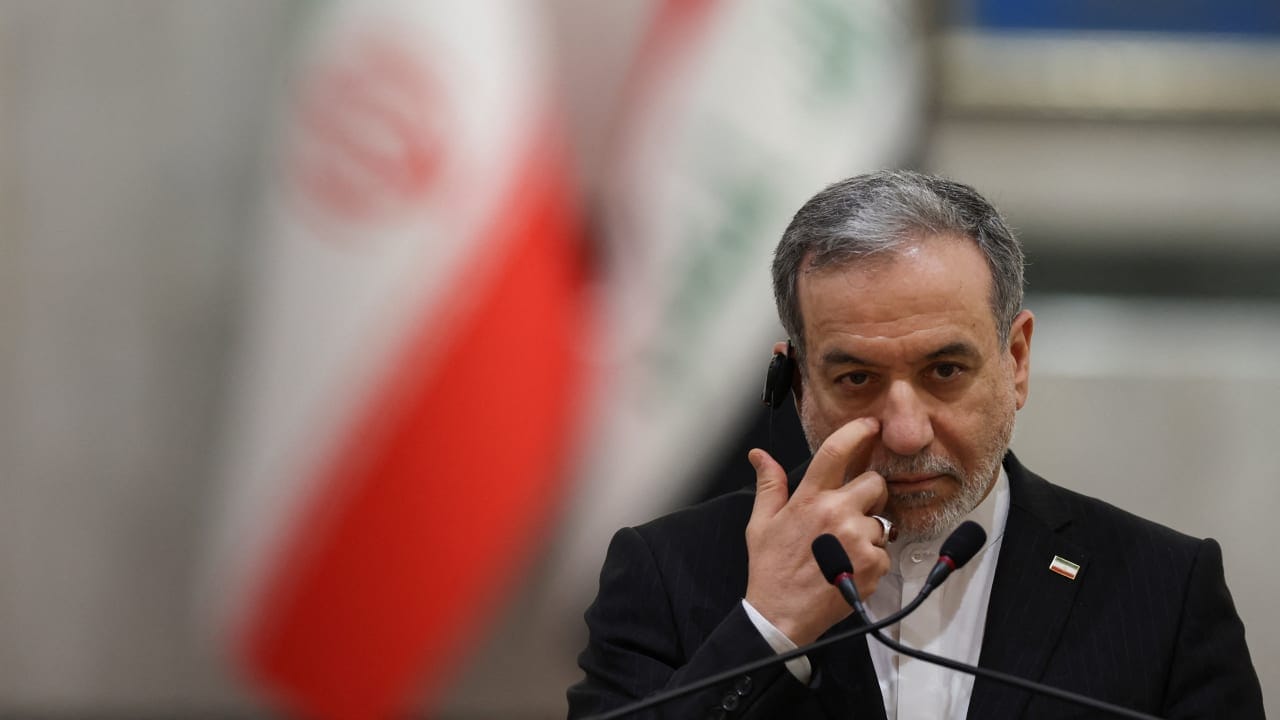
Jerusalem Post/Middle East/Iran NewsExperts have frequently called into question the role of Khamenei, who has not been seen since being injured in the same attack that killed his predecessor, his father, Ayatollah Ali Khamenei.Follow us on GoogleIranian Foreign Minister Abbas Araqchi attends a press conference alongside Iraqi Foreign Minister Fuad Hussein (not pictured), in Baghdad, Iraq, June 28, 2026.(photo credit: REUTERS/THAIER AL-SUDANI)ByDANIELLE GREYMAN-KENNARDJULY 21, 2026 13:26Updated: JULY 21, 2026 13:27A six-person subcommittee in the Supreme National Security Council was behind the “on the spot” decisions made while negotiating the now-defunct Memorandum of Understanding with the United States, Iran’s Foreign Minister Abbas Araghchi told Asriran, admitting that he has never met Iran’s Supreme Leader Mojtaba Khamenei.Experts have frequently called into question the role of Khamenei, who has not been seen since being injured in the same attack that killed his predecessor, his father Ayatollah Ali Khamenei, in February.In the new Khamenei’s absence, global analysts and commentators have increasingly looked toward Parliament Speaker Mohammad Bagher Ghalibaf and IRGC Commander Ahmad Vahidi as the minds behind Tehran’s trajectory."There was a six-member committee consisting of people like the president, Ghalibaf, the secretary of the Supreme National Security Council, and myself, who made decisions for the negotiations on the spot, because it was difficult to communicate with the top," Araghchi admitted.The committee, which does not include all 11 members of the SNSC, reportedly includes only Araghchi, Iranian President Masoud Pezeshkian, Ghalibaf, and SNSC Secretary Mohammad Bagher Zolghadr and two other unnamed persons.Minister of Foreign Affairs of Iran, Seyyed Abbas Araghchi, centre, at the Buergenstock resort in Obbuergen, near Lucerne, Switzerland, Sunday, June 20, 2026. (credit: Urs Flueeler/Pool via REUTERS)Nuclear committee evolved into negotiation committeeAraghchi said the committee was formed after the 12 Day War and was initially headed by Shahid Shamkhani, a longtime figure in Iran’s IRGC, and was initially considered a nuclear committee before evolving into a negotiating committee under the chairmanship of Ali Larijani. “All discussions related to the negotiations took place in this committee, and its approvals followed exactly the same procedure as those of the Supreme National Security Council. There, interesting expressions were used about the negotiators,” Araghchi said.The foreign minister added, "I have not seen Mr. Mojtaba so far, and I don't think anyone else has seen him in the current era, except for a few people. He was always considered one of the most worthy leaders, and the final decision was made by the Assembly of Experts. His election showed the world that there has been no change in the ideals and principles of the Islamic Republic and there will be no change."The Institute for the Study of War published an analysis of Araghchi’s comments, noting that it displayed the limited role Khamenei has played in decision-making over the past few months.Dr. Menahem Merhavi, a researcher specializing in modern Iran and Shia Islam, told The Jerusalem Post he thought Araghchi’s comments were like an attempt to garner support for his line of negotiations “and direct more criticism at the IRGC, by implying they unknowingly serve foreign interests.”Iran is winning war, Araghchi insistsThe minister stressed during the interview that Iran was winning the war, but defended the pursuit of negotiations to end or pause the conflict. The comments came after the Wall Street Journal reported that Vahidi pushed for harder lines in the talks in Pakistan, overruling Araghchi and Pezeshkian. “The war must end at the point of victory. Wars end either with absolute military victory or with negotiations. Absolute military victory means that the other side raises its hands and surrenders, like what happened to Saddam. When we are not able to do this, negotiations must be held,” Araghchi said. “Negotiations must be held when we have the upper hand on the military front. Continuing the war was a risk, and we cannot take risks with the lives of the people and the fate of the country. "Our strategic achievements were completed in the first two weeks of the war, although we suffered losses. If we had accepted the ceasefire 10 days earlier, our achievements would still be in place. We must calculate whether the war will further strengthen our position in the negotiations or weaken our position due to the additional losses? If our infrastructure is in a situation where we are crippled for gas and electricity for the people, can we become stronger in the negotiation field? Therefore, it is very important to recognize the point of negotiation." Merhavi said he thought the comments indicated that the ongoing power struggle in Iran has “entered a new phase,” and that the absence of an effective supreme leader is leaving that struggle more “exposed” now than before. I think it's a power struggle that has entered a new phase after the death of Khamenei senior, but not all that different. However, due to the absence of an effective supreme leader, it is somewhat more exposed“Bottom line: Vahidi et al are the ones who call the shots, giving the negotiators room for maneuver to lull the US,” he concluded.Follow us on Google
Iran's Araghchi reveals six-member committee led nuclear talks, says he never met Khamenei
Full Article
Original Source
Read the full article at Jpost →KhanList aggregates and links to publicly available news content. We do not host full articles from third-party sources. Always verify important information with original sources.