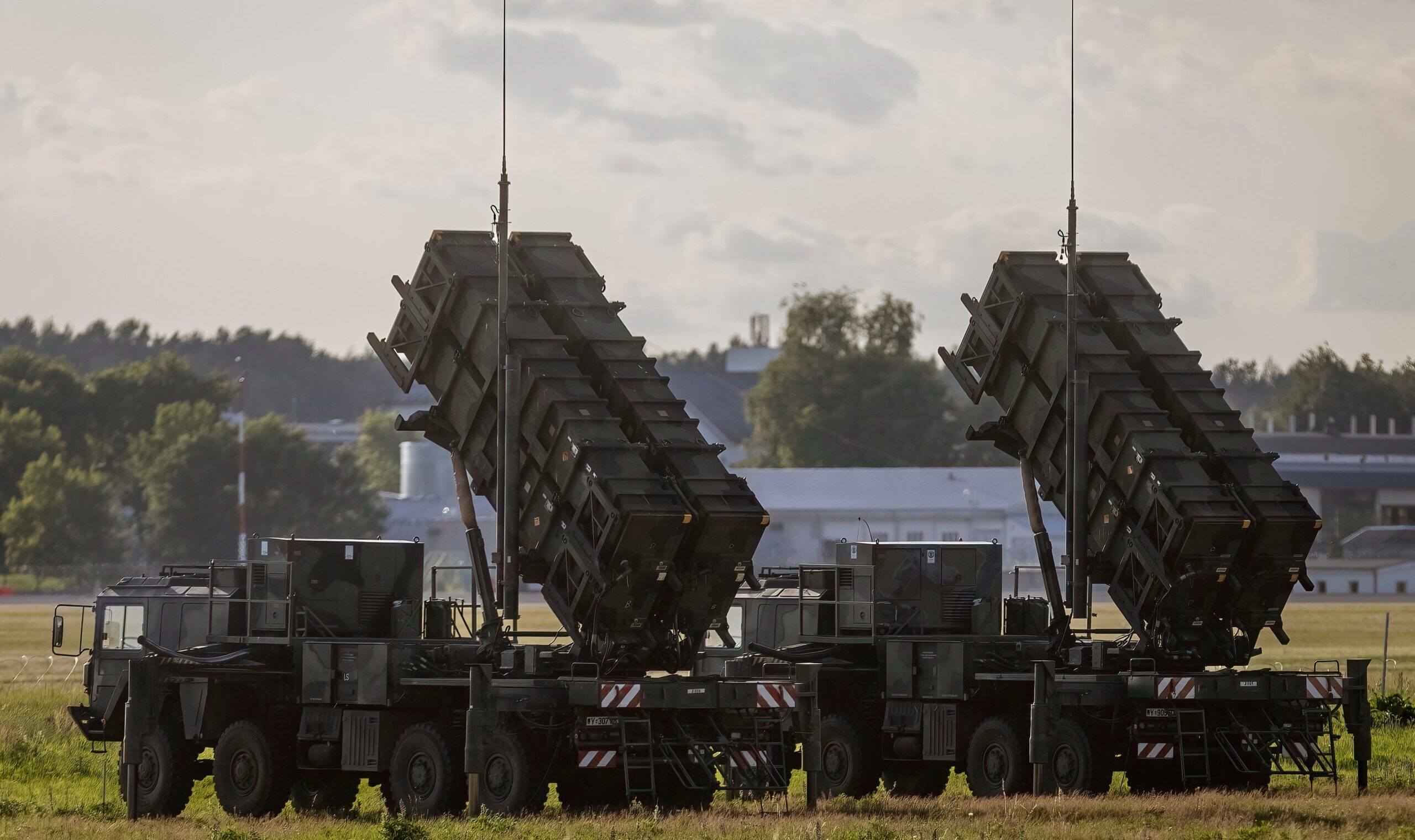
The Iran War State of the Union: Iran-Oman talks on Hormuz continued, as Tehran denied U.S. participation. Credit: Karolis Kavolelis Media reports offered new details on the Pentagon’s munitions stockpiles and Iranian and Omani negotiators discussed the future of Hormuz, as the Iran War entered its 159th day Wednesday. The U.S. military has used up nearly 80 percent of its THAAD interceptors and 50 percent of its Patriot interceptors, CNN reported Tuesday, citing anonymous sources familiar with the Pentagon’s inventory. One of CNN’s sources also claimed that the military had fired “virtually all” of its Army Tactical Missile Systems (ATACMS) and Precision Strike Missiles (PrSMs). Oman and Iran have continued their talks over the future management of the Strait of Hormuz. Axios reported that those talks have also included the United States, and that all parties are “closing in on an interim agreement to reopen the Strait of Hormuz.” But Iran has maintained, as recently as Monday, that the U.S. is not involved in the negotiations. According to a report from Iranian broadcaster IRIB on Wednesday, one Iranian source said the Hormuz negotiations have “nothing to do with the United States.” Another news outlet quoted an Iranian official as saying Wednesday that “US interference and the threat of a military attack on Iran” are “the main reason for the delay in the agreement with Oman.” President Donald Trump told Fox News that the U.S. is having “very good discussions” with Tehran and that the Strait of Hormuz “is going to be open very soon.” The president also threatened to “hit [the Iranians] really hard” if “they back out again.” Iran’s President Masoud Pezeshkian wrote on X Sunday that the June 17 memorandum of understanding between the U.S. and Iran would become the “cornerstone” of future foreign relations and that Iran “must strive to make” the U.S. “abide by what it signed.” Subscribe Today Get daily emails in your inbox In the Red Sea, an Indian-flagged tanker reportedly carrying Saudi oil sank after being struck by ballistic missiles. The Houthis claimed responsibility for the attack. Kpler’s maritime tracker recorded eight crossings in the Strait of Hormuz on August 4, down from 10 on Sunday. Bab el-Mandeb traffic, meanwhile, rose from 25 to 34 vessels on Monday. The price of Brent Crude oil was below $80 per barrel on Wednesday. AAA reported the national average price of regular gas at $4.08 per gallon.
Iran War Day 159: New Reporting on the U.S. Munitions Shortage
Full Article
Original Source
Read the full article at Theamericanconservative →KhanList aggregates and links to publicly available news content. We do not host full articles from third-party sources. Always verify important information with original sources.