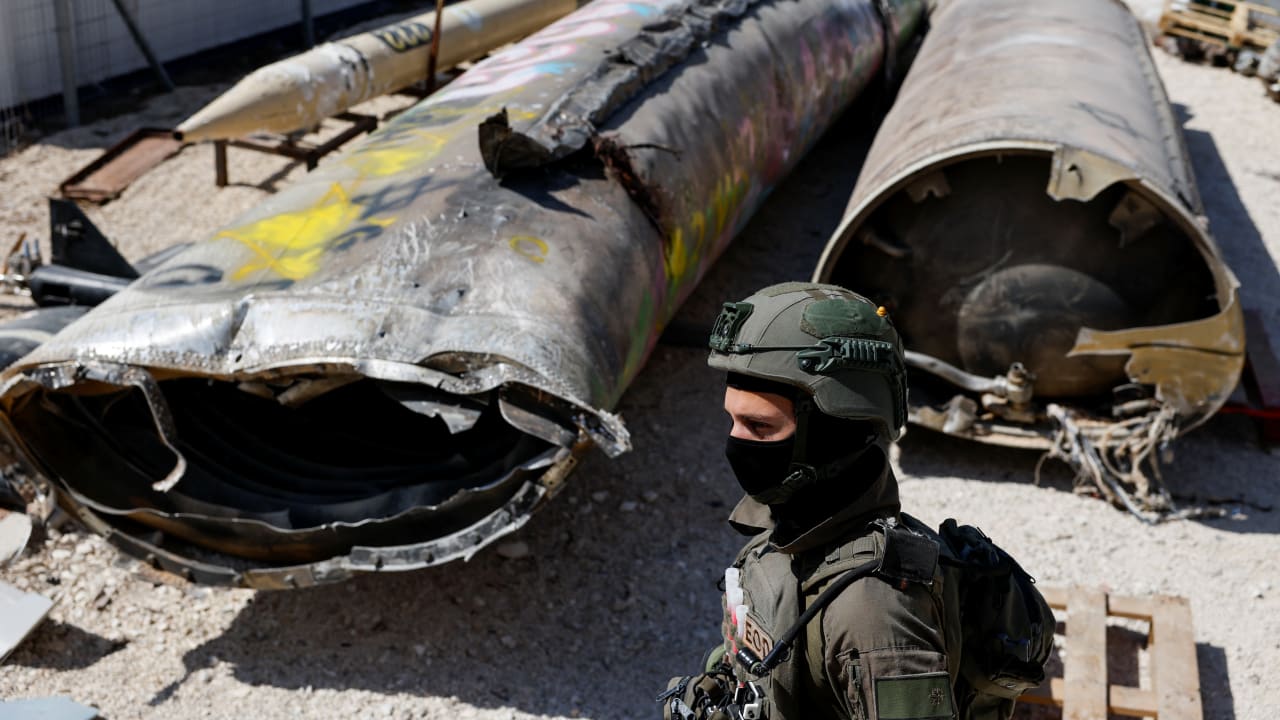
Jerusalem Post/Middle East/Iran NewsThe Kheibar Shekan missiles can be kept fueled and loaded quickly onto trucks for launching, making it easier to evade warplanes targeting launch sites. Follow us on GoogleThe remains of a Kheibar Shekan and a Emad ballistic missiles are displayed by Israel's military in Julis army base, days after an attack by Iran on Israel, in southern Israel, October 9, 2024.(photo credit: REUTERS/Amir Cohen)ByDANYA SAPERSTEINJULY 26, 2026 10:06Iran has been using Kheibar Shekan missiles, cheap, mobile, and accurate missiles, which have a range of at least 1,400 kilometers in their recent strikes against US assets across the Middle East, the Wall Street Journal cited US officials as saying on Saturday. The Kheibar Shekan missiles differ from older Iranian missiles that require prelaunch fueling, a lengthy process which the Kheibar Shekan can bypass by being kept fueled and are capable of being loaded quickly into trucks or other vehicles for launching, making it easier to evade US and Israeli warplanes seeking to knock out Iranian missile launch sites, military experts told WSJ. While the US and its allies have shot down most Kheibar Shekans throughout the war, one of the US officials told WSJ that some have gotten through. According to the officials, Iran has been using different flight paths, maneuvers, and speeds to confuse US defenses. Kheibar Shekans are also harder to destroy than other missiles, as they have higher maneuverability. Some variants have small engines in the nose section that carry the explosive warhead and detach during the final phase of flight. This makes it capable of adjusting direction as it approaches its target at about 10,000 kilometers per hour, WSJ wrote. Iran is combining the Kheibar Shekan launches with those of high-speed attack drones and less sophisticated missiles, targeting, among other assets, radars supporting air defenses across the region and housing areas for US troops at bases across the Middle East, US officials told WSJ. Anti-missile batteries fire interception missiles toward incoming ballistic missiles launched from Iran, as seen over Tel Aviv, during the war with Iran and ongoing missile fire toward Israel, March 15, 2026; illustrative. (credit: CHAIM GOLDBERG/FLASH90)Iran adapts to previous failed strikes, experts say“I think what it tells us is Iran is paying attention, and they’re learning, and they’re looking at ways that they can get at us,” WSJ cited Army Gen. Joseph Votel, who has led US Central Command, as saying. “This is a military that has a well-developed drone capability; it’s had a missile program, a rocket program for a long period of time. They’ve got a lot of expertise in this area,” he added.While Iran was believed to have 2,500 Keibar Shekan and other medium-range missiles before the war began, according to US and Israeli estimates, it may be assembling more from components in underground bases. However, the production facilities where the missile engines were built have been destroyed, Fabian Hinz, an independent missile expert, told WSJ. Iran likely studied previous launches in order to maximize their chances of their missiles reaching their targets, according to Hinz.'Every combat use gives you some sort of data'Iran “has seen what types of maneuvers are the most effective ones for overcoming missile defense. Every single combat use gives you some sort of data, so that’s very useful for the Iranians,” Hinz told WSJ. Iran hasn’t disclosed the cost of a Khebar Shekan, but analysts told WSJ that they are far cheaper than US and Israeli interceptors used to stop them, at a cost between $2 million and $15 million, depending on the system, according to WSJ. Israel said it shot most of the Kheibar Shekans fired at it by Iran, which claimed it targeted the office of Prime Minister Benjamin Netanyahu as well as another attack with the missiles last month.Follow us on Google
Iran improving cheaper, more accurate missiles that put target on entire Middle East - report
Full Article
Original Source
Read the full article at Jpost →KhanList aggregates and links to publicly available news content. We do not host full articles from third-party sources. Always verify important information with original sources.