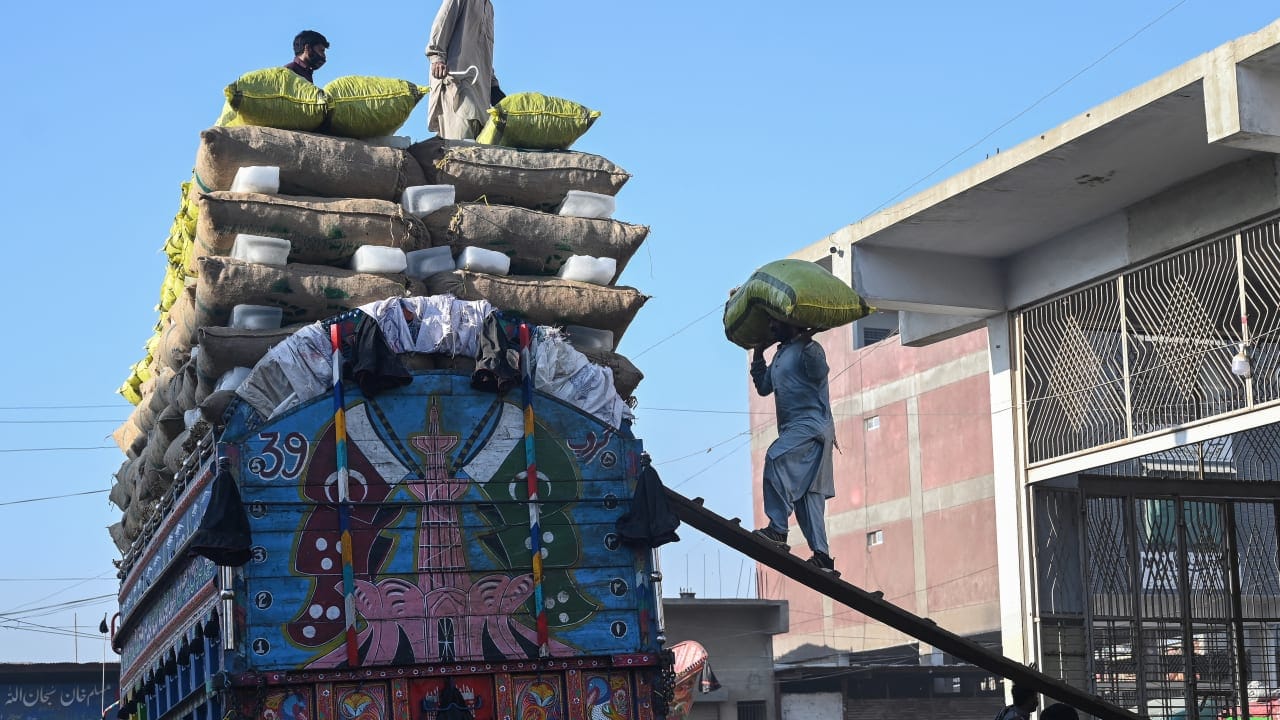
ByDANIELLE GREYMAN-KENNARDJULY 23, 2026 14:14The Islamic Republic’s plan to increase truck trade with Pakistan to 2,000 vehicles per day will “ease the squeeze” of the United States’ blockade of the Strait of Hormuz “without coming close to neutralizing it,” counterterrorism analyst Roger Macmillan told The Jerusalem Post on Thursday.Iranian Interior Minister Eskandar Momeni announced the trade advancement on Wednesday, telling the semi-official IRGC-affiliated Fars News Agency that the countries made an agreement that aims to “raise the current level of bilateral trade from $3 billion to at least $10 billion”“Achieving this requires improved infrastructure. At a minimum, 2,000 trucks should cross the border daily, whereas the current volume is only about 20% of that target," he told the site, adding that a new border crossing would be opened in the Kuhak region to facilitate the trade.Cross-border travel, infrastructure to be increased under new agreementThe countries would also improve infrastructure at the existing Rimdan border crossing, he added."Both sides also expressed readiness to increase agricultural trade alone to $5 billion. This will require improvements in infrastructure, such as building cold storage facilities on both sides of the border, and the necessary agreements have been reached. I believe this was one of our most successful visits," Momeni said.Iranian and Pakistani national flags are displayed along a street ahead of the arrival of Iran's President Masoud Pezeshkian in Islamabad, Pakistan, June 23, 2026. (credit: REUTERS/Waseem Khan)The agreement also means Iranian and Pakistani trucks will be permitted to operate across each other's territory.Though the increase in trade is a “genuine reprieve” from the economic fallout of the Strait of Hormuz, Macmillan said it offers Iran less breathing room than what ‘headlines might suggest.”“The overland corridors Islamabad has opened through Gwadar, Karachi and Port Qasim into Iran via Gabd and Taftan are moving real volume, and Tehran is now pushing for capacity of up to 2,000 trucks a day. That matters for clearing the backlog of stranded cargo and keeping consumer goods and third-country trade flowing,” he admitted, adding that it still “doesn't touch Iran's core problem, which is crude export revenue through Hormuz. This is a goods corridor, not an oil corridor, so it eases the squeeze without coming close to neutralising it.”Washington's silence on expansion of TradeWhat is of greater interest, Macmillan said, is “Washington’s silence” on the expanded trade.“Under normal sanctions logic, the US would be expected to lean hard on Pakistan for facilitating this kind of trade with Iran. Instead, there's been no formal objection, and Trump's only comment was that he ‘knows everything about it,’ he explained.“That restraint isn't an accident. Pakistan is simultaneously acting as the principal broker of the US-Iran ceasefire talks, including the Bürgenstock meeting, and Washington needs Islamabad's credibility there more than it needs to punish a road corridor. Pakistan has effectively bought itself room to hedge.”Pakistani diplomatic sources told The National’s Sulaiman Hakemy in May that Islamabad had calculated in advance that its relationship with the Trump administration and its role as a mediator would dissuade Washington from imposing sanctions on Pakistan.Hakemy noted that the Chinese investment in Gwadar had faced significant criticism for years, as the corridor's cargo activity has failed to justify its costs. However, the crossing is located very close to Iran’s Chabahar Port. Under the third-country rule of the Statutory Regulatory Order, goods can arrive in Gwadar from any country and then enter Iran by road.Though Pakistan is obligated under the current sanctions policies in place to ensure that goods entering Iran are not restricted, nor destined for sanctioned individuals, a huge task. Sources told The National journalist that they were not anticipating any consequences against the country, especially given their role as a mediator.Iran strengthening ties with IraqOutside of its trade agreement with Pakistan, Iraqi Prime Minister Ali Faleh Al-Zaidi confirmed that officials from Baghdad would be visiting Iran on Thursday to “discuss files of common interest, bilateral cooperation, and consultation on regional issues.”“Today, we are heading to Tehran on an official visit and will meet with high-ranking officials of the Islamic Republic of Iran to launch joint economic cooperation dossiers and bilateral collaboration, as well as discuss regional issues and efforts to promote security and stability in the region,” he confirmed.“Iraq and Iran are bound by historical, cultural, geographical, and mutual interests, which necessitates continued work with a spirit of dialogue, cooperation, and mutual respect, in a manner that fosters sustained development and prosperity for the people of both countries and contributes to supporting security and stability at both regional and international levels.”According to the Iraqi Shefaq news, trade between Iran and Iraq approached $12 billion in 2024, and Iraq was ranked second among Iran’s top export destinations in 2026, importing $7.917 billion in goods. Follow us on Google
Iran expands trade with Pakistan as experts claim it will ‘ease the squeeze’ of Hormuz blockade
Full Article
Original Source
Read the full article at Jpost →KhanList aggregates and links to publicly available news content. We do not host full articles from third-party sources. Always verify important information with original sources.