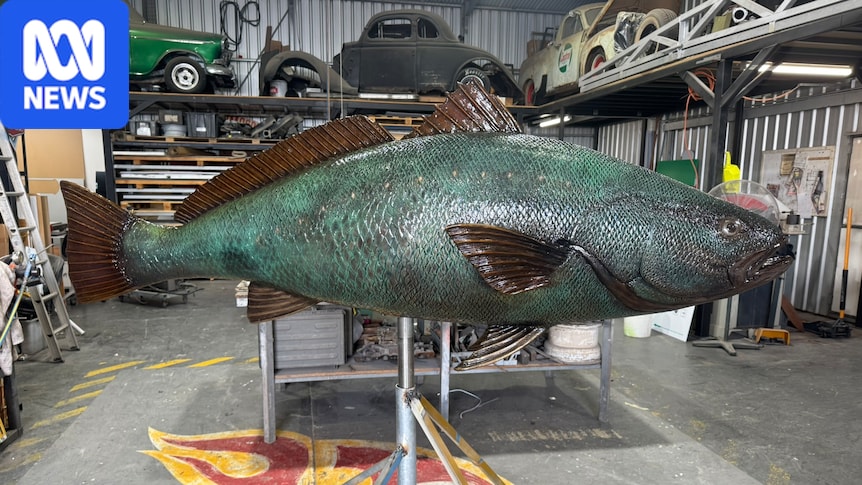
Visitation to the remote Indigenous community of Yalata on the far-west coast of South Australia has been limited since it was established in 1952.The community is an Indigenous Protected Area owned and managed by the Yalata Anangu Aboriginal Corporation."We still live in a cultured life, a traditional lifestyle," said Uncle Fabian Peel, who has lived in Yalata since he was 13 years old. The community consists largely of Anangu traditional owners who were forcibly relocated from their ancestral homelands in the lead-up to British nuclear bomb testing in Maralinga in the 1950s.A sign in Yalata, an Aboriginal community located 100km west of Ceduna on the edge of the Nullarbor Plain. (ABC News: Stephen Opie)Increasingly, the coastline around Yalata was being used by people, including international tourists, trying to fish off the Great Australian Bight coastline, Uncle Peel said"We hid our fishing spot away from the public for years. But people keep coming here," he said."We turned around and said, 'Why don't we open it to the public? We need money.'"Fabian Peel (left) was at the unveiling of the Mighty Mulloway sculpture. (Supplied: Michael Roxas)Anglers fishing near Yalata have been known to catch monster mulloway, gummy shark, Australian salmon, and snapper.While visitation to Yalata is still restricted to the public – and alcohol strictly prohibited – the community has decided to promote its camping and fishing spots through two new public artworks: a Yalata Roadhouse sign and the bronze Mighty Mulloway.The two-metre, 200-kilogram bronze mulloway sculpture was purchased by Yalata Anangu Community and unveiled this month at the Yalata Roadhouse, which is also owned and managed by the community.Two public artworks were purchased by Yalata Anangu Aboriginal Corporation, including a tourist road sign. (Supplied: Michael Roxas)"We came up with the idea of putting a statue of the Mulloway … and opened up fishing to the public," said Uncle Peel. He hoped the Mighty Mulloway, also known as the "silver ghost" fish, would entice people to apply to visit Yalata and learn about the diversity of the lands and the people who live there."I want to see people from out of community get involved with us but the main thing is I want to see our young ones get employment through the program."He said visitation to Yalata would result in long-term, stable employment in retail and rangers to protect the campgrounds.David White says the Yalata community had not ventured into tourism before. (ABC News: Stephen Opie)"The community is closed, but not 100 per cent closed," explained David White, Yalata Anangu Community chief executive."We have extensive camping and fishing along the coast that's available for visitors with permits."While the plunge into tourism has been in the pipeline for almost a decade, Mr White said the sculpture was Yalata's "first real step"."They want to be a true part of the Eyre Peninsula and share their culture and beliefs to be part of the Far West Coast region," he said."Kimba has the Big Galah, Nullarbor Roadhouse has the Big Whale, and now we've got our bronzed mulloway, the Mighty Mulloway."Reckoning with historyYalata's history centres on the displacement of Aboriginal people from their ancestral homelands due to British nuclear tests at Maralinga in the 1950s."They're displaced people," Mr White said."But they're starting to really put their roots into the ground now."Community gathered at Yalata Roadhouse when the two public artworks were installed. (Supplied: Michael Roxas)Uncle Peel said Yalata had changed a lot in recent years."Twenty years ago we didn't have any houses here. Some of us still lived out in the bush in humpies," he said."We've been put in the dark and had to rely on government funding for all the years. We want to make something for ourselves to say that it belongs to us."Mr White said it had been a massive move for the community, but people were finally making Yalata their home. A spokesperson for the South Australian Tourism Commission said statues and public art were great ways to make travellers pull over and spend time and money in towns "that they might otherwise drive straight past".The 2-metre-long stainless steel mulloway was made by Port Lincoln artist Ken Martin. (Supplied)Uncle Peel hoped Yalata's step into tourism would create more opportunities for its young people while helping the town retain its agency."It's the young ones that are going to run the community soon and looking after us," he said."We want to grow. But we want to control that."
Indigenous-owned town hopes giant fish statue will attract tourists
Full Article
Original Source
Read the full article at Abc →KhanList aggregates and links to publicly available news content. We do not host full articles from third-party sources. Always verify important information with original sources.