
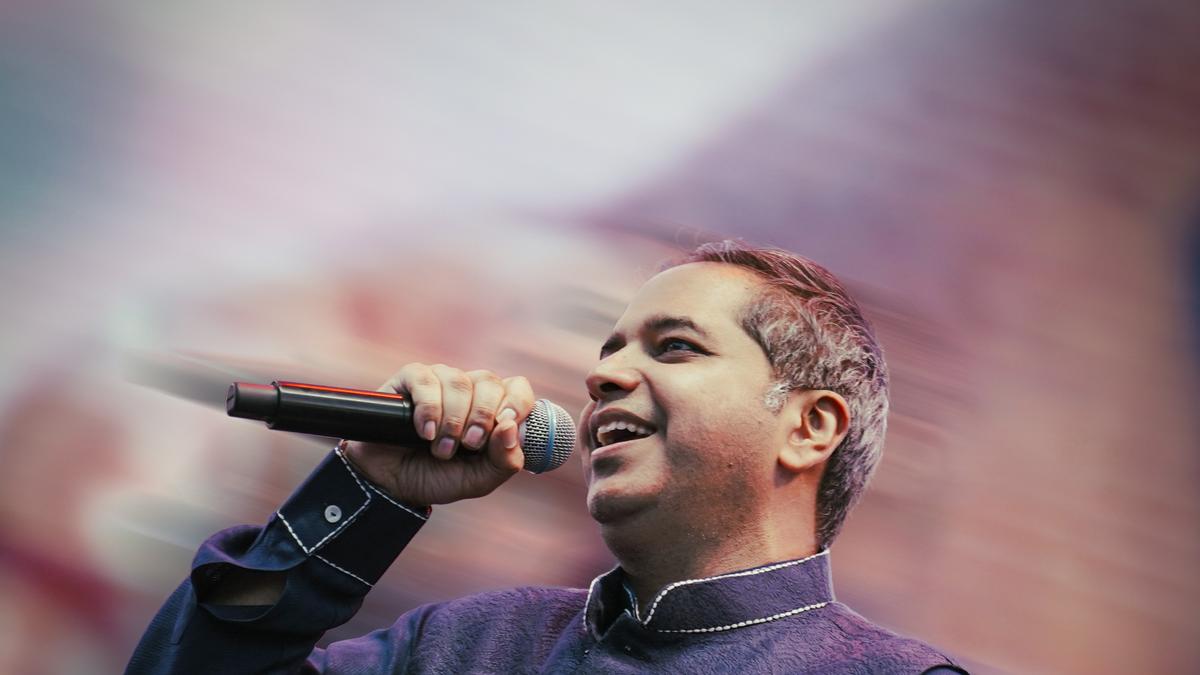
What happens when the rhythms of Indian konnakol, sitar and tabla meet Latin percussion, Venezuelan horns and Spanish-language pop? For musician and producer Siddhant Bhatia, it is an extension of a journey that has taken him from Indian classical and global collaborations to the Grammy-nominated Sounds of Kumbha. As co-founder of IndiLat, he now brings together musicians from India, Venezuela and Chile through ‘Muévete’, released by Universal Music India. Beginning with Muladhara, the root chakra, and weaving a Sanskrit invocation to Ganesha into a Spanish-language track, the song reflects Siddhant’s curiosity about how music can bring distinct cultural and spiritual traditions speak to one another.In a conversation, the musician talks about the collaboration and how ‘Muévete’ came to be. How did the collaboration come about? It was really serendipitous. We met around the Grammys, became friends, and somewhere between India, Venezuela and Chile, realised that we all wanted to do something different. My experience with ‘Sounds of Kumbh’, where more than 50 collaborators came together for a single production, had already shown me how powerful music can be when people from different cultures create together. That experience laid the foundation for IndiLat. Raghav Mehta and I are from India, Raniero Palm from Venezuela and Cristóbal ‘Tibo’ Gajardo from Chile — four artiste-producers from three countries, building a new sound together. There was also a deeper curiosity. Our friends from Latin America were fascinated by India and wanted to experience its spirituality. That made us to ask: instead of simply combining Indian and Latin sounds, could we explore spirituality through a conversation between these cultures? India and South America have rich civilisational histories, each with their distinct relationships to Nature, ritual, mysticism and consciousness. The chakras offered us a framework for exploring these ideas through music, beginning with the root chakra. Another important aspect is that we are also making music at a time when AI can generate enormous content. ‘Muévete’ is original music, created and performed by people. We are not against technology, but we don’t want to forget what happens when humans create together. For us, IndiLat is about a genuine exchange, where every artiste is heard and every tradition is respected. What did the Grammy-winning and Grammy-nominated musicians bring to the table? It was never really about Grammy winners or nominees. Awards are a wonderful recognition, but what mattered was the musicianship and what each person brought into the room — instinct, emotion, experience, listening and generosity. That is what happened with ‘Muévete’. Nirvaan brought the initial compositional idea, which we developed together. Akapellah brought his identity as a rapper, along with his own humanity and spirituality. Maleh brought warmth, melody and soul. Raghav, Tibo, Raniero and I shaped the broader musical landscape alongside many other musicians. Nobody came into the song just to showcase their abilities. The aim was to create a cohesive piece of music rather than have each artiste announce where they came from. How did you incorporate konnakol, tabla and sitar into a Spanish-language pop song? It came naturally because these sounds are already part of my music. I perform with my brothers — Adnan Khan and Zoheb — who are Indian musicians, so sitar, tabla and Indian rhythm are not sounds I have to artificially introduce. And rhythm is a language in itself. Konnakol and tabla are sophisticated rhythmic traditions, while Latin music has tremendous rhythmic vitality. Once you stop viewing instruments through nationality, you begin to hear the connection between the musical cultures differently. The challenge was not how to put Indian instruments into a Spanish-language song, but how to make them feel integral to it. We never wanted a moment when the listener thinks, “Now the Indian section has arrived.” The sitar should not simply announce India, nor should the tabla become an exotic layer. Why did you choose to include a Sanskrit invocation to Ganesha? ‘Muévete’ is not simply a song about dancing. Its spiritual philosophy begins with Muladhara, the root chakra. Within the chakra tradition, Muladhara represents grounding, stability, belonging and our connection to life. It is also the starting point of the Kundalini journey. Lord Ganesha is traditionally associated with Muladhara and revered as the remover of obstacles. What fascinates me about the deity is the contrast in his energy. The elephant form convyes tremendous grounding and weight, yet there is also playfulness and the energy to remove what obstructs us. The Sanskrit invocation, then, was not added simply to create an ‘Indian spiritual moment’ within a Latin-pop song. It is central to the composition’s philosophy. The sound of Muladhara is Lam, which starts the invocation to Ganesha. The idea is simple: before movement, find your ground. Before beginning a journey, acknowledge and overcome what stands in your way. Is IndiLat the beginning of a larger India–Latin America musical collaboration? Yes. ‘Muévete’ was never conceived as a one-off single. It is the first of many projects we want to create. We want to bring more artistes from different parts of the world into this musical universe and continue exploring the relationship between India and Latin America through music. Perhaps the most interesting part is that I don’t even speak Spanish, and many of our collaborators don’t speak Hindi or understand Sanskrit. Yet, we can communicate through music. When spoken language falls away, you begin to listen differently. The chakra journey provides a spiritual canvas for beginning this conversation, but IndiLat can travel much further. We want to explore cultures through their ideas, philosophies, rhythms, musicians and people, while continuing to create original music.
Indian and Latin American sounds find a meeting point in ‘Muévete’
Full Article
Original Source
Read the full article at Thehindu →KhanList aggregates and links to publicly available news content. We do not host full articles from third-party sources. Always verify important information with original sources.