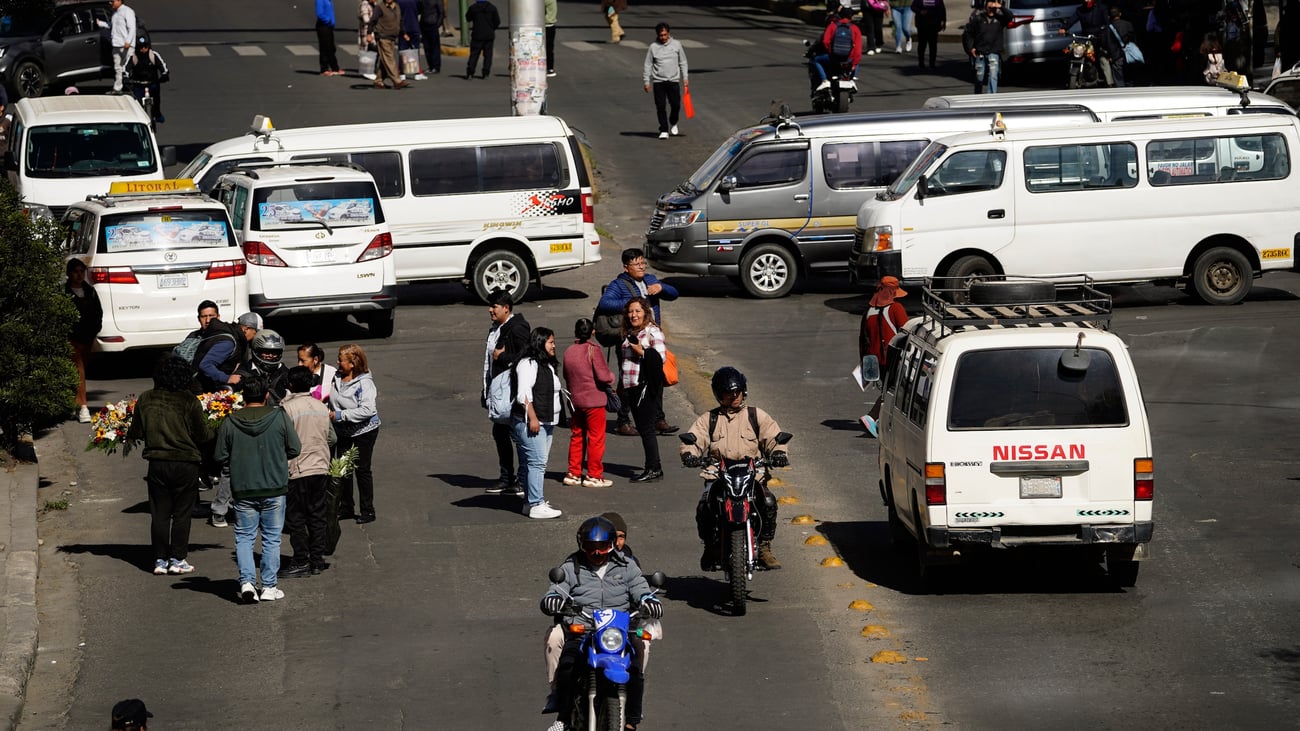
Bolivian President Rodrigo Paz declared a state of emergency on June 20 after nearly two months of opposition road blockades over his handling of Bolivia's crisis.The International Monetary Fund and Bolivia reached a staff-level agreement for a new $1.9 billion bailout, the Fund said Wednesday, as the Latin American country struggles with its worst economic crisis in four decades.The program will run over three years and is subject to the implementation of certain prior actions and the approval of the Fund’s board, the IMF said in a statement.“The IMF-supported program is expected to help catalyze additional financing from the World Bank, the Inter-American Development Bank, and other development partners, contributing to a broader financing package of over US$5 billion over the program period,” said IMF official Joana Pereira.Bolivian President Rodrigo Paz declared a state of emergency on June 20 after nearly two months of opposition road blockades over his handling of Bolivia’s crisis, which has seen double-digit inflation, a contracting economy and a rapidly devaluing currency.The blockades, which strangled supplies of food, medicine and fuel to the administrative capital La Paz and other cities, have since been taken down by security forces.The Bolivian currency’s official value has depreciated by more than 60 percent against the US dollar since it lifted a 15-year peg last month.Bolivia’s dollar reserves have been severely depleted by a collapse in its gas production over the past decade.The center-right Paz last year took office on a promise to revive the economy after two decades of socialist rule.His cost-cutting program has however run into stiff opposition from trade unions, farmers and Indigenous organizations loyal to Indigenous ex-president Evo Morales.Bolivia has had a number of arrangements with the IMF and has $7.2 million in interest repayments to the multilateral lender due this year.The IMF’s Pereira noted that Bolivia was struggling with persistent fiscal deficits, declining hydrocarbon production, dwindling reserves and other serious economic issues.“These imbalances have constrained economic activity, heightened external vulnerabilities, and eroded real incomes,” she said.The new program will focus on restoring fiscal sustainability, strengthening social safety nets, and modernizing the exchange rate regime, the IMF statement said.It will also aim to build resilience in the financial sector and enhance competitiveness and governance, the Fund said.__© Agence France-PresseSubscribe to our free newslettersOur weekly newsletter Closing Arguments offers the latest about ongoing trials, major litigation and rulings in courthouses around the U.S. and the world, while the monthly Under the Lights dishes the legal dirt from Hollywood, sports, Big Tech and the arts.Additional Reads
IMF reaches staff-level agreement with crisis-hit Bolivia on $1.9B bailout
Full Article
Original Source
Read the full article at Courthousenews →KhanList aggregates and links to publicly available news content. We do not host full articles from third-party sources. Always verify important information with original sources.