
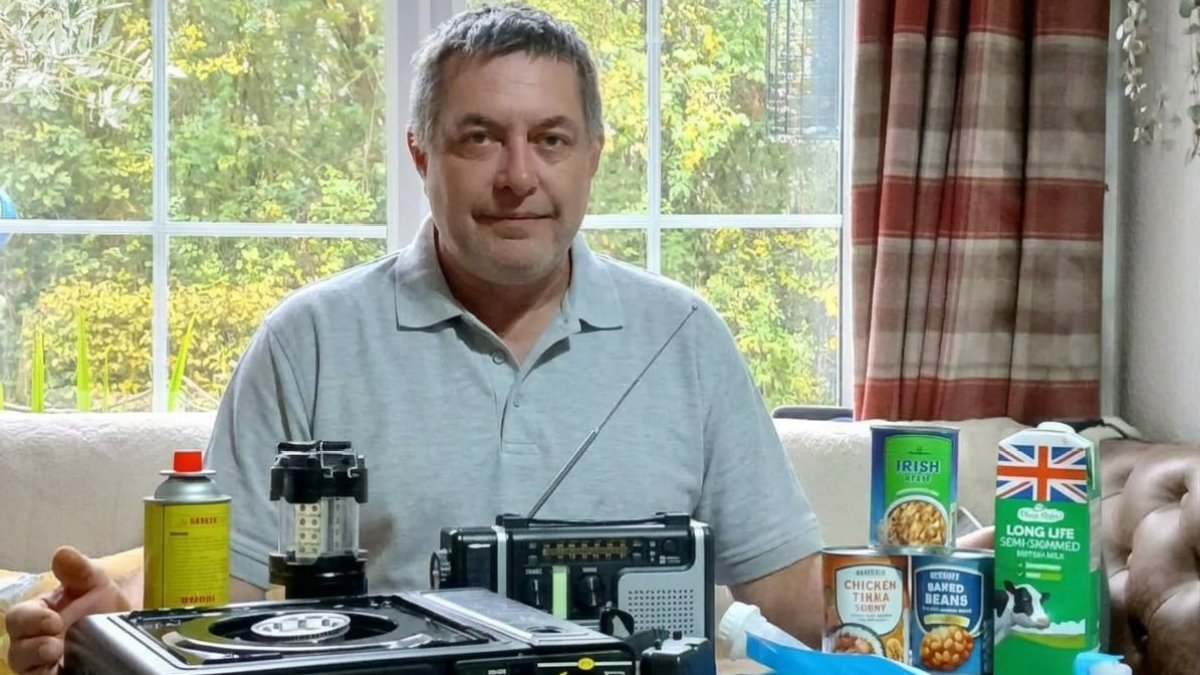
Whether you’ve stocked up on canned food, or gone further with solar panels and rainwater harvesting, more and more of us are following the government’s advice to get prepared for national emergencies. For those who are less confident about self-sufficiency, a growing range of “prepper” kits are becoming available that promise to include everything you need in an emergency. Some experts say buying branded kits can be a costly mistake, and most households are far better served by good, ordinary items they’ll actually use, and sometimes already own. Shorts Darren Rhodes, the founder of UK Prepper Hub, has over 40 years of practical experience in emergency planning, risk management and household preparedness. He says a basic emergency kit is no different from having insurance: you hope you never need it, but you’ll be grateful if you do. Rhodes, who prefers realistic, non-alarmist preparedness strategies for everyday households, has conducted over 100 honest kit reviews – here is a selection of essential items he recommends: FosPower compact AM/FM emergency radio £29.99, Amazon During a power cut, Rhodes says a dedicated radio is essential for knowing what’s going on outside, especially if phone signal is poor. He owns one of these, which has four independent power sources (USB, battery, wind-up, and solar), a built-in torch, an SOS alarm, and a small USB power bank output for emergency phone charging. Aquatabs water purification tablets 8.5mg x 100, £10.49, Amazon When added to water, these release a measured dose of chlorine that effectively neutralises harmful microorganisms. They’ve been used for over 20 years in emergency situations in households without access to safe drinking water, and they’re fast-acting, with water drinkable within 30 minutes. The World Health Organisation recommends a minimum of 2.5-3 litres of drinking water per person per day for survival. Ten litres per person per day will make you more comfortable by also providing for basic cooking and hygiene needs. Unopened, commercially bottled water is the safest and most reliable source of water in an emergency because it comes in sealed, tamper-evident containers that prevent bacterial growth. If you’re unsure about the purity of drinking water in an emergency situation, Rhodes says: “Many people think a Brita-style jug filter makes water safe to drink (it doesn’t, it only improves the taste), when, in fact, you need a water purification tablet. FosPower compact AM/FM emergency radio is £29.99 on Amazon; Aquatabs water purification tablets are £10.49 on Amazon; Green Haven camping stove starts at £18.99 from B&Q Green Haven camping stove From £18.99, B&Q The government’s emergency kit list focuses on food that needs no cooking, which, as Rhodes says, works for most people for an evening. By day two of cold beans, a portable gas stove that boils a kettle and heats a pan is what makes a power breakdown bearable rather than miserable. Rhodes says: “We live in an area with regular power cuts, so we’ve each got a portable gas stove in the kitchen cupboard. It’s the cheapest bit of kit in our power cut setup, and it’s the one that gets used every single time, because the first thing anyone wants when the lights go out is a cup of tea.” This gas stove boils the kettle and cooks a proper meal on top of your hob when the power goes, and you can buy them with eight cartridges included, too. When it comes to food, Rhodes says, “stock what you eat and eat what you stock. A mistake some people make is buying big ‘prepper’ buckets of freeze-dried food that nobody in the house has ever tasted, which is no use at all if you have picky eaters. Buy food you already eat, and a simple way to heat it without mains power. A supermarket covers almost everything you will need.” When it comes to canned food, low-acid foods (meats, vegetables, beans) last two to five years, while high-acid items (tomatoes, citrus fruits) last 12 to 18 months. Rhodes advises to keep cans in a cool, dark, dry space (ideally 10–21°C) and store them off concrete floors to prevent rust. Practice Fifo (First In, First Out) by eating older cans regularly and replacing them twice a year. Throw away any cans that are bulging, leaking, severely rusted, or dented along the seams. Really Useful boxes Various sizes from £20, Argos If you want your prepping supplies to stay clean and dry, Rhodes recommends spending a little more on strong boxes with proper clip lids, as “cheap boxes that crack or have flimsy lids will often leave supplies exposed to damp and pests”. Rhodes says Really Useful boxes cost more – sometimes three times as much as budget alternatives. But they’re actually waterproof, they seal properly, and they’re engineered well enough to justify the extra cost when you’re protecting hundreds of pounds worth of emergency supplies. INIU 20,000mAh power bank is £27.53 on Amazon; Really Useful boxes start at £20 from Argos; Renogy 100W portable solar panel is £99.99 Renogy 100W portable solar panel £99.99, uk.renogy.com What do you do when the power bank runs out? A portable solar panel converts sunlight into electricity to charge 12V batteries and small-to-medium portable power stations. Rhodes has this one that he uses daily. It’s not pocket-sized, but it’s built for travel, whether camping or moving it out to the garden when the power cuts out. INIU 20,000mAh power bank £27.53, Amazon There’s a vast array of power banks available, but Rhodes says: “Don’t buy a bigger power station than you need. For most homes, a decent power bank that charges everything, not just phones, is the place to start.” In an emergency, we often look for our phone first, and it will inevitably be almost out of battery. This small power bank provides around four full charges for a modern smartphone, or two full charges for a tablet, and it also works for low-current devices like earbuds, fitness trackers, and smartwatches. LifeStraw Go BPA Free Water Bottle £40, Amazon A refillable water filter bottle that cleans water as you drink it, with no power, batteries or tablets needed. The filtration works in two stages. The first stage is an activated carbon filter that reduces chlorine, odours, and organic chemical matter. The second stage is a membrane microfilter that removes 99.99 per cent of bacteria and parasites. LifeStraw Go BPA free water bottle is £40 on Amazon; Lepro rechargeable lantern is £29.99 on Robert Dyas; Energizer vision HD+ 315 lumen head torch is £11 on Amazon; Eurohike Nova 25L daysack is £10 from Millets Lepro rechargeable lantern £29.99, Robert Dyas When the power goes off, many of us reach for candles, but as Rhodes says, “these are a fire risk and give off poor light. A cheap LED lantern and a head torch are safer and far more useful in a power cut.” Rhodes rates an LED lantern for lighting a room, as you don’t need an overly bright lantern for indoors. You charge it by USB while the power is on, and when the power has been off long enough that there’s nothing left to charge it from, it runs on ordinary AA batteries instead. Energizer Vision HD+ 315 lumen head torch Around £11, Amazon We all think a torch is the best source of light in a power cut, but as Rhodes says, “last winter, during a power cut I found myself rummaging through a kitchen drawer with my phone torch balanced between my chin and shoulder. Both hands were occupied and the beam kept moving every time I turned my head. What I needed was a head torch. It’s hands-free light you don’t have to think about.” This one runs on AAA batteries and is ideal for navigating a dark house or cooking during a power cut. Eurohike Nova 25L daysack £10, Millets A grab bag is the one essential every household should have. It sits ready by the door for when you have to leave home at short notice because of a fire, flood, storm, or evacuation, and there’s no time to go round the house collecting things. The grab bag holds copies of important documents, spare keys, cash, basic toiletries, chargers, clothes and a small supply of food. Rhodes says to look out for a cheap, light, comfortable daysack. A 20–30 litre rucksack is the right size, roughly the size of a standard school bag. “It doesn’t need to be an expensive ‘tactical’ rucksack, because it’s what goes inside that matters.” FireAngel combined smoke and carbon monoxide alarm is £38.98 from Screwfix; General Medi first aid kit is £24.95 on Amazon; Silentnight heat genie self-heating giant blanket is £40 in Boots FireAngel combined smoke and carbon monoxide alarm £38.98, ScrewfixIf you’re cooking or heating with gas in a power cut, a carbon monoxide alarm isn’t optional. A combined smoke and carbon monoxide alarm that doesn’t need to be connected to the mains can be a life saver during a power cut. This one comes with a 10-year sealed battery. General Medi first aid kit £24.95 Amazon Every home should have a first aid kit. Rhodes suggests this 309-piece kit because it includes two items you rarely see at this price: an instant cold compress for sprains, strains, and swelling, and an emergency blanket that retains body heat, useful for shock treatment and any situation where someone needs to stay warm. Silentnight heat genie self-heating giant blanket £40, Boots A self-heating blanket is a big, reversible fleece blanket with a foil layer built into the middle, designed to keep you warm without a plug, battery, or boiler. It doesn’t create heat – instead, it traps the heat your body produces to help keep you warm. Rhodes owns one, and his wife regularly uses it. too.
I’m a prepper – the low-cost power banks, head torches and radios I recommend
Full Article
Original Source
Read the full article at Inews →KhanList aggregates and links to publicly available news content. We do not host full articles from third-party sources. Always verify important information with original sources.