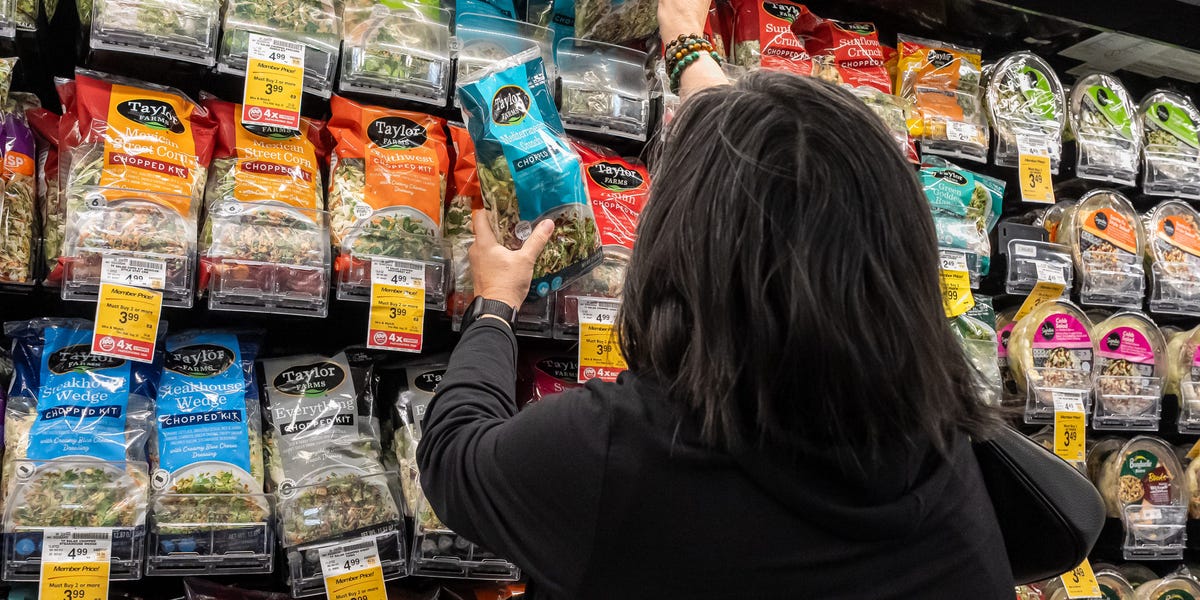
I work at a food bank. We're getting more produce because of the cyclospora outbreak. One Seattle food bank has seen an increase in produce offerings amid the cyclospora outbreak. Bloomberg/Getty Images This as-told-to essay is based on a conversation with Robbin Peterson, the development director at the West Seattle Food Bank in Seattle. Peterson spoke with Business Insider on Tuesday, two days after the US Food and Drug Administration said a test result tying iceberg lettuce from Taylor Farms to the cyclospora outbreak was a "false positive." Taylor Farms did not respond to a request for comment on this essay.A big part of what we do here is "grocery rescue."Grocery stores and food wholesalers often offer us food that they cannot or will not sell. Often, that's because they've purchased too much. Other times, it's because a grocer has really strict cosmetic standards: One grocer I'm aware of here will reject an entire load of zucchini if one doesn't match their size and appearance expectations, even if it's perfectly good, wholesome produce.In the last day or so, we've started seeing additional salad greens come in. We assume retailers are having a harder time selling many of these products due to consumer fear.Much of it is prepared greens that aren't the focus of investigations over the cyclospora outbreak — salads prepacked in bowls or bags, for instance.We've even been offered a truckload of cut watermelon from Taylor Farms. Now, people don't want anything from that brand, no matter what it is. The West Seattle Food Bank has seen an uptick in contributions of fresh salad mixes during the cyclospora outbreak, Peterson said. West Seattle Food Bank Contamination scares make shoppers skepticalWe purchase the majority of the produce we distribute, often at a discount. This isn't typical for most neighborhood food banks, but we believe providing the most expensive items on a grocery list, like fresh meat and produce, helps stretch the family's budget and SNAP benefits farther. We're affected directly by customers avoiding fresh produce. Many food banks, like ours, don't just hand people a box of food. We run what we call a "modified markets" — a space where food is laid out like a store, and people can come in and pick what they want.As we start distributing this influx of produce, there might be people coming to shop at our stores who don't feel comfortable buying leafy greens. That's fine, since we have a process for composting produce that we can't distribute before its sell-by date.We don't take products that are part of any recall or otherwise unfit for consumption. We want to make sure we're not distributing anything that doesn't live up to our quality standards.A lot of our partners in retail and wholesale help us acquire food that would otherwise go to waste. But worries about contamination, like the one we see now, make it harder for us to function.Think about how many lettuce recalls we've had over the last decade. People have become a little bit more fearful.Have a tip? Contact this reporter at abitter@businessinsider.com or via encrypted messaging app Signal at 808-854-4501. Use a personal email address, a nonwork WiFi network, and a nonwork device; here's our guide to sharing information securely. Read next Alex Bitter is a senior retail reporter covering the gig economy, food, and retail. His work focuses major gig delivery and ride-hailing apps, including Uber, Lyft, DoorDash, Instacart, and Walmart's Spark. He is interested in everything from what it's like to work on the apps to the companies' business strategies.Some of his recent stories feature gig workers who have been deactivated on the apps, DoorDash hiring traditional employees to make deliveries, gig workers' use of bots, and gig work expanding into new professions, such as nursing.Alex has also written about Aldi's US expansion, Starbucks' turnaround efforts, and the fallout from Kraft-Heinz's budget cutting. Convenience store chain Sheetz ended its "smile policy" after his reporting.Before joining Insider in September 2020, he wrote about consumer and retail companies for S&P Global Market Intelligence. He's a graduate of the University of Hawai'i at Mānoa and grew up on the Big Island.Alex lives in the Washington, DC, area, where you can find him studying ancient coins or searching for Civil War artifacts with his metal detector in his free time.Got a tip? Reach out at abitter@businessinsider.com or via encrypted messaging app Signal at +1 (808) 854-4501. Food Grocery Health More as told to
I work at a food bank. We're getting more produce because of the cyclospora outbreak.
Full Article
Original Source
Read the full article at Businessinsider →KhanList aggregates and links to publicly available news content. We do not host full articles from third-party sources. Always verify important information with original sources.