
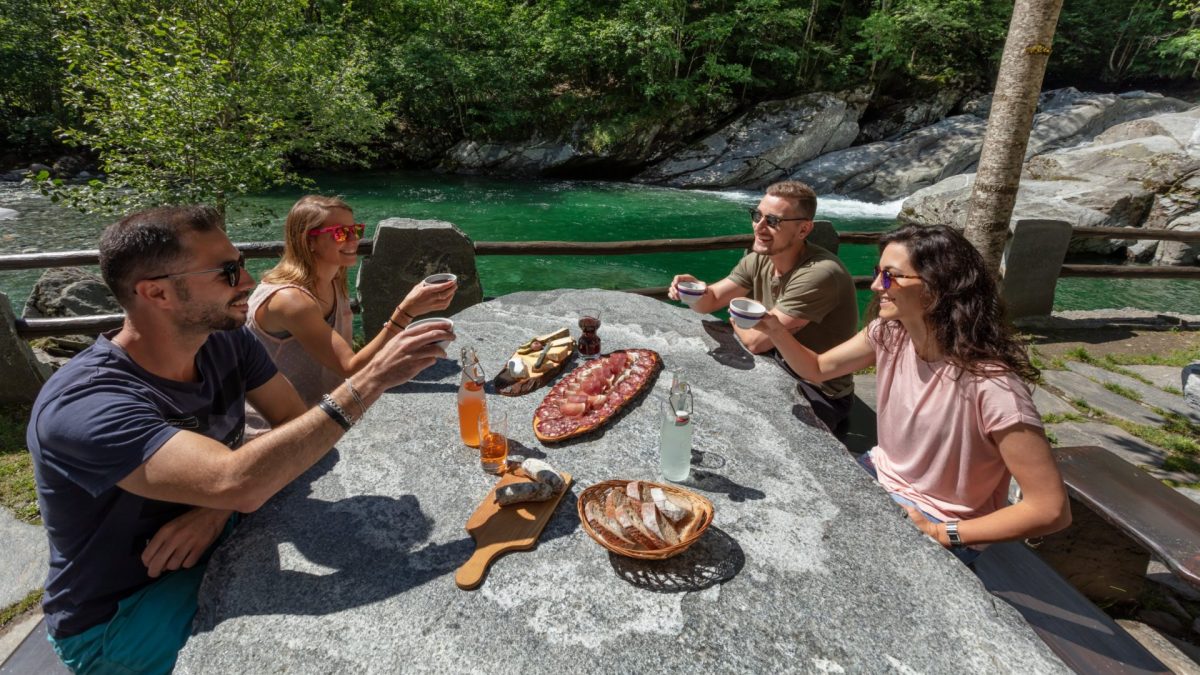
Shaded from the autumn sun by lofty ash trees, water tumbles over the rocks, its rush interrupted only by church bells and the clonk of a plate being placed on the stone table. “It’s grandmother’s secret recipe,” says the smiling waitress, before dashing to serve a horde of hungry hikers. The dish is brasato, a slow-cooked stew. The beef falls apart at the touch of my fork, while the sauce is rich, with fruity notes of red wine. Everything here is served with sweet, nutty polenta – ground corn stirred over a wood fire – which soaks up the brasato like a sponge. Most people picture raclette and fondue when they think of Swiss food, but Ticino, Switzerland’s southernmost canton, blends Alpine traditions with northern Italian flavours. Shorts I am dining at Grotto Pozzasc, a restaurant built against a mountainside cave. For centuries, caves – or grotti – like this one were used to store cheeses, cured meats and wine. The caverns’ naturally cool air made them ideal larders, and some farmers would add doors and build rooms around them. “Grotti were a precursor to the fridge,” guide Christian Wilhelm tells me. But in the second half of the 20th century, when refrigerators became more common, the caves’ purpose began to evolve. Some owners added tables and benches outside and began selling food and wine to passers-by, establishing their own rustic taverns. Today, grotti are popular for their authentic regional food and atmospheric outdoor setting, often beside rivers or in forested valleys. Grotto Pozzasc in southern Switzerland (Photo: Remy Steinegger/Switzerland Tourism, 20 At Museo di Valmaggia, in the village of Cevio, a self-guided trail leads visitors past more than 60 grotti, offering a glimpse into their history. You can even book a picnic basket of local cheese and cured meats to enjoy at one of the stone tables. Christian and I climb the valley up a flight of rickety steps, stopping outside a small, windowless hobbit house of a building, constructed around boulders and a chestnut tree. “The most important thing you need is a rockslide with huge boulders,” he says. “It creates a natural airflow.” Inside the dark, damp cavern, metal hooks hang from the ceiling and empty shelves hint at a time when they were stacked with cheese. A cool draft comes from an air hole at the rear. “The temperature in the best grotti fluctuates by one degree celsius over the year,” Christian says. The courtyard of Grotto Raffael (Photo: Yvette Cook) We sit outside at a stone table. “Imagine during the summer”, Christian adds. “You have to finish the last of your food before the harvest, so you sit here with friends, drinking wine, eating sausages – it’s one step from opening a restaurant.” Which is exactly what happened across Ticino. On the outskirts of Ascona, Grotto Raffael is one of the oldest grotto restaurants, dating back 150 years. Here, communal tables sit beneath centuries-old plane trees strung with fairy lights and Swiss flags. Friends and family gather for a lively Friday night, wine glasses clinking to cries of “Salute” while children play on swings. A glass of merlot, costing just CHF4 (£3.60), is perfect with the foraged mushrooms and gnocchi I’ve ordered. But I’m curious how the crisp and creamy white wine has been made from red grapes. The food in Grotto Raffael (Photo: Yvette Cook) To find out more, the next day, I take a tour around Cantina alla Maggia’s vineyards, sandwiched between mountains and Lake Maggiore. A paraglider drifts overhead and crows pick walnuts off the trees. “The merlot grapes are iconic in Ticino,” says Danilo Roncoli, who runs tasting sessions. “There was a demand from people who came here during the holidays; it became a trend to ask for white wine.” With few white grape varieties available, the winery adapted, harvesting the fruit early, pressing it immediately and separating the skins before fermentation so the tannins couldn’t bleed into the juice. “We didn’t really invent anything new – the process already existed,” Danilo says. He is right – the French even have a name for these kinds of wines: blanc de noir. But it still feels like a novelty. Blended with chardonnay and kerner grapes, the white merlot “works well as an aperitivo – very light, good to enjoy by itself”, Danilo adds. I take a sip and agree. Yvette enjoyed the southern Swiss lakes (Photo: Yvette Cook) My final stop is Grotto America, outside Locarno, in a steep valley above the Maggia River. The dining room is decked out with American flags, nodding to the Ticinesi who ate their final meals here before leaving for the California gold rush. Owner Davide Buvoli shows me the original cool storage room, where he still keeps wine. I join a communal table, where a fellow diner recommends I try the grottizza. “People kept asking me to serve pizzas, and no way was I going to do that,” Davide says. Instead, he spent three years perfecting a polenta-based version, served in a metal dish. The Ponte Brolla grottizza, named after a nearby gorge, is a delicious fusion of nutmeg from the luganighetta sausage, rich porcini mushrooms and creamy alpine cheese melted on to a polenta base. There is still time to sit under the trees with a glass of white merlot and taste a Switzerland many visitors rarely find, before the cold shuts Grotto America, like many traditional grotti, until the spring. As I raise my glass, there’s only one thing left to say: “Salute.” How to get there and around Swiss flies from the UK to Zurich. Visitors can travel for free on public transport and receive discounts at major attractions with a Ticino Ticket when staying overnight at participating hotels. Where to stay Hotel Rio Garni in Locarno has doubles from CHF160 (£145).
I went in search of a secret Swiss food scene with grottos, pizza and white merlot
Full Article
Original Source
Read the full article at Inews →KhanList aggregates and links to publicly available news content. We do not host full articles from third-party sources. Always verify important information with original sources.