
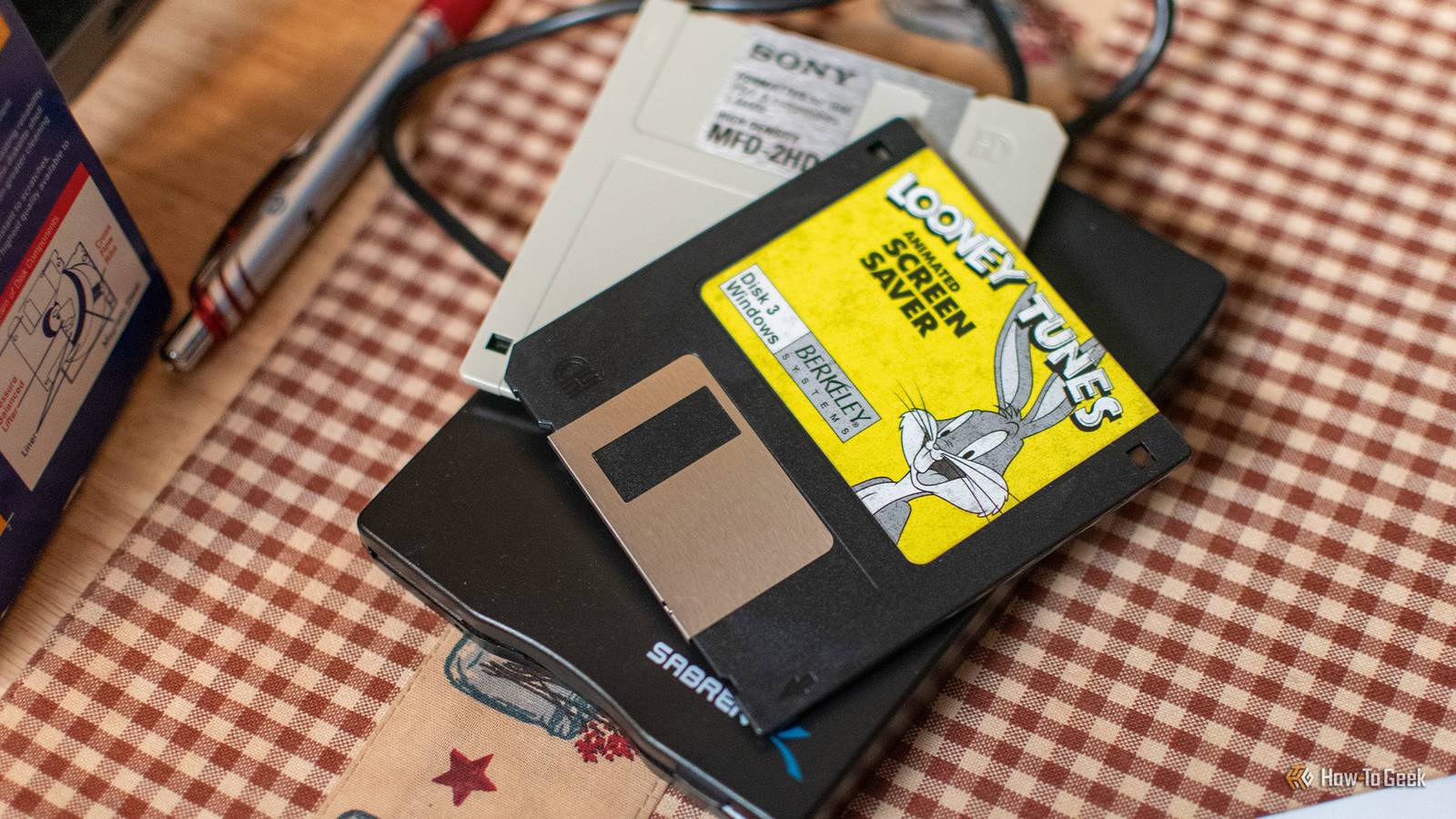
Published Oct 10, 2026, 2:30 PM EDT Andrew Heinzman is a seasoned tech writer with over half a decade of experience. He specializes in delivering insightful tech news and detailed product reviews, particularly focusing on audio and video technology, as well as computers and smartphones. His journey in tech writing includes a two-year stint as the News Editor at Review Geek, the former sister site of How-To Geek. Throughout his career, Andrew has consistently provided readers with valuable insights and up-to-date information on the latest developments in the tech world, earning recognition for his clarity, depth, and relevance. In his free time, Andrew likes to explore music and read books, just as he did when earning his bachelor's degree in English literature. I'm just old enough to have participated in the last few years of the floppy disk era, and although I don't feel a particularly strong sense of nostalgia about floppies, I do think that they're interesting. In any case, I've recently started archiving old screen saver disks and screwing around with floppy disk cameras, and I was surprised by all of the tactile, sensory memories that my mind had chosen to bury away. The horrifying noise What the heck is going on in there? Until fairly recently, PCs were an endless wellspring of mildly-concerning noises. Monitors hummed, dialup connections screeched, and hard drives chattered. But you rarely see people mention the dulcet tones of a functioning floppy drive. It's kind of hilarious to imagine someone blowing thousands of dollars on their first personal computer, bringing it home, setting it up, inserting a floppy drive, and saying to themselves, "yeah, that sounds like it's working just fine." A fully-functioning floppy drive sounds like it's full of angry cats. It churns and whirs as if it's on its last breath. I remembered that floppy drives were kind of noisy, but I forgot that the noise they put off was so demonic. (They don't sound much better when they're dying, either. Clicking noises and all that.) On the bright side, it's easy to tell when a floppy drive is reading or writing data. Modern SSDs don't really give you that courtesy. And I imagine that the sound of a drive in a desktop tower would be dampened a bit, at least when compared to the cheap plastic drive that I've got at my desk. The "eject" button turns disks into projectiles Weeeeeee!!!! CD and DVD drives tend to be pretty graceful. Some of them have a little caddy that pops out, others don't, but they always make a point of protecting your disc. Floppy drives don't really seem to care what happens when your disk is ejected. Most floppy drives (or perhaps all of them) use a spring-loaded mechanism to lock in and eject disks. And depending on how you position your hand, the eject mechanism can launch your floppy disks like those little toy guns that shoot out flat pieces of foam. My poor Looney Toons screen saver disk went flying when I ejected it from my cheap floppy drive—it all felt very slapstick. I know for a fact that this isn't true of all floppy drives. Some are gentle ejectors. Others are aggressive. Floppy disks are built into a plastic caddy, so it's not really a big deal if they fall on the ground, but I'm still surprised that the projectile aspect of this tech isn't mentioned more often. Waiting, and waiting, and waiting Was it always this slow? A standard-sized 3.5-inch floppy disk can hold 1.44 MB of data and operate at something like 0.025 MBps. So, realistically, you should be able to transfer the full contents of a floppy disk in about a minute, maybe less? That's kind of what I figured when I started playing around with these things, yet I found myself standing around for several minutes watching bitmaps load at an astonishingly slow pace. I looked into it, because the math wasn't really adding up, and apparently the real-world speed of floppy disks can vary a lot depending on whatever files you're working with. These disks only spin at 300 RPM (half the slowest speed of DVDs), and floppy drives have an abysmally slow read/write head, so the seek time adds up with every file. Some sources say that USB floppy drives are actually 20% slower than old-fashioned drives because there's a bit of lag when converting everything into modern data packets. So, maybe I have it worse today than I did when I was a kid? A self-imposed punishment, I guess. Another curious thing (and I'm going on a bit of a tangent here), hardware floppy drive emulators, like Gotek and HxC, are limited to real-world floppy drive speeds. These emulators plug directly into an old PC's 34-pin floppy controller and unlock near-unlimited storage (without any of the awful floppy noises), but they still have to behave like real floppy drives in order to function correctly. I'm just scratching the surface, there's plenty of other weird stuff I forgot about Most of the things that surprised me about floppy disks are pretty surface-level. It's the kind of stuff that would've surprised people when floppy disks hit the scene half a century ago. But there are some deeper quirks I forgot about, too, like how a pair of scissors could double a floppy disk's storage. Maybe I'll get the chance to talk about those deeper quirks in future articles, I don't know.
I tried using a floppy drive for the first time in 25 years. Here's the weirdest quirks I forgot about
Full Article
Original Source
Read the full article at Howtogeek →KhanList aggregates and links to publicly available news content. We do not host full articles from third-party sources. Always verify important information with original sources.