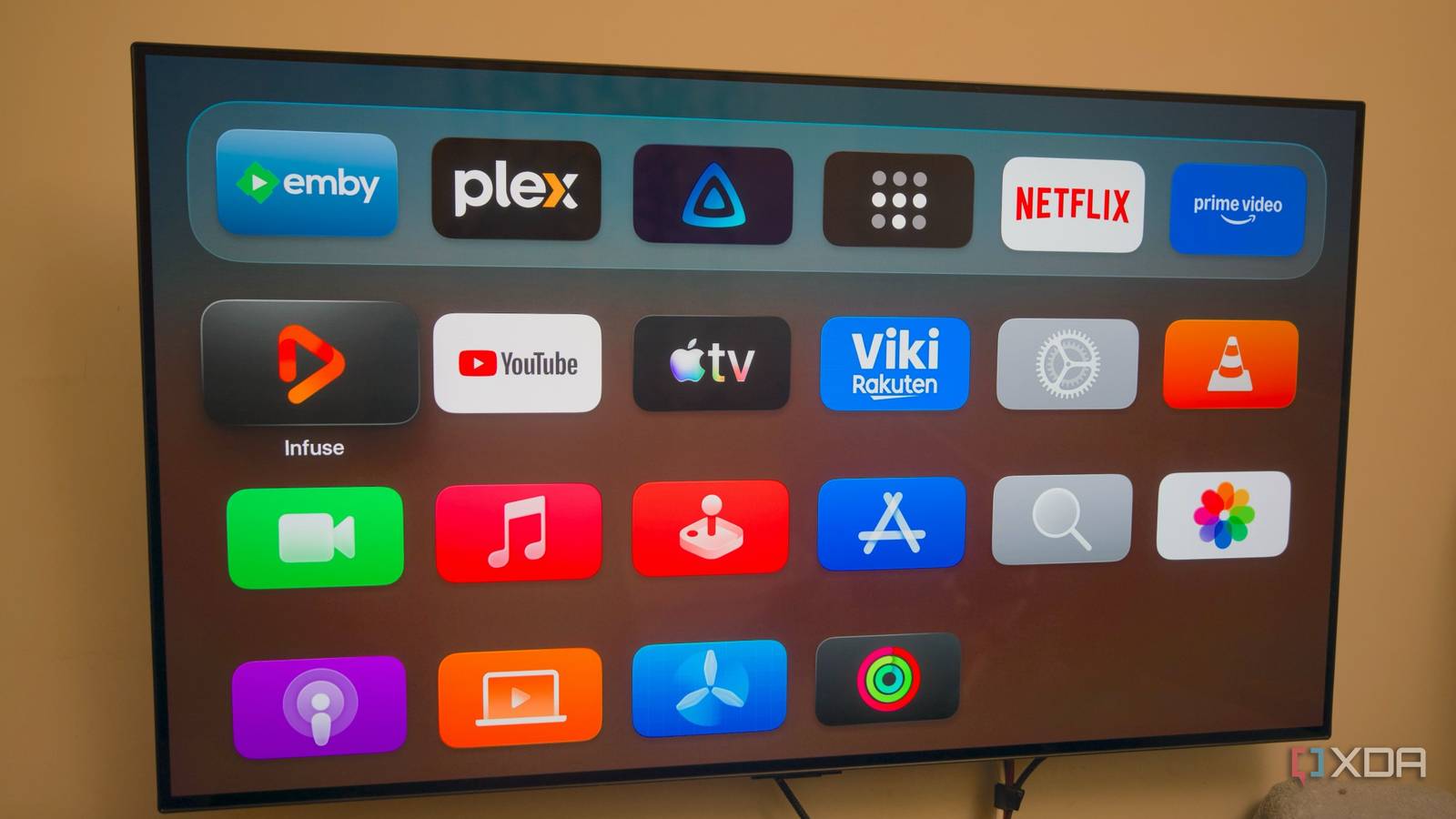
Published Jul 20, 2026, 11:30 AM EDT Samir Makwana is a technology journalist and editor from India since past 18 years and his work appears on MakeUseOf, HowToGeek, GSMArena, BGR, GuidingTech, The Inquisitr, TechInAsia, TechWiser, and others. He has written news, features, and gadget reviews for national technology media publications. His passion is to help people with their technology problems and gadget purchases. For that, he has worked for some of the biggest international technology publications, covering news, explainers, how-to guides, listicles, and product-buying guides. He has worked as an editor and managed teams since 2015. His expertise broadly covers computers, smartphones, game consoles, headphones, smart home products, browsers, and apps. I’ve been self-hosting a media server at home. That’s how I started my home lab building journey, which taught me a lot. One of the key lessons for me was to spend only where the value lies. I had deployed Jellyfin while considering a Plex Pass for my Plex server. But the recent price bump from $250 to $750 for a Lifetime Plex Pass made up my mind. I’ve spent the last year running Plex and Jellyfin side by side on a Proxmox box with a Debian VM. The plan was to figure out which one would pull ahead so I could finally settle the debate on a media server. Unfortunately, neither of them did. Instead, another media server that most people have forgotten about turned out to be the right fit for my home lab. That’s why I bought the Emby Premiere lifetime license for $119, and I’m not looking back. Plex’s $750 lifetime pass price tag was the last straw The Remote Watch Pass has me reconsidering already Honestly, the $750 Plex Lifetime Pass price hike was the best thing that ever happened to my home media server. I don’t regret not buying into it, even after trying the Remote Watch Pass at $1.99 per month in April 2025. But in June 2026, even that subscription was bumped to $2.99 per month or $29.99 annually. Though the hike is modest, the steady increase in less than a year made me reconsider it. That’s exactly what was concerning, since it was no longer a “pay once and forget” license. It was a monthly or annual subscription that could suddenly be hiked at any time. The Lifetime Plex Pass price increase to $750 totally steered me away from a one-time payment. On the playback side, skipping Plex Pass didn’t actually save me money. It just relocated the problem. Without Plex’s server-side transcoding, codec and container compatibility became my problem to solve. On my Apple TV 4K, Infuse solved it outright, thanks to its extensive format support. I could confidently throw a 4K remux at it, and it would work. But Infuse is an Apple devices-only solution. On other platforms, I’m stuck with Plex’s own apps or third-party clients that can direct play. Still, none of them come close to Infuse’s range. OS Windows, macOS, Linux Individual pricing Free, $6.99/month, $250/lifetime Jellyfin is a free option, but it keeps costing me time Enabling transcoding and DVR felt like a chore Just after deploying a Plex server last year, I also installed Jellyfin, a free, open-source option. Jellyfin doesn’t phone home and is close to ideal on paper for every homelab tinkerer. Though its installation felt straightforward, the struggle began when I wanted to enable a couple of features. For starters, I kept referring to the official documentation to enable hardware transcoding. That meant digging through the configuration to ensure I installed the full package rather than a partial one that depended on my hardware. Otherwise, I needed to edit the Docker Compose flags to run it as a container. Fortunately, the processor on my HP ProDesk 600 G6 mini PC supports Intel QuickSync. Jellyfin’s strength is its client situation, which offers a choice of several community-developed apps. Each app had its own playback engine. But those trials had me flying blind, since I didn’t know which client would survive the variety of video formats in my media library. For every client, I tried playing a 4K remux to assess its capability. It came down to trial and error to find what client worked for my household. Getting DVR running meant I needed to use my own tuner and guide data. Unfortunately, Jellyfin’s Live TV plugin doesn’t include a built-in program guide, so I had to wire up an XMLTV source myself before recordings would even show up correctly. Jellyfin iOS compatible Yes Android compatible Yes Desktop compatible Yes Emby’s Premiere tier does the two things I actually needed Offline downloads worked on the first try I assumed Emby was the compromise between Plex and Jellyfin. However, I was pleasantly surprised with the setup, and I didn’t feel like trading one frustration for another. At first, I paid for the monthly option to try out the Premiere tier, since the official apps and other options were locked behind it. Enabling hardware transcoding requires flipping a toggle on the Emby dashboard. Thankfully, I didn’t have to install drivers or edit a Docker Compose file. Downloading content for offline viewing no longer required me to hit the sync option every time. Instead, it just worked. Most importantly, I wasn’t relying on a rotating roster of third-party clients just to get consistent playback on Apple TV, Android devices, and Fire TV. Emby Premiere’s official apps handle the direct play and fallback transcoding together. I used to lean on Infuse for that, and now Emby’s app handles it natively. Every video file just plays on Emby, no matter which device I use. That said, Emby’s plugin catalog is small and doesn’t come close to Jellyfin’s. That’s understandable since the Emby community itself is smaller. Apart from transcoding, I’ve used Emby’s DVR feature too, and it’s been worth paying for. What would switching and ownership actually cost $119 lifetime license beats $750 lifetime pass A new Lifetime Plex Pass costs $750 starting July 1, 2026. Jellyfin costs nothing upfront, but I do spend hours configuring the transcoding and swapping Jellyfin clients on different platforms. There’s no receipt for that, though. Meanwhile, Emby Premiere’s lifetime license lands around $119, which is still less than Plex’s old pricing. Turns out Emby Premiere is relatively cheaper, and I don’t need to spend hours configuring a media server. Of course, Jellyfin’s free, open-source nature offers a lot of freedom and flexibility. That looks great until I sit down for maintenance and spend time choosing a client that works on all platforms. That’s why Emby is the only one that solves cost and cross-device playback problems at once. Should you still stay on Plex or Jellyfin instead of switching After using all three, I bought the Emby Premiere lifetime license because I was done deliberating. The choice wasn’t about features. I wanted to keep spending my time enjoying my media library rather than pay for the company's next price hike or maintain a project myself indefinitely. But my preferences and decisions don’t apply to everyone. If you’re sharing a media library with a dozen family members and friends, then Plex’s polished experience works with zero configuration. Yes, even at $750. But if you want to control your media server stack and don’t mind putting in the hours to set up, configure, and troubleshoot issues, Jellyfin is the best option. Emby
I replaced Plex and Jellyfin with a media server most people have forgotten
Full Article
Original Source
Read the full article at Xda-developers →KhanList aggregates and links to publicly available news content. We do not host full articles from third-party sources. Always verify important information with original sources.