
The first time I met Vladimir Putin in person was in October 1999, when he was prime minister of Russia. He bounced into the room wearing a cream polo-neck jumper and a smart tweed jacket, as if he had popped in for drinks at the golf club. Unfortunately, we were not at a golf club but on a bleak army base in the breakaway southern republic of Chechnya, and the dapper little man with the self-deprecating smile was about to unleash the most vicious of wars on his own citizens. He had promised to “wipe out terrorists even if we find them on the bog”. I asked him how he planned to retake the Chechen capital, Grozny, without endangering civilian lives, and he smirked and said: “I’ll tell you later”. A few months later, with Grozny razed to the ground and some 10,000 civilians dead, he swept to power as Russian President. Shorts For the first few years of his rule, Western leaders struggled to decide who Putin really was – the nice young man who lavished praise on the West, or the hard man who devastated Chechnya. At that time, Putin presented himself as thoroughly Western. He had wined and dined Tony Blair and other leaders in his home town, St Petersburg, and had supported the Americans after 9/11, providing Russian air bases for their campaign in Afghanistan. He addressed the Bundestag – in German – about Russia’s European destiny. Yet, he simultaneously closed down independent TV stations, banned a puppet show that mocked him and slowly but surely cracked down on democratic freedoms. George W Bush epitomised what Putin began to see as Western arrogance towards Russia. Bush said he “looked in his eyes and found him to be very straightforward and trustworthy”. They spent days together at Bush’s ranch and Putin’s dacha. But, behind the back-slapping there was back-stabbing going on, too. The US president ignored Putin’s warnings not to invade Iraq in 2003. Bush also insisted on building a missile shield in Eastern Europe to counter any Russian attack – despite Putin insisting that they were on the same side and so the idea of an assault by Moscow was preposterous. Putin felt sidelined. George W Bush said he looked in Putin’s eyes and ‘found him to be very straightforward and trustworthy’ (Photo: Mark Wilson/Getty) In 2006, Putin hired Western PR consultants to try to improve his image. I joined their team and saw first-hand how the Kremlin failed to grasp why it was that Putin ruffled feathers. There was no understanding that it was precisely his undemocratic behaviour at home that made the West uneasy about his intentions abroad. By early 2007, Putin had finally lost patience with the Americans. “Dostali!” he told his aides, which roughly translates to “I’m sick of this!” His spokesman, Dmitry Peskov, asked me to accompany him to Munich, where Putin was going to deliver a humdinger of a speech. Afterwards, I shepherded journalists towards Peskov, so he could elaborate on his boss’ words, though they could not have been clearer. If Putin 1.0 was Mr Nice Guy, he had now morphed into Putin 2.0, full of bitterness and spite at having been spurned by the West. He accused the US of “disdain for the basic principles of international law”, of double standards and of building a new Iron Curtain that excluded Russia, even though Russians, like the other nations of Eastern Europe, had renounced communism and chosen democracy and freedom. At this stage, Putin still hoped to be accepted into what he called “the big European family”. He was simply trying some tough talk, since his soft soap had failed. But in the next five years, things went from bad to worse. Nato leaders met in Bucharest in 2008 to try to solve a dilemma: how to enlarge Nato without annoying the Russians. Germany’s chancellor Angela Merkel was most sensitive. She knew that inviting Georgia and Ukraine to join would touch a raw nerve. Bush was gung-ho. He loved Georgia’s cheeky, chappy president, Mikheil Saakashvili, and thought a few more barbecues at the Bush family retreat in Kennebunkport, Maine, would win Putin around. In the end, they agreed on wording that said: “Ukraine and Georgia will become members of Nato.” The date for the accession was deliberately kept vague, but Britain’s then-prime minister Gordon Brown joked to Bush: “I’m not sure we didn’t just make Ukraine and Georgia members!” Vladimir Putin, pictured with Ukraine’s President Volodymyr Zelensky, Germany’s Angela Merkel and French President Emmanuel Macron in 2019, once hoped to be accepted into what he called ‘the big European family’ (Photo: Charles Platiau/AFP) Putin thought so, too. He ranted to Bush that “Ukraine isn’t even a proper country”, before storming back to Moscow. In the coming years, Putin engaged in “gas wars” with Ukraine – cutting supplies unless it agreed to pay higher prices – and launched a short real war with Georgia after then-president Saakashvili recklessly attacked the breakaway republic of South Ossetia, killing Russian peacekeepers. In America, Barack Obama came to power and incensed Putin by referring to Russia as a mere “regional” power, and by remarking that Putin had a “kind of slouch, looking like the bored kid in the back of the classroom”. Putin faced growing problems at home, too. From 2008, he had “loaned” the presidency to his friend Dmitry Medvedev, and in 2011 he announced he was reclaiming it – for a third term. Finally, the people of Russia revolted. Huge demonstrations against this blatant abuse of power spread across the country. Putin’s response was tougher than ever. Protest leaders were arrested and imprisoned. Alexei Navalny, the most prominent of protestors, would be jailed, poisoned and eventually murdered in a prison camp. By now, Putin was finished with democracy. He was ready to sever ties with the West he had once wooed. Putin 3.0 was about to be launched. On 12 December, 2012, two ceremonial guards, synchronised like mechanical soldiers, swung open the 15-feet-high gilded doors of St George’s Hall in the Kremlin, and President Putin strode in, his head barely reaching the height of the doorknobs. His expression was one of faux humility. His left arm swung hard, his right hand gripped the text of his annual address to the Russian nation. It revealed a rebranded Putin – confident, insolent, ready to proclaim Russia not only the equal of any Western country but distinctive and morally superior, entitled to assert its own interests both at home and abroad. Russia was “exceptional”, with “traditional” values that could be a beacon to the world. The new direction quickly manifested itself in precisely the kind of actions abroad for which Putin had previously castigated the US. In 2013, thousands gathered on Kyiv’s main square, Maidan, to protest against Ukrainian president Viktor Yanukovych’s decision (under pressure from Putin) to end talks on an association agreement with the EU. The following February, Putin’s spies gave him a transcript of a telephone conversation in which top American officials in Kyiv were discussing which opposition politicians they wanted in the next government. Three weeks later, Yanukovych fled as crowds demanded that he be overthrown – and Putin acted to secure Russian interests. His troops carried out a swift and bloodless takeover of Crimea, which was part of Ukraine but was home to Russia’s Black Sea Fleet. In 2013, thousands gathered on Kyiv’s main square, Maidan, to protest against Ukrainian President Viktor Yanukovych’s decision to end talks on an association agreement with the European Union (Photo: Genya Savilov/AFP via Getty) This was Putin’s first major miscalculation in foreign policy. No longer could he claim the moral high ground, asserting that the US was the perennial rule-breaker while Russia always upheld the international order. Then came Syria. In 2015, after millions of refugees from Bashar al-Assad’s regime flooded Europe, Putin sent in Russian forces to support him. And in 2016, Putin seemingly tried to influence the US election in favour of Donald Trump – or rather (more precisely) against Hillary Clinton, whom Putin despised. Putin’s fury with the West was now all-consuming. As Ukraine abandoned its previous constitutional commitment to neutrality and began to receive training, tanks and missiles from Nato, he drew up plans to reassert Russian control over what he regarded as a “brotherly nation” that must never be allowed to leave the family. In February 2022, he launched his catastrophically misguided full-scale invasion of Ukraine. In moments of clarity, Putin may look at the chaos he caused with despair. He has failed to achieve any of the goals with which he came to power. He wanted Russia to be respected as an equal on the world stage. In fact, it is a pariah. He wanted Russia to be reintegrated into Europe. Instead, it has excluded itself. He declared Russians and Ukrainians to be one people, but has turned Ukrainians into Russia’s bitterest enemies. He may have wished to go down in history as Vladimir the Great. Instead, he will be remembered as a brutal dictator who destroyed the kind of Russia he once hoped to create.
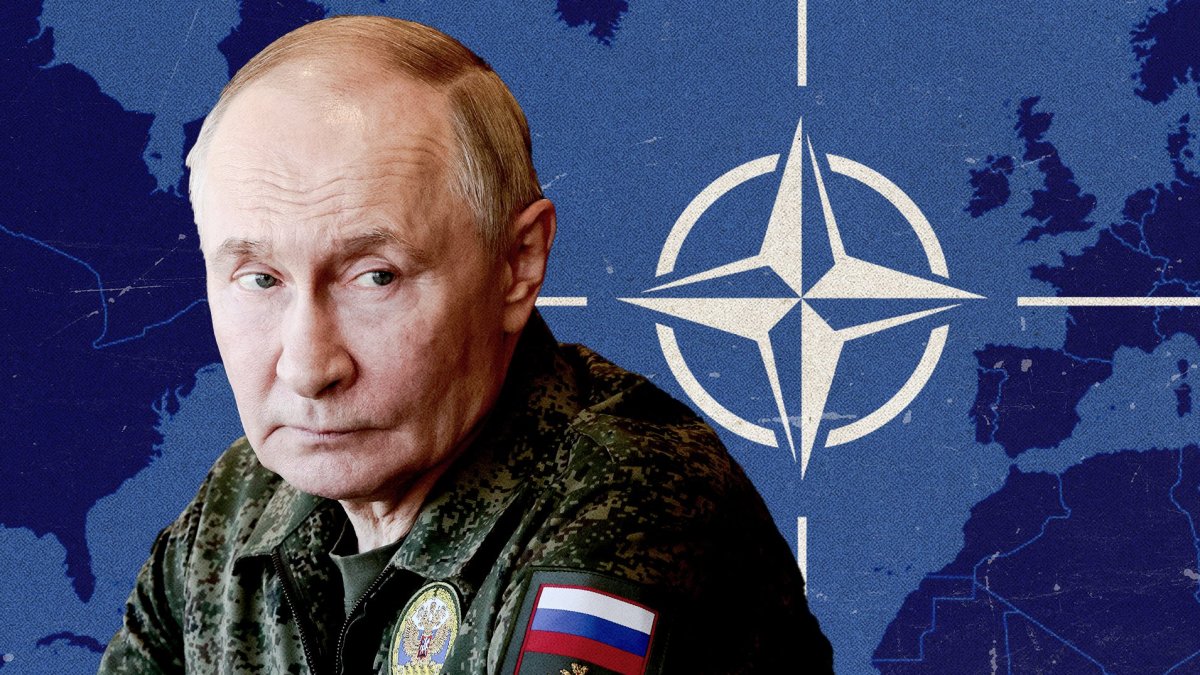
I met Putin when he wanted acceptance from the West. Failure made him vengeful
Full Article
Original Source
Read the full article at Inews →KhanList aggregates and links to publicly available news content. We do not host full articles from third-party sources. Always verify important information with original sources.