
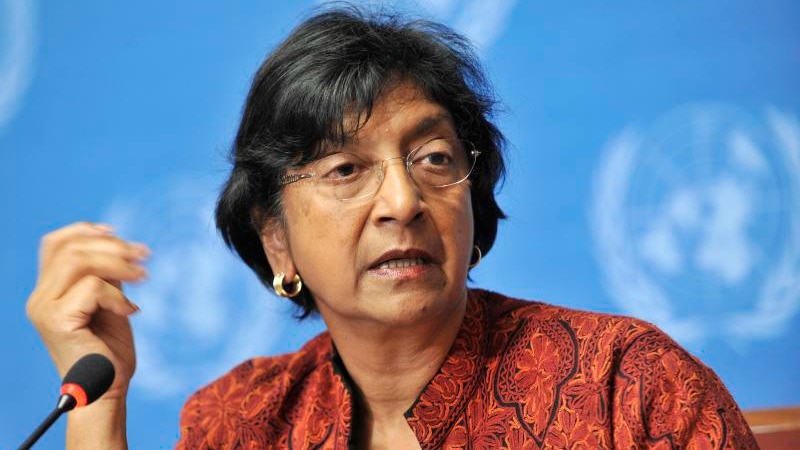
“The biggest violators of human rights are states themselves, by commission or omission.”These words by Navi Pillay, a South African jurist and former United Nations High Commissioner for Human Rights, underline the responsibility governments carry in protecting people.She made the remark during a talk titled National Sovereignty vs. International Human Rights at the University of Georgia School of Law on October 19, 2016. The university's Dean Rusk International Law Center recorded the statement while reporting on her address.She was awarded the 2026 Nobel Peace Prize on October 9 for her efforts to promote peace and international law. The quote raises an important issue: human rights violations do not only occur when authorities actively harm people. They can also occur when those in power fail to prevent abuse or protect people from it.WHO IS NAVI PILLAY?Born in Durban, South Africa, on September 23, 1941, Pillay grew up during apartheid, a system of racial segregation and discrimination. She became a lawyer and defended political prisoners during the apartheid era before making history as the first non-white woman appointed to South Africa's High Court.She later served as a judge at the International Criminal Tribunal for Rwanda and the International Criminal Court. From 2008 to 2014, she was the United Nations High Commissioner for Human Rights, a role that placed her at the centre of international efforts to promote and protect fundamental freedoms.WHAT DOES THE QUOTE REALLY MEAN?Pillay's words distinguish between two ways a state can contribute to human rights violations: through its actions and through its failure to act.The phrase “by commission” refers to violations committed through direct action, such as authorities unlawfully restricting people's freedoms. “By omission” refers to failing to take necessary steps to prevent abuses, protect vulnerable people or ensure that existing laws are enforced.Her argument also challenges the idea that national sovereignty should shield governments from scrutiny. At her 2016 address, Pillay discussed restrictions on non-governmental organisations and stressed the importance of accountability mechanisms developed through the United Nations.MORE QUOTES BY NAVI PILLAY“The United Nations was formed by states. It is a club of governments.” Pillay used these words while discussing international cooperation and human rights obligations during her 2016 address.“That doesn’t mean we are transgressing sovereignty.” She made this point while explaining why governments' commitments to international human rights treaties do not automatically undermine national sovereignty.“The fundamentals for protecting and promoting human rights are largely in place.” In her 2013 Human Rights Day statement, Pillay highlighted the progress made in establishing international laws and institutions.“The key now is to implement those laws and standards to make enjoyment of human rights a reality on the ground.” Pillay emphasised that having laws is not enough; they must translate into meaningful protection for people.Pillay's words return to a fundamental principle: protecting human rights requires more than promises from governments. It requires action, accountability and the willingness to address violations, including those that occur when authorities fail to act.- Ends
Quote of the Day by Navi Pillay: The biggest violators of human rights are states themselves...
Full Article
Original Source
Read the full article at Indiatoday →KhanList aggregates and links to publicly available news content. We do not host full articles from third-party sources. Always verify important information with original sources.