
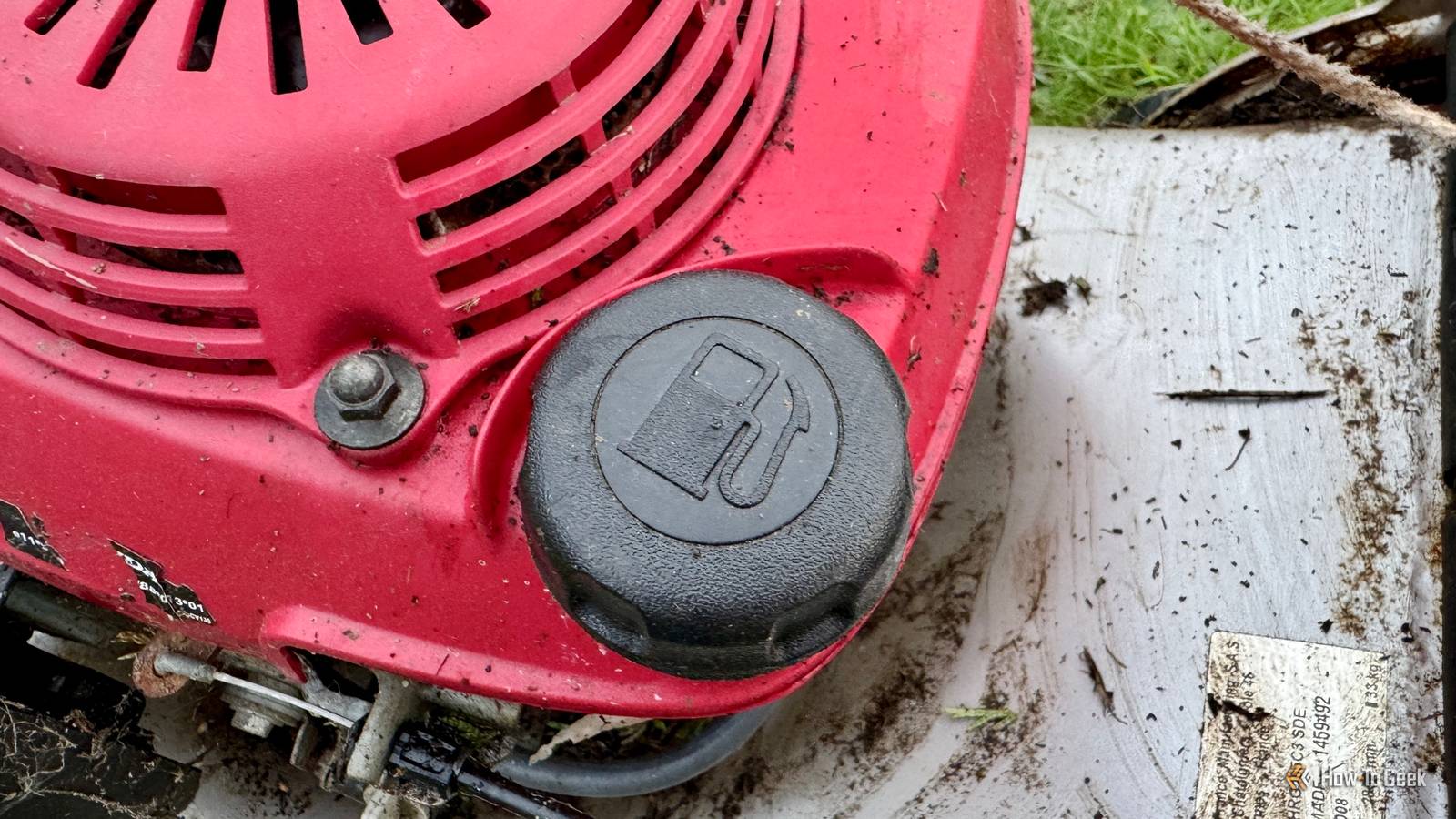
Published Oct 23, 2026, 12:00 PM EDT Adam has a degree in Engineering and has a life-long interest in technology. He has been writing for over a decade for various print and online publications, with a focus on consumer tech. He joined How-To Geek in 2024 while working at Pocket-lint. As well as being a long-term fan of Apple products, he also has a strong interest in smart home tech, running a Home Assistant server at home to automate all his smart home devices. He believes that the ideal smart home should work with minimal interaction from the user, with automations running as if by magic rather than requiring you to push buttons on a control panel. You can find more of his work on Muck Rack. I've been clinging on to my ancient gas-powered lawnmower for years. It weighs a ton and literally gave me a hernia when I lugged it up some steps, but it's always done a great job tackling my lawn, even when I've let the lawn get a little bit out of control. A relative was raving about their electric mower, so I took it for a spin and found that most of the things I was most worried about turned out to be complete myths. Myth: Cordless mowers aren't powerful enough Modern electric motors can compete with gas Credit: RyobiCredit: Ryobi This was one of my biggest concerns. I own an electric hover mower, and while it's useful for quickly tidying up grass that's already been cut recently, trying to mow a lawn that's grown a little is pretty horrific. I just didn't think an electric mower could have the power to handle my neglected lawn. It turns out I was very wrong. When I borrowed my relative's mower, it handled the longer grass without any issues. It also didn't feel like a workout to turn it around at the end of the garden like it does with my gas mower. Myth: There isn't enough charge to finish mowing Modern run times are enough for most lawns I have a lot of grass around my house. My gas mower has a decent-sized tank, so it can get through a lot of mowing sessions before I need to top it up again. My concern was that with an electric mower, I might not even finish one lawn before I needed to stop and charge the battery. The truth is that many cordless mowers have run times listed as 45 or 50 minutes. It takes me less time than that to finish the lawn with my gas mower, and when I tried out an electric mower, I never needed to charge before I finished the job. If you have a very large lawn, it's still not the end of the world. Some models are rated for even larger areas, and larger batteries or dual-battery systems can extend mowing time even further. Interchangeable batteries allow you to switch to a full battery in just a few seconds. Run time is dependent on a lot of factors, including grass length, cutting height, and whether the mower is self-propelled. You might find that a gas mower is still the best option for a very large lawn. Myth: Electric mowers require just as much maintenance Keeping a gas mower running isn't an easy job. Maintenance tasks can include oil changes, cleaning air filters, replacing spark plugs, and more. You can't just shut your eyes and hope that your gas mower keeps running. In comparison, electric mowers have far fewer maintenance tasks to take care of. The majority of the engine-related maintenance is gone, so there's no oil to change or carburetor to worry about. You also don't need to worry about where to store your gas. That's not to say that electric mowers are maintenance-free. You still need to keep the mower clean, inspect the blades, and keep an eye out for damage. Batteries also need looking after and to be correctly stored. Myth: Cordless mowers can't handle demanding lawns Cutting conditions matter more than the power source Credit: Ryobi I've always assumed that electric mowers would be great if you had a small, perfectly flat, well-kept lawn that you could trim every now and then, but that they weren't any good for more challenging lawns. There's a fairly steep rise in the middle of my lawn, and even with the self-propelled gas mower, it can be tough work getting up the hill. However, many capable electric mowers can handle thick grass, uneven lawns, and even lawns that have been left to get far too long. Some electric mowers include automatic power adjustment that can increase the power when they experience higher cutting resistance. Self-propelled models can help with steeper inclines, and the lower weight compared to gas models makes them easier to handle. The purchase price is far from the only cost Perhaps the biggest thing that's put me off trying an electric mower is the price tag. A cordless mower can cost more than an equivalent gas-powered model. The difference becomes even more stark when additional batteries and chargers are also required. That's only considering the upfront costs, however. Gas mowers have their own continual costs, including (obviously) the gas that they need to run on. You also need to pay for oil, servicing, and the medical bills for the hernia you get lugging them around. Electricity costs for electric mowers are relatively low. In the long term, the overall costs may not be as different as they seem. I wish I'd considered cordless mowers sooner It isn't a joke; I really did get a hernia from lugging my gas mower around and required surgery to get it fixed. If I'd known that electric mowers could do such a good job, I might have retired my ancient gas mower sooner and not have to carry the scars of my poor decisions.
I avoided electric lawn mowers for years because of these 5 myths—now I regret not buying one sooner
Full Article
Original Source
Read the full article at Howtogeek →KhanList aggregates and links to publicly available news content. We do not host full articles from third-party sources. Always verify important information with original sources.