
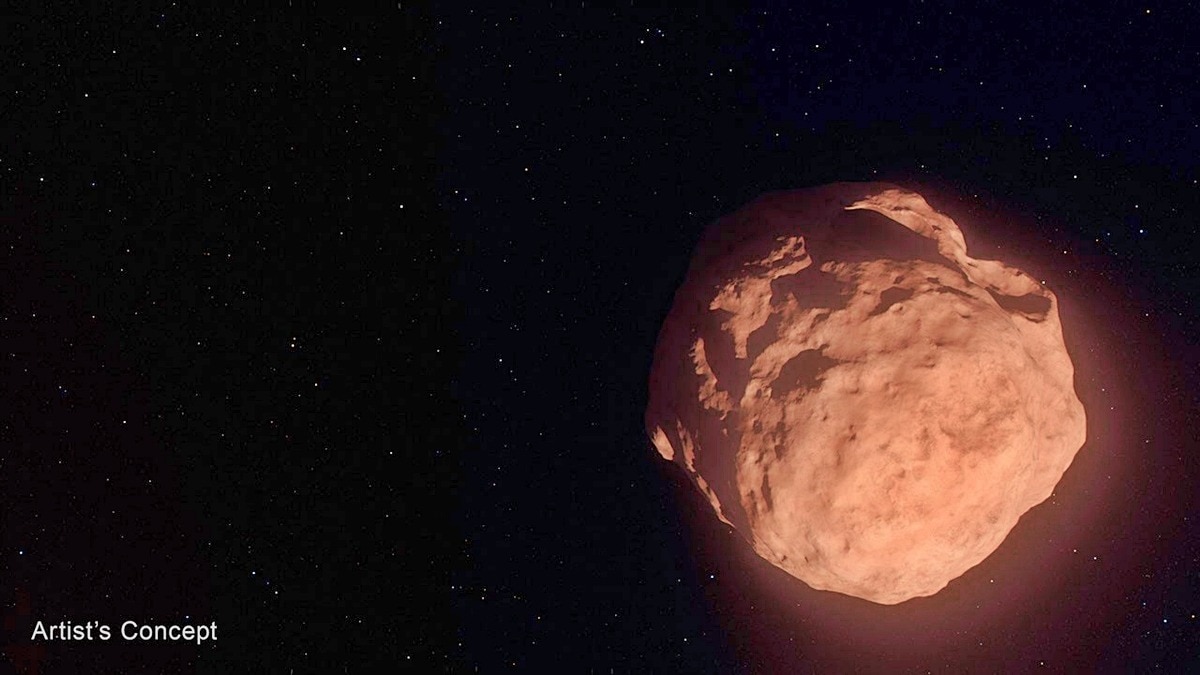
The findings suggest some tiny icy bodies have remained largely unchanged while their lower-than-expected numbers raise fresh questions about planet formation.The findings offer scientists a rare glimpse into the early days of the solar system. (Photo: Nasa)For the first time, scientists have combined the extraordinary powers of NASA's Hubble and James Webb Space Telescopes to peer deep into one of the most remote and mysterious regions of our solar system.Their target: tiny, faint and frozen worlds orbiting the Sun beyond Neptune.The observations have revealed 27 previously unknown Trans-Neptunian Objects, or TNOs, including some of the smallest and faintest objects ever directly detected at the edge of the solar system.But the discoveries have also thrown up a surprise: scientists found far fewer tiny objects than some models of planet formation had predicted. TNOs are icy bodies that orbit the Sun beyond Neptune. Most are incredibly dim, more than 100 million times fainter than objects visible to the naked eye from Earth. To find them, researchers used Hubble to observe the objects in visible light and Webb to study them in infrared. Together, the telescopes measured the colours, sizes, compositions and orbits of these distant worlds.The findings offer scientists a rare glimpse into the early days of the solar system.Billions of years ago, dust and pebbles swirling around the young Sun gradually clumped together to form larger objects called planetesimals, the building blocks of planets.Beyond Neptune, however, many of these objects never merged into full-sized planets, leaving behind what scientists believe is a frozen record of the solar system's infancy.The researchers studied two different populations of TNOs: "cold" objects that have remained on relatively stable, circular orbits, and "hot" objects that were pushed outward when the giant planets migrated billions of years ago.Scientists expected collisions to have heavily altered the smaller bodies over time. Instead, they found something remarkable.The tiny TNOs have colours similar to their much larger counterparts, suggesting that their surfaces may have remained largely unchanged since the birth of the solar system.One of the newly discovered objects is just about 5 kilometres wide — roughly five times smaller than the smallest objects detectable by even the most powerful ground-based telescopes. Researchers said it is so faint that detecting it is comparable to spotting a small swarm of fireflies on the Moon from Earth.The discovery of fewer tiny bodies than expected is now raising new questions about how planetesimals formed.With Hubble and Webb working together, scientists may be opening an entirely new window into the frozen relics that have quietly preserved the story of how our solar system was born.- EndsPublished By: Sibu Kumar TripathiPublished On: Sep 9, 2026 12:24 IST
Hubble and Webb telescopes spot 27 frozen worlds hiding beyond Neptune
Full Article
Original Source
Read the full article at Indiatoday →KhanList aggregates and links to publicly available news content. We do not host full articles from third-party sources. Always verify important information with original sources.