
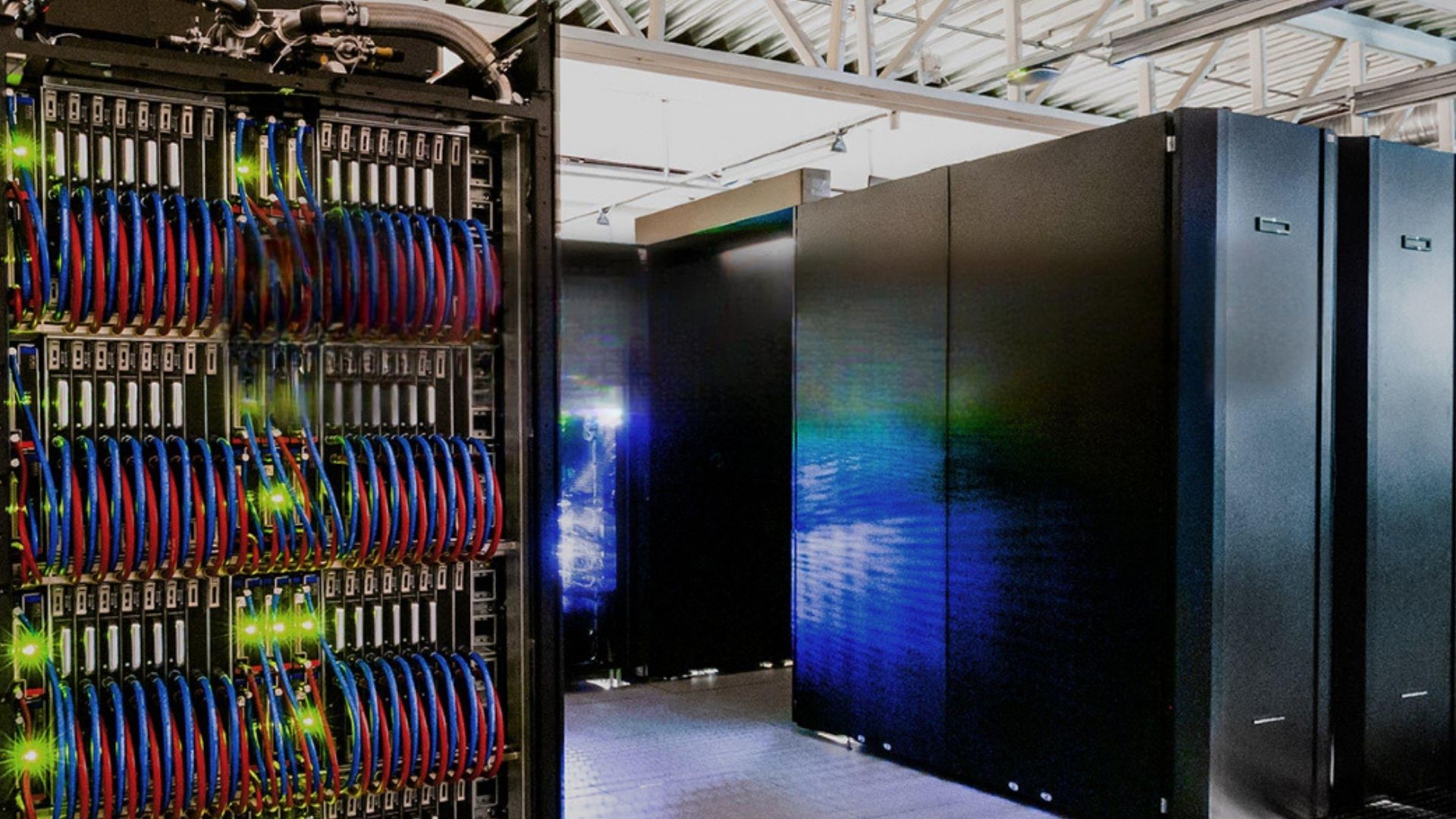
Europe has added another powerful machine to its growing supercomputing network with the inauguration of Arrhenius, a new system in Sweden capable of more than 60 petaflops, or over 60 million billion operations per second. The supercomputer was inaugurated at Linköping University and will be available to researchers, companies and public-sector organizations across Europe. It is designed to tackle computationally intensive work ranging from climate simulations and materials research to life sciences, engineering and artificial intelligence. A 60-petaflop machine for European research Arrhenius is classified as a mid-range supercomputer, but its performance places it among the world’s most powerful machines. It ranked 42nd on the TOP500 list published in June 2026. Its computing capacity is intended for workloads that would be impractical or take considerably longer on conventional computing systems. Researchers can use it to run complex simulations, analyze large datasets, and develop compute-intensive AI applications. Potential applications include climate modeling, materials science, drug discovery, life sciences, and engineering. The system is also designed with security and data integrity in mind, allowing organizations to use it for proprietary product development and research involving sensitive personal data, according to the EuroHPC Joint Undertaking. Arrhenius is already being used by European researchers. Users gained early access through the EuroHPC AI for Science access call before the official inauguration, while broader access is now available through regular EuroHPC access calls as well as benchmark and development modes. Designed to deliver more computing for less energy Raw performance is only one measure of a modern supercomputer. The amount of electricity required to achieve that performance has become increasingly important as computing systems grow larger. According to EuroHPC, Arrhenius delivers more than 61 billion operations per watt. That placed it 24th on the Green500 list, which ranks supercomputers according to energy efficiency. The system was procured through a contract with HPE signed in July 2025, with an estimated total value of €68.5 million. Up to 35% of the cost is co-funded by the EuroHPC Joint Undertaking through the Digital Europe Program, with additional contributions from the Swedish Research Council to Sweden’s National Academic Infrastructure for Supercomputing (NAISS). EuroHPC and NAISS, hosted by Linköping University, jointly manage access to the machine. Part of Europe’s push for computing sovereignty Arrhenius is more than a standalone Swedish research computer. It joins 12 supercomputers already procured by the EuroHPC Joint Undertaking as Europe attempts to build computing infrastructure that it can control and access across the continent. The initiative is also expanding beyond traditional high-performance computing. EuroHPC is overseeing the implementation of 19 AI Factories and 13 AI Factory Antennas across Europe, while also developing a European quantum-computing infrastructure that will integrate quantum technologies with conventional supercomputers. The Swedish system is named after Carl Axel Arrhenius, the Swedish geologist and chemist who discovered the mineral gadolinite in 1787. Gadolinite was later found to contain several previously unknown elements belonging to the rare-earth group. For European researchers and businesses, however, the machine’s more immediate significance is its computing capacity. By making tens of petaflops of processing power accessible across borders, Arrhenius gives scientists and industry another resource for workloads that conventional computing simply cannot keep pace with.Get the latest in engineering, tech, space & science - delivered daily to your inbox.Kaif Shaikh is a journalist and writer passionate about turning complex information into clear, impactful stories. His writing covers technology, sustainability, geopolitics, and occasionally fiction. A graduate in Journalism and Mass Communication, his work has appeared in the Times of India and beyond. After a near-fatal experience, Kaif began seeing both stories and silences differently. Outside work, he juggles far too many projects and passions, but always makes time to read, reflect, and hold onto the thread of wonder.
Meet Arrhenius a 60-petaflop supercomputer designed for engineering research
Full Article
Original Source
Read the full article at Interestingengineering →KhanList aggregates and links to publicly available news content. We do not host full articles from third-party sources. Always verify important information with original sources.