
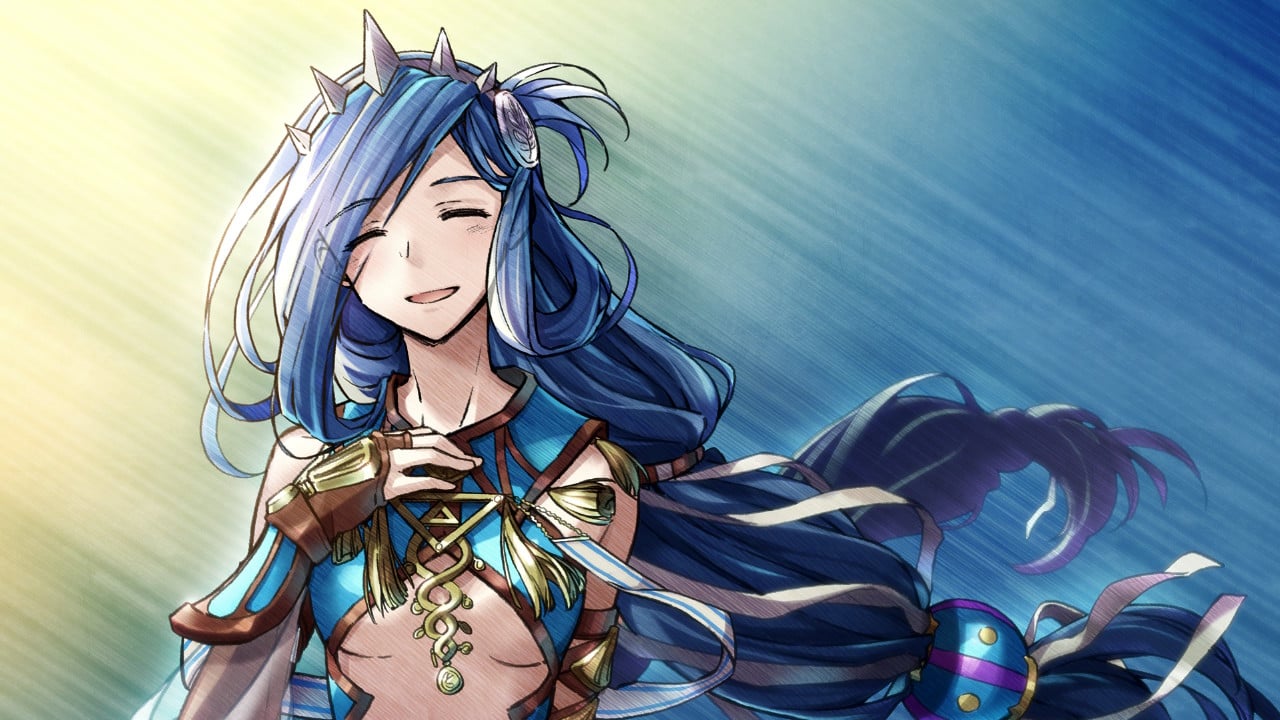
Ys VIII is one of my top 3 JRPGs of the past generation alongside Dragon Quest XI and Persona V. An incredible action RPG following the adventures of Adol, it came out from Nihon Falcom in 2016. I’ve played its direct sequels YSIX and X, and while both were good, there was something special about VIII that still makes it my favorite in the series. Revisiting it again almost ten years after its release, I felt like I was meeting up with old friends. In particular, I loved the second half and that’s because it does something very few games can pull off; it switches main protagonists and crafts an even better story in the second half with its new heroine. There’s another reason this game has meant a lot to me. Mike Fahey’s review was what convinced me to play it in the first place and the last exchange I had with him was a DM thanking him for getting me into the series. I thought about that a bunch as I played through the game again. I actually wrote a few years back how much I enjoyed the first half of the game as Adol and company build a survivor’s village. The game succeeds in making you care about almost every NPC (except for Sir Carlan). This time, I want to dive into the end game and explore what makes it so great even now. Next Step Toward The Unknown The game begins with Adol and company shipwrecked on a mysterious island called Seiren. He has to rescue the stranded members, build a village, fight his way through a bunch of prehistoric primordials, track down a serial killer in their ranks who murders one of their key members, Captain Barbaros, and eventually find the ancient ruins of a fallen city on the northern part of the island. Throughout the whole journey, Adol gets visions of a woman named Dana, but he’s not sure who she is or why he keeps seeing her in his dreams. I figured there was some connection between the two that would come to the forefront as the game progressed since she is the eponymous heroine of Dana’s Lachrymosa. The combat in this game is sublime. It’s so much fun to fight your way through hordes of enemies as you uncover items and castaways in the new sections of the island. With exhilarating music and fluid animation, Ys VIII has some of the best fighting in any action RPG. ©Nihon Falcom Fortunately, the story is just as good with a focus on the NPC interactions. Some of the most poignant moments are the ones players share with the villagers. As their bonds increase, you learn more about what motivates each of them. I enjoy doing sidequests in RPGs, but am not a completionist that feels I have to do every single one. In the case of Ys VIII, I wanted to complete it so I could get closer to all the villagers. Hummel was one of them. A cold transporter who is very practical in his approach to relationships, he’s generally distant to Adol and the villagers. When your bond reaches the max level, he reveals that he was from a family of transporters, but hated their dark legacy and connection with society’s underbelly. After an argument with his dad, he left his home in order to pursue his dreams of becoming an entertainer. Many years later, with a clown mask on his face, he met his father in an alley. He’d been fatally wounded trying to deliver a package, but made his son promise to deliver the package even though he didn’t recognize him. ©Nihon Falcom It turned out his dad was carrying critical medical supplies for a back-alley doctor. The medicine treated a rampant disease, including some of the kids who came to watch him perform. Hummel, realizing that people could do good even in society’s underbelly, took up the mantle once again, but as a different kind of transporter. He shows this altruism in one of the toughest side quests in the game. The party has to rescue the egg of a kidnapped Saurian by entering a plain crammed with hundreds of lethal monsters ready to rip them to shreds. It’s a mad jaunt from one end to the other. The fact that it’s the generally calculating Hummel initiating the quest gives us a glimpse into his more caring side. Another villager, the seamstress, Alison, is physically unwell. The doctor realizes that Alison has been hiding her pregnancy and she’s about to give birth. But she longs for her husband who’s been lost since the shipwrecking. In order to cheer her up, the villagers suggest looking for a special flower from her hometown that she likes. ©Nihon Falcom During the quest, they find her stranded husband, Ed, who quickly returns. After a touching reunion, she gives a premature birth. Fortunately, the baby is healthy. The couple asks Adol to be the child’s godfather and name their child after him. I admit, whenever I see scenes involving childbirth, I’m reminded of being at the hospital while my wife gave birth. It makes me emotional. So I liked this part, even if it mostly skipped over the giving birth part. In one of the later side quests, Ed asks Adol to find a ruby for him so he can make a special ring for his wife. You can tell they care about each and it’s tender moments like these as they run their tailoring store and take care of their baby that I appreciated. Every character matters, even the ones who’ve passed away. I love how the captain is never forgotten and villagers constantly talk about him. Katthew, who tries to carry on the wishes of the late Captain Barbaros, requests fermented sap for the boat to perform a ritual to honor the captain. The young girl, Quina, whose life the captain saved, asks Adol for help putting together something special. Adol at first thinks she has a crush on someone, but as it turns out, she wanted to pay tribute to the captain. I was deeply moved by the gesture and how the game reminds you that the captain’s sacrifice meant something. ©Nihon Falcom There’s also the fisherman battler, Sahad, who is consistently crude, but also has the biggest heart in the group. He misses his family and can’t wait to connect with them again. I felt for the guy. When my wife and kid went to spend time with her family for just a month, it felt like forever. I couldn’t imagine what it would be like shipwrecked away from them indefinitely. The one character I detested, Sir Carlan, never gets a redemptive scene. He is an arrogant aristocrat who refuses to help out in any way in the first half of the game and instead provokes panic in the village with his paranoia. He tries to escape the village by stealing the only craft they have. That provokes an attack by the same monster that had destroyed their ship. He is devoured in the process, and I doubt anyone shed a tear. Towards the end of the game, Adol and company find the ruins of the small ship and repair it. They sail to a nearby island and learn that Carlan actually survived. I wanted nothing to do with him. After he got back to his usual arrogant self, barking orders at the villagers, he was so annoying, I wanted to reset and “unsave” him. ©Nihon Falcom Unfortunately, there are a few spots where I needed all 24 characters to gain access, including an additional dungeon called the Silent Tower. There’s pure orichalcum hidden within, which is necessary to obtain the best armor and max out Adol’s relationship with the blacksmith, Kathleen. Through the force, she comes to understand her grandfather better and creates the best equipment available to the party. The Silent Tower is also home to arguably the toughest bosses in the game, Mephorashmoo, who was far more difficult than the actual final boss. The only way players have a chance is to use the barriers in the chamber to block its attack as it really packs a punch. Abyss Beyond Dreams ©Nihon Falcom At a certain point in the game, we jump to the distant past and play as Dana rather than Adol. But everything is different. The city, which was destroyed in Adol’s time, is teeming with people. We learn that the Eternians were driven to extinction, similar to that of the dinosaurs aka Primordials. Dana knew it was coming, having foreknowledge of the end of her species. She tries to save them as she’s been gifted with the power to see the future. But her abilities drove her to madness until her mother gave her a necklace to suppress her prognostications. This helped bring a semblance of normalcy to her life, but tremendous grief as well. Her mother was killed in a fire that she potentially could have foreseen and prevented if not for that necklace. Her fate, similar to Cassandra, is to know the future, but be completely helpless to change it. As Maiden of the Great Tree, she often interacts with people, helping them in their daily lives. We get a real sense of the Eternians and their society and culture during the past sequences. Back in the present, as Adol and team explore the ruins of Eternia, they come across the Great Tree of Origins. At its base, they find Dana who’s been suspended in a stasis. The woman of Adol’s dreams joins the party and changes everything. ©Nihon Falcom She makes Adol seem more of a generic action hero in light of how compelling her struggle is. She’s a better fighter as well and took Adol’s position in my party. Adol actually becomes superfluous to the quest, serving as a mostly silent avatar for the player (he does have occasional lines here and there, but they’re also very generic). As the journey continues, we see how Dana’s world was destroyed by the Great Tree in a ruthless cycle of evolution. She did her best to help them by warning her people about their impending doom. They prepare a massive essence dome to protect themselves from a shower of destructive meteors, and it seems to work. But then it falls apart and the capital gets badly damaged. Winter brings even more ruin and it seems the Eternians won’t be able to avoid their fate. To make matters worse, all the Iclucians blame Dana. Dana not only has to live with the fact that she’s the last of her people, but that everyone unjustly accuses her of bringing about their demise. ©Nihon Falcom She learns she’s not the only one to walk this cruel and lonely path. There are other Wardens who were the sole survivors of their species’ extinction. They’ve been kept alive to witness and shepherd the destruction of others. Their sorrow has calcified into apathy and they observe Dana with amused detachment. They know her struggle all too well as it was something they themselves struggled with until their own people grinded them up and spat them out. In order to keep life fresh, the old has to make way for the new. Entire civilizations are repeatedly driven to extinction to achieve that end. ©Nihon Falcom I also felt conflicted about what the humans were doing on the island in the present. The party eventually gets strong enough to battle the massive sea monster that had shipwrecked them. It’s a satisfying victory, but I also couldn’t help feeling awful in reflection. The whole journey of Ys VIII involves the party finding these ancient majestic creatures, then destroying them. Most of the Primordials are just protecting their turf, fighting against the foreign invaders (you). There’s no real reason Adol and company has to actually kill all the saurians. But they antagonize them to the point where the dinosaurs form raiding parties and attack the Castaway Village in an attempt to protect themselves. The irony is that in their attempt to ward off extinction and thwart the will of the Great Tree, they themselves become the instruments of said destruction on the Saurians of Seiren Island. By the time they leave, the flora (thanks to continual resource harvesting), the animals (since I killed them all), and the entire ecosystem had been ravaged. There are three endings in the game. I got the normal one first, which leaves matters on an inconclusive note. I also felt underwhelmed by the villain who kind of comes out of nowhere and fills in the trope of super villain bringing about annihilation of the universe. But the conclusion also felt very bittersweet as we never find out what happens to certain key characters. I learned shortly afterwards that Adol needs 200 reputation points to get the good ending. As I was only off by a few points, I quickly went on a few additional raids and got the points I needed. The true ending is better, but still bittersweet. Dana makes the ultimate sacrifice and erases her own existence from their reality. Adol’s companions don’t even remember her. But the Earth goddess, Maia, restores their memories and they have to go to one last fight against an even more underwhelming boss. This leads to Dana’s deification, which might make up for her loss? At the same time, her tragedy, her “lachrimosa,” left me conflicted. She doesn’t get to be with her people again; she’s doomed to godhood. ©Nihon Falcom As the villagers leave on the new ship called the Lombardia II, the game gives the players an opportunity to talk with all of them one last time. Each of them has parting words for Adol and I felt wistful that my journey with them had come to an end. I also felt pretty terrible since all of them get to leave and go on all new adventures, while Dana is stuck in some celestial sphere, having to balance Maia whose dream (or nightmare) was what caused all the chaos in the first place. I played Ys VIII at night, squeezing in time after my kid had gone to sleep. The night after I finished the game for the second time, I instinctively picked up my Switch, only to realize my time on the island was done. I know all good RPGs make you feel a little emptier when they’re finished. But I really wish it could have gone on longer, especially because it left me wondering, are we all just part of some mad god’s dream, persisting in our lives only to one day vanish when the alarm clock goes off? Wake up, Maia!
How Ys VIII’s Unique Take On The Apocalypse Made It So Compelling
Full Article
Original Source
Read the full article at Kotaku →KhanList aggregates and links to publicly available news content. We do not host full articles from third-party sources. Always verify important information with original sources.