Published Jul 21, 2026, 1:00 PM EDT With a Master’s degree in Air Transport Management, Viviana brings her passion for aviation to Simple Flying, while specialising in managing Time-Critical Aircraft on Ground (AOG) situations. Over the past two years, United Airlines has built out San Francisco International Airport (SFO) as the US's dominant launchpad for ultra-long-haul Pacific flying, operating SFO–Manila on the Boeing 777-300ER (expanding to twice-daily on October 26, 2025) and seasonal SFO–Christchurch three times weekly on Boeing 787-8/-9s. These sectors leapfrog partner hubs to capture end-to-end tech-corridor, diaspora, and premium leisure traffic in one hop, replacing multi-stop itineraries via Auckland or intra-Asia connections. United now offers 4.5 times more Pacific seats from SFO than any other US carrier from any other US hub, and is growing its SFO ops by 20% in 2026. The strategy pits United directly against Philippine Airlines, which is acquiring five Airbus A350-1000ss for 2026 specifically to defend its North American market share. What United is aiming to do is a deliberate construction of an ultra-long-haul Pacific fortress at SFO, leveraging aircraft economics and geography as competitive weapons against both foreign flag carriers and its own JV partners, which this article aims to discuss in further detail. Building A Pacific Fortress At SFO Credit: Shutterstock SFO did not become United Airlines' leading Pacific hub overnight. Its position today is the result of decades of strategic planning and investment. Geographically, San Francisco is one of the closest major US gateways to Asia and Oceania, making SFO an ideal departure point for ultra-long-haul flights. It also gives United a strong alternative to the highly competitive Los Angeles (LAX) market, allowing the airline to build its Pacific network around a less congested hub. A major turning point came in 1985, when United acquired Pan American World Airways' Pacific Division for $750 million. The deal gave the airline Pan Am's extensive route network across East Asia and the South Pacific, along with key operations in Tokyo, San Francisco, and Honolulu. Simple Flying Quiz Think you really know United Airlines? Answer 10 questions and put your knowledge to the test Simple Flying Quiz Think you really know United Airlines? Answer 10 questions and put your knowledge to the test It also included a fleet of 18 aircraft (eleven Boeing 747SPs, six Lockheed L-1011-500s, and one McDonnell Douglas DC-10-30) as well as around 2,700 Pan Am employees. Although none of these aircraft remain in United's fleet today, and the airline retired its final Boeing 747 in 2017, the acquisition laid the foundation for the Pacific network it operates from SFO today. That long-term strategy continues. In 2025, United increased capacity from SFO by 20%, giving it around 4.5 times more Pacific seats than any other US airline at any hub. Concentrating long-haul Pacific operations at SFO, rather than spreading resources across multiple airports, has created a stronger and more efficient network. It has also reinforced United's position as the leading US carrier across the Pacific. Why Manila Has Become One Of United's Most Important Pacific Routes Credit: Shutterstock United now flies to more than 111 destinations from SFO, operating around 300 daily departures. Over the past four years, the airline has added more than 11 international and nine domestic destinations from the hub. These include new domestic routes to New Orleans, Kansas City, Detroit, and St. Louis, alongside international services to San José, Costa Rica, and Panama City. One of the airline's most important additions was the launch of nonstop SFO–Manila service in October 2023. The route made United the first US airline to operate nonstop flights between the United States and the Philippines. It proved successful enough for the airline to increase the service to twice daily effective October 26, 2025, with the second flight providing passengers with an evening departure. Year 2023 2024 2025 Load Factor 88.67% 90.59% 91.19% The route has continued to perform very strongly, with an average load factor of around 90.76%, according to Cirium data. Demand is driven by more than tourism and the large Filipino diaspora. SFO is also the gateway to Silicon Valley, generating strong premium business traffic. To better serve this market, United has introduced its new Polaris business class suites on the route. Why Christchurch Fits United's Long-Term Strategy Credit: Shutterstock United's seasonal SFO–Christchurch service operates three times a week using Boeing 787-8 and 787-9 aircraft during New Zealand's summer, typically from December through March. The route is the only nonstop service operated by a US airline to New Zealand's South Island. By bypassing traditional entry points such as Auckland, United is able to capture premium leisure demand while also growing its cargo business. The route complements United's broader New Zealand strategy. The airline already serves Auckland year-round from SFO and seasonally from Los Angeles. This gives United a stronger presence than its US rivals. Delta only flies between Los Angeles and Auckland, while American Airlines operates seasonal services from Dallas/Fort Worth and Los Angeles. By introducing SFO-Christchurch, United bypassed traditional entry points and captured premium leisure traffic and cargo. Together, these routes support United's post-pandemic strategy of expanding its long-haul international network. The launch also made Christchurch the southernmost destination in United's global network. The timing also aligns with Christchurch Airport's own growth plans. The airport recently completed a NZ$40 million expansion that doubled its freight handling capacity, allowing up to eight cargo aircraft to park simultaneously. This investment strengthens Christchurch's position as both a passenger gateway and a growing cargo hub. How The Boeing 777 And 787 Are Powering The Expansion Credit: Shutterstock United's diverse fleet gives the airline the flexibility to match aircraft with market demand. According to Cirium data, the carrier operates around 1,150 aircraft, including more than 200 Airbus jets, although Boeing models make up the majority of the fleet. Around 12% of its aircraft are leased, while the fleet has an average age of 15 years, with nearly a third being six years old or younger. The Boeing 737 MAX 9 is United's most numerous aircraft type, with 161 in service, providing the backbone of its domestic network and feeding passengers onto long-haul flights. On thinner ultra-long-haul routes such as San Francisco–Christchurch, United deploys the Boeing 787-8 and larger 787-9. The airline operates 12 787-8s and 53 787-9s, with more than 70 additional Dreamliners on order. Higher-demand routes, including San Francisco–Manila, are instead served by the Boeing 777-300ER, of which United has 22. Depending on the cabin configuration, these aircraft seat between 365 and 440 passengers. Specification Boeing 777-300ER Boeing 787-8 Boeing 787-9 Capacity 365-400 243 257 Maximum range ~7,370 nm (13,650 km) ~7,305 nm (13,530 km) ~7,565 nm (14,010 km) Operating costs High Low Medium Belly cargo volume 7,120 ft³ (201.6 m³) 4,826 ft³ (136.7 m³) 6,090 ft³ (172.5 m³) Operating both aircraft families allows United to expand strategically while reducing risk. The fuel-efficient 787 is well-suited to launching new long-haul markets with lower operating costs, while the larger 777-300ER provides additional capacity as demand grows. This flexibility supports United’s strategy of expanding San Francisco's Pacific network. Why San Francisco Remains The Key To United's Success Credit: United Airlines SFO continues to be one of United's greatest strategic assets, and the airline's expansion plans are far from complete. Thanks to its geographic location, the airport provides an ideal gateway to Asia and Oceania while also serving as one of the world's largest technology and business markets. This aligns with United's growing focus on premium travel, with the airline offering a record 27.4 million premium seats in 2025, accounting for around 12% of its total capacity. United's strategy relies on SFO functioning as both a major origin-and-destination airport and a powerful connecting hub. According to SFO data, around 28.8% (enplanements per fiscal year) of passengers at SFO travel on domestic flights, providing a steady flow of connecting traffic from dozens of US cities onto the airline's long-haul Pacific network. This domestic feed allows United to support routes that would be difficult to sustain on local demand alone. Fiscal Year 24/25 25/26 Domestic 17,171,366 17,703,719 International 7,160,673 7,153,860 Total 24,332,039 24,857,579 The airline is also investing heavily in the hub's future. The ongoing $2.6 billion redevelopment of Terminal 3 West, which is expected to be completed in 2027, will modernize United's domestic operations and improve connections. Combined with the efficiency and cargo capability of the Boeing 787 family, these investments give United greater flexibility to launch new long-haul routes while maintaining profitability as passenger demand continues to develop. Growing Competition Across The Pacific Photo: Vincenzo Pace | Simple Flying Although United has built a dominant position at SFO, competition across the Pacific continues to grow. The airline operates around 40% (48.7% of total market share) of the airport's long-haul flights, but SFO is also served by more than three dozen other long-haul international airlines. Among the biggest competitors are Alaska Airlines (9.5% market share), Delta Air Lines (7.6%), and American Airlines (6.9% market share). The airport has also welcomed new entrants, including Vietnam Airlines, Condor, ITA Airways, STARLUX Airlines, ZIPAIR, and Air Premia. Competition is also increasing on some of United's key Pacific routes. Philippine Airlines, for example, is taking delivery of 15 Boeing 787-10 and nine Airbus A350-1000s to expand its ultra-long-haul North American network and strengthen its position on routes such as Manila–San Francisco. Even so, United's scale at SFO makes it increasingly difficult for rivals to match its network. Its extensive domestic connections, large Pacific schedule, and continued investment in new routes have reinforced SFO as the airline's primary gateway across the Pacific, even as competition intensifies. Simple Flying Quiz Think you really know United Airlines? Answer 10 questions and put your knowledge to the test Simple Flying Quiz Think you really know United Airlines? Answer 10 questions and put your knowledge to the test
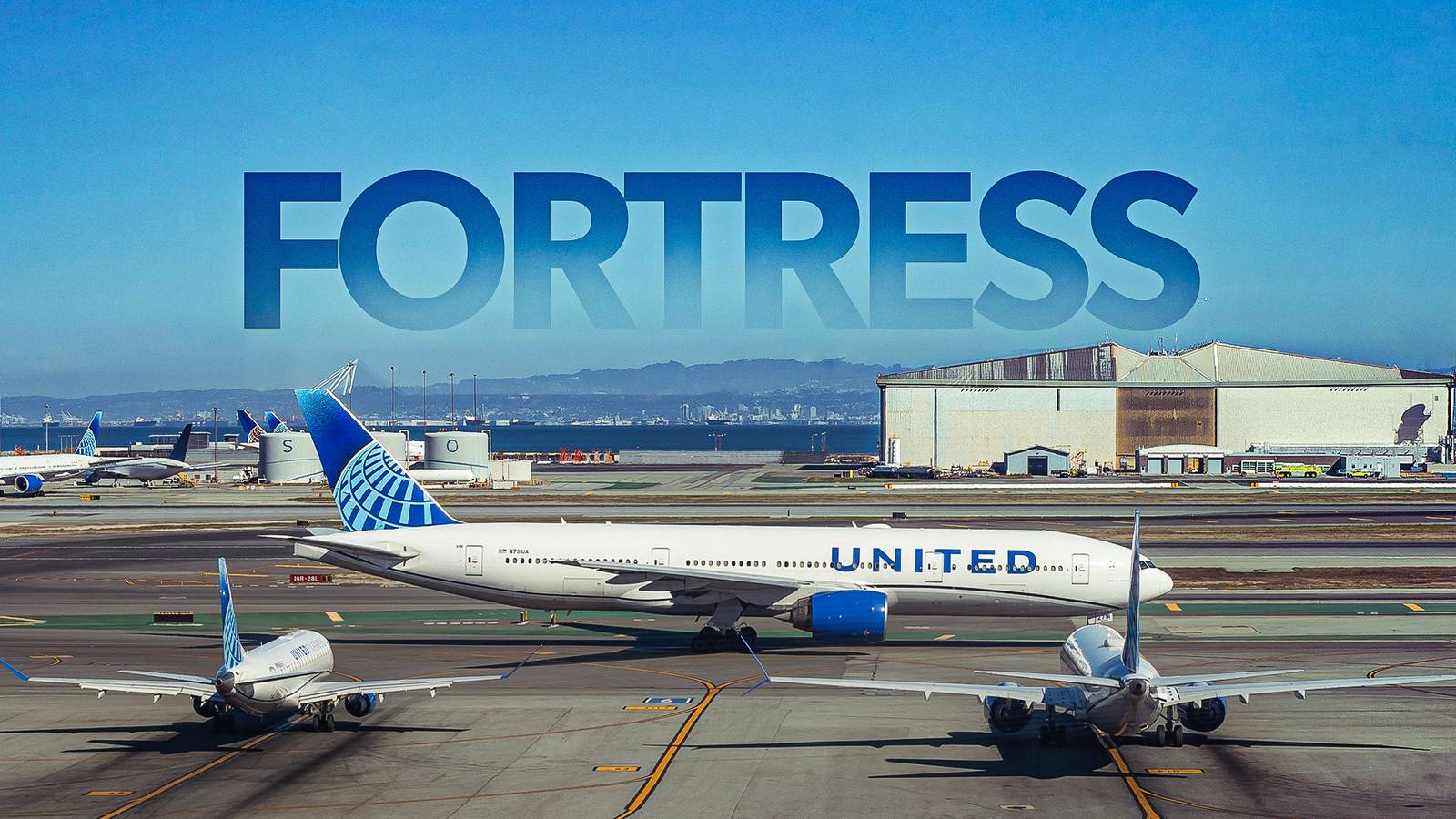
How United Airlines Quietly Turned San Francisco Into America's Ultra-Long-Haul Pacific Fortress
Full Article
Original Source
Read the full article at Simpleflying →KhanList aggregates and links to publicly available news content. We do not host full articles from third-party sources. Always verify important information with original sources.