
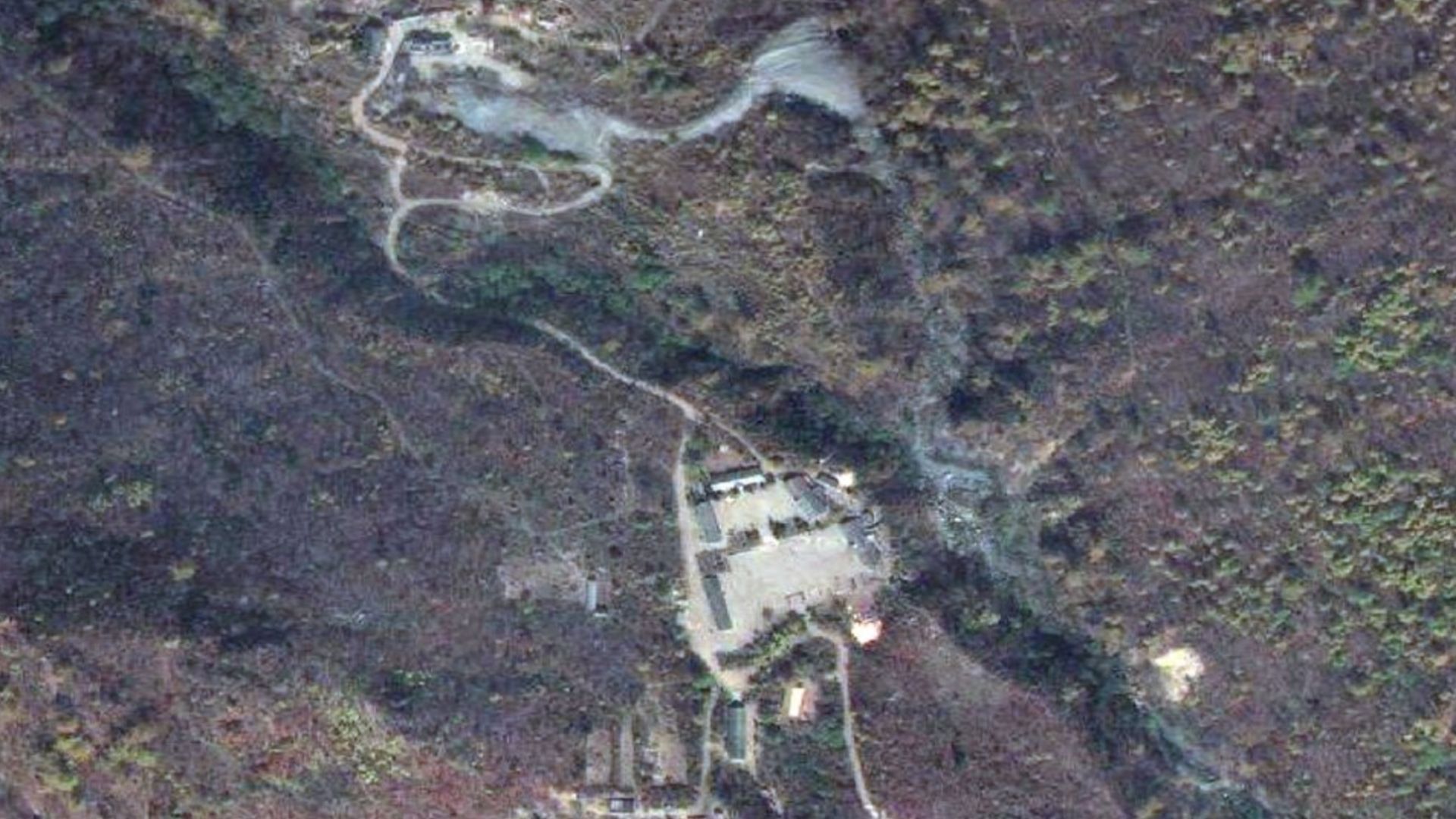
North Korea’s six underground nuclear tests may have done more than produce short-lived tremors. They appear to have reactivated dormant faults beneath the country’s Punggye-ri test site, leaving the surrounding region unusually active for years. An international team led by Pusan National University Professor Kim Kwang-hee reached that conclusion after studying seismic records collected in South Korea and northeastern China from 2008 to May 2025. The research identified 1,399 local earthquakes around Mount Mantap, including roughly 1,330 that followed North Korea’s sixth and most powerful nuclear test in September 2017. What changed after the 2017 nuclear test? North Korea conducted its first underground nuclear test beneath Mount Mantap in 2006. Around 60 earthquakes were detected between that explosion and the country’s sixth test, with seismic activity beginning to increase after the third detonation in 2013. The pattern changed sharply following the September 2017 explosion, which generated an earthquake-like event with a magnitude of 6.3. About 20 days later, earthquakes began occurring more frequently around the mountain. These were not limited to a conventional sequence of aftershocks that faded over days or weeks. Instead, the tremors continued for years and gradually spread along existing faults. “The seismic activity did not quickly subside after the 2017 nuclear test. The earthquakes continued for years and gradually formed a clearer pattern along existing faults,” Kim said. Most of the events were concentrated along two fault zones extending roughly 15 miles in a north-northwesterly direction. How can an underground explosion reactivate faults? A nuclear device detonated underground releases an enormous amount of energy into the surrounding rock. That energy produces intense pressure, fractures the nearby crust, and alters the forces acting on existing geological faults. Researchers believe North Korea’s repeated tests weakened the shallow crust under Mount Mantap. The 2017 explosion may then have disturbed faults that were already under pressure, pushing sections of rock closer to slipping. Unlike most earthquakes on the Korean Peninsula, which generally originate at depths of about 9 miles, most Mount Mantap events occurred less than 0.6 miles below the surface. Their shallow locations strengthen the proposed connection to underground nuclear testing. The earthquakes also became more powerful. Early events generally ranged from magnitude 1.0 to 1.3, while some reached the magnitude-3 range during 2023 and 2024—the strongest registered magnitude 3.4. Why do these continuing earthquakes matter? Kim said the entire 15-mile fault system could potentially produce a magnitude-6.4 earthquake if it were reactivated simultaneously. The study does not predict such an event, but it highlights the possible geological consequences of repeated underground explosions. The findings also challenge the assumption that seismic disturbances caused by nuclear testing disappear relatively quickly. “The progressive increase in both the earthquake rate and the moment release rate indicates that the crust did not simply relax toward equilibrium after the final explosion,” the researchers wrote. Long-lasting seismic activity could also complicate efforts to monitor compliance with the Comprehensive Nuclear-Test-Ban Treaty. Earthquakes detected years after a detonation may be difficult to distinguish from unrelated tectonic events. For monitoring agencies, the implication is clear: surveillance around former nuclear test sites may need to continue for years after the explosions stop. The research was published in the Science journal. Get the latest in engineering, tech, space & science - delivered daily to your inbox.Atharva is a full-time content writer with a post-graduate degree in media & amp; entertainment and a graduate degree in electronics & telecommunications. He has written in the sports and technology domains respectively. In his leisure time, Atharva loves learning about digital marketing and watching soccer matches. His main goal behind joining Interesting Engineering is to learn more about how the recent technological advancements are helping human beings on both societal and individual levels in their daily lives.
How underground nuclear explosions can trigger earthquakes long after tests end
Full Article
Original Source
Read the full article at Interestingengineering →KhanList aggregates and links to publicly available news content. We do not host full articles from third-party sources. Always verify important information with original sources.