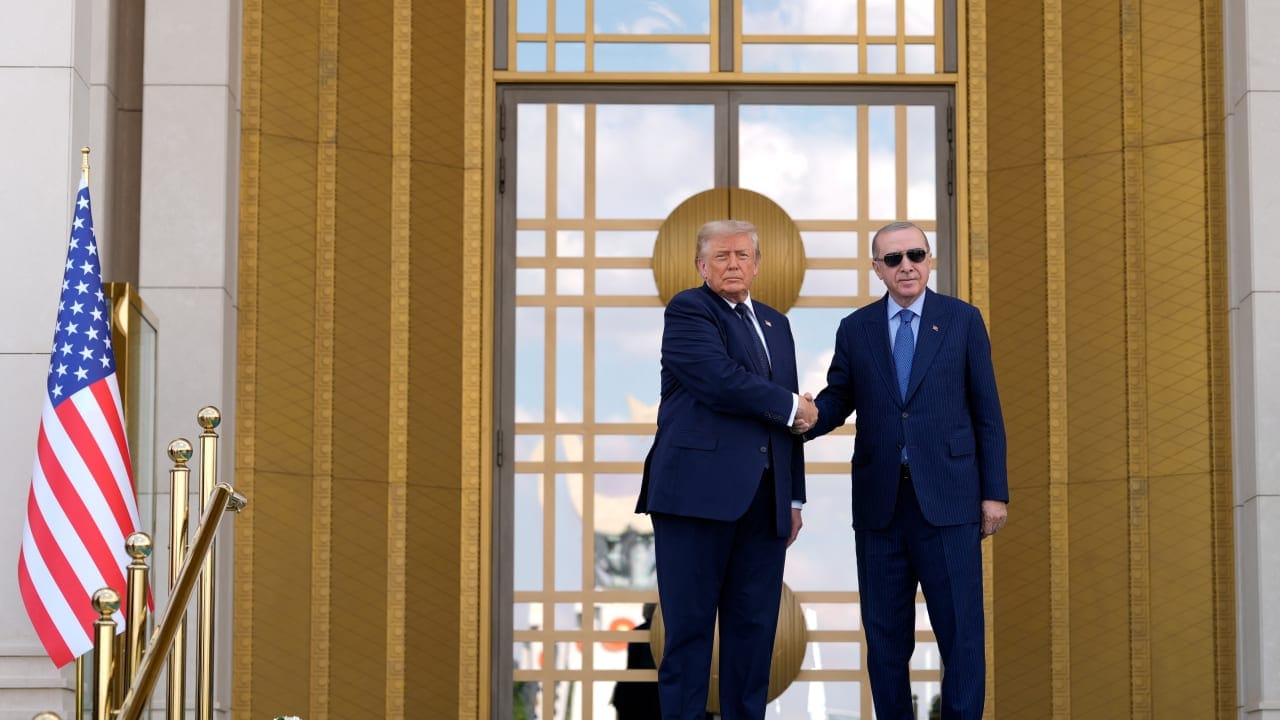
The Ankara summit confirmed Turkey’s transformation from a difficult ally into one of NATO’s most influential strategic powers.Follow us on GoogleUS President Donald Trump shakes hands with Turkish President Recep Tayyip Erdogan as he arrives at the Bestepe Presidential Palace during a formal welcome for the NATO summit in Ankara, Turkey, Tuesday, July 7, 2026.(photo credit: Emrah Gurel/Pool via REUTERS)ByDAVID BEN-BASATJULY 31, 2026 15:48Updated: JULY 31, 2026 17:36When NATO leaders gathered in Ankara on July 7 and 8, 2026, for the alliance’s annual summit, it was clear that this was more than another diplomatic event. It was a strategic declaration.Turkey – long regarded as a complicated and at times problematic member of the Atlantic alliance – hosted a NATO summit for only the second time in its history, following the Istanbul summit in 2004.The message was clear. Ankara is no longer sitting on the alliance’s sidelines. It has become a pivotal state whose decisions influence the region stretching from Eastern Europe to the Middle East.The Turkish paradox remains. Turkey maintains complex relations with its allies, has purchased Russian weapons systems and frequently generates tensions with Washington. At the same time, it holds some of NATO’s most important strategic assets.As the US signals its desire for Europe to assume a greater share of the security burden, Turkey is positioning itself as a partner that is difficult to replace.Turkish President Recep Tayyip Erdogan speaks to the media at NATO’s 75th anniversary summit in Washington last year. Turkey under Erdogan is no longer a NATO ally in spirit; it is a rogue state pursuing an expansionist, Islamist agenda that threatens stability, states the writer. (credit: Elizabeth Frantz/Reuters)It leads the naval task force responsible for mine clearance in the Black Sea, plays a central role in defending the alliance’s southern flank and maintains NATO’s second largest land army.At the same time, it stresses that threats emerging from its southern border, including terrorism, regional instability and the consequences of wars in the Middle East, demand the same attention as the challenges facing Eastern Europe.This message, once pushed to the margins of NATO discussions, took center stage at the Ankara summit and demonstrated the growing importance of the alliance’s southern flank.Energy as a geopolitical leverTurkey’s strength is rooted not only in its military power, but also in its geographic position. Continued disruptions to shipping routes and energy supplies in the Persian Gulf and the Strait of Hormuz have once again demonstrated how urgently Europe needs alternative energy routes.In this environment, Turkey is becoming a central hub for gas and oil pipelines and transit infrastructure connecting Asia, the Caucasus and Europe.Ankara’s standing, therefore, is based not only on military strength, but also on its ability to influence Europe’s energy security. This strategic advantage is becoming increasingly significant as instability in the Middle East continues.Alongside developments in the Middle East, the Ankara summit also addressed the future of the alliance itself. Key decisions included strengthening security cooperation among member states, expanding defense production, increasing investment in military infrastructure, and continuing to adapt NATO to future threats.Some analysts describe this process as a transition toward “NATO 3.0,” an alliance that depends more heavily on European responsibility and advanced industrial cooperation.Turkey enjoys a clear advantage within this process. Its defense industry is expanding rapidly, its weapons exports are rising, and it is becoming an increasingly important partner in the alliance’s joint defense projects.The combination of proven military capabilities, an irreplaceable geographic position, and growing importance in the energy sector has made Turkey one of NATO’s most influential members.The question facing decision makers in Europe and Washington is no longer whether Ankara will continue to gain influence, but how cooperation with Turkey can be preserved without undermining the alliance’s unity and values.Above all, the Ankara summit marked a change in perception. Turkey has moved from being a difficult partner whose periodic crises must be managed to a strategic player that cannot be ignored.The author is CEO of Radios 100FM, an honorary consul, vice dean of the Consular Diplomatic Corps and president of the Israel Radio Communications Association. He previously served as a monitor for Army Radio and as a television correspondent for NBC.Follow us on Google
How Turkey became NATO’s indispensable partner - and a major force on the global stage - opinion
Full Article
Original Source
Read the full article at Jpost →KhanList aggregates and links to publicly available news content. We do not host full articles from third-party sources. Always verify important information with original sources.