
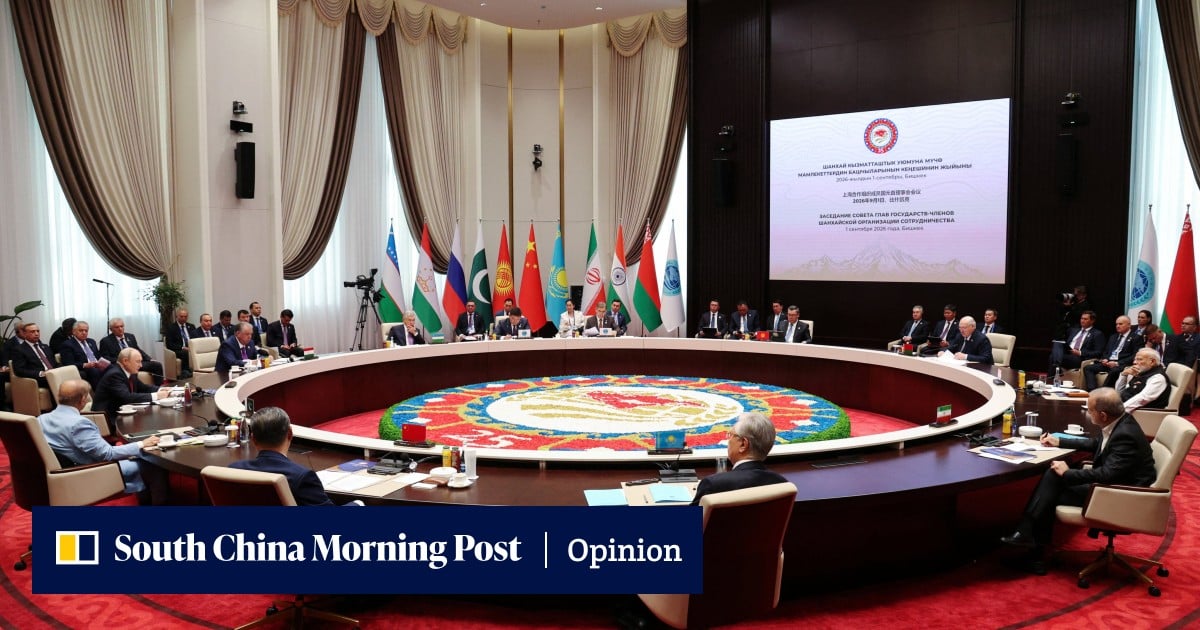
The Shanghai Cooperation Organisation (SCO) was born 25 years ago as a modest mechanism for managing borders between China, Russia and four Central Asian states. At its anniversary summit in Bishkek this week, it looks more consequential – and harder for the United States to dismiss.The timing is important. Russia’s invasion of Ukraine remains unresolved, while the war between Iran and the US has turned the Persian Gulf into another theatre of strategic competition, with energy markets again exposed to disruption around the Strait of Hormuz. The SCO now brings together China, Russia, India, Iran, Pakistan, most of the Central Asian republics and Belarus, alongside partners including Turkey and multiple Gulf states.Its 10 full members represent more than 3.4 billion people and roughly a quarter of global GDP. However, its growing importance is not simply a matter of size.President Xi Jinping has called for the SCO to assume a larger role in technology and security and to help create a “universally secure environment”. He has presented it as a model of cooperation without formal alliances, confrontation or targeting third parties, urging members to focus on development, security, people’s well-being and dialogue.Calling the SCO an anti-American alliance is a mistake. Its members have different interests. India and China remain strategic competitors; India and Pakistan have long-standing tensions; and Central Asian governments want room to manoeuvre between Moscow, Beijing, Ankara, Brussels and Washington. Turkey remains a North Atlantic Treaty Organization (Nato) member while pursuing a larger Eurasian role.The SCO has neither Nato’s military command nor the European Union’s supranational institutions. Its significance is more practical: it gives states that do not want their foreign policy defined in Washington a forum to coordinate, negotiate and hedge.
How the SCO chips away at US power without an alliance system
Full Article
Original Source
Read the full article at Scmp →KhanList aggregates and links to publicly available news content. We do not host full articles from third-party sources. Always verify important information with original sources.