
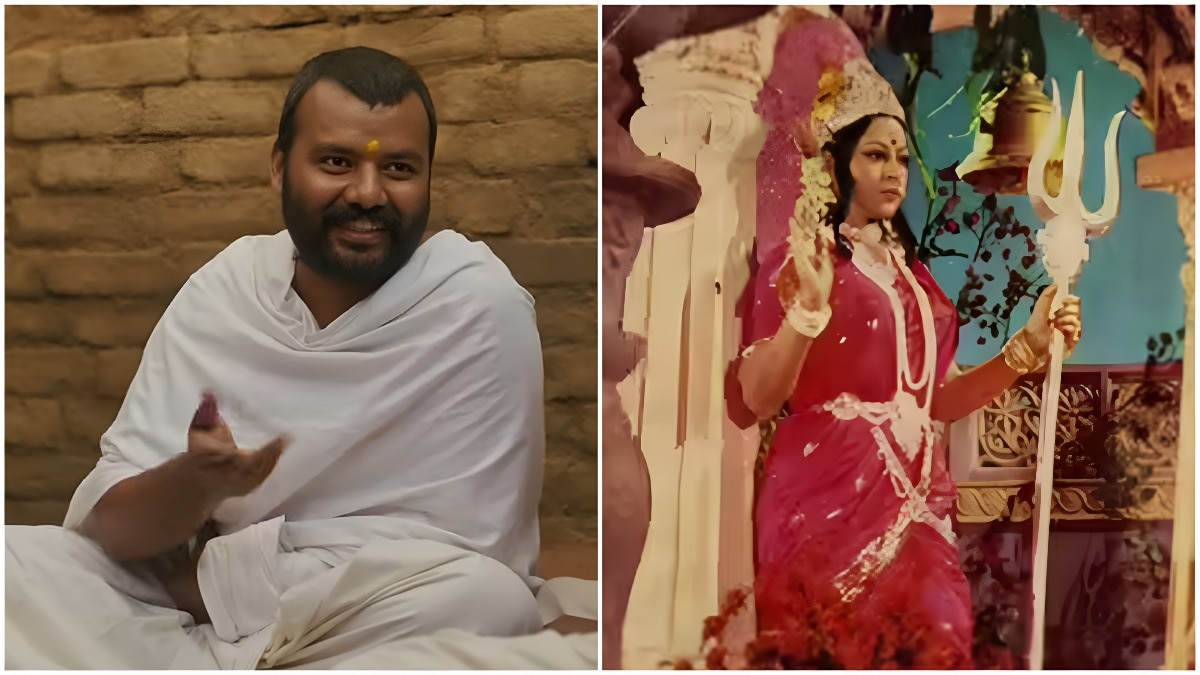
Hanuman Ansh opened on August 7 to around Rs 10 lakh. Two weeks into its run, there was little indication that the spiritual drama would become a theatrical success. By its fourth week, it had crossed the Rs 70-crore mark in India and expanded from 355 shows on opening day to more than 7,000 shows.According to the trade website Sacnilk, the Vishal Chaturvedi-directed film collected around Rs 1.08 crore in its first week and Rs 40 lakh in its second. Its third week jumped to Rs 10.40 crore, followed by Rs 6.25 crore on the fourth Friday, Rs 9.25 crore on Saturday and Rs 12.75 crore on Sunday. By Day 28, its India nett stood at around Rs 72.88 crore."The first week was very poor. The second week was a total collapse. And then the turnaround happened from the third weekend onwards," trade analyst Taran Adarsh tells India Today, calling the trajectory “a major turnaround.”Adarsh draws a parallel with Jai Santoshi Maa, the 1975 devotional film that became one of the year’s biggest Hindi hits. “I distinctly remember that I have seen a similar trend of a film picking up after a slow start 51 years ago,” he says. “I went with my mother to watch Jai Santoshi Maa. People were carrying aarti thalis and everything. The shoes were removed outside. When there was this song, people used to get up from their seats, start worshipping and clapping.” The comparison comes at a time when mythology, spirituality and folklore are finding increasing space in theatrical cinema.From television staple to theatrical genreFor decades, mythology and spirituality had a more established place on Indian television than in mainstream cinema. Ramayan and Mahabharat became television phenomena, while devotional and mythological programming developed a dependable home audience. Theatrical releases in this space continued, but the genre was rarely positioned alongside the industry’s major commercial bets. That has changed noticeably in the past few years.Kartikeya 2, released in 2022, used mythology as the basis for an adventure film and saw its Hindi business grow substantially after a modest opening. Kantara, released the same year, built its narrative around folklore, local belief systems and the Bhoota Kola tradition before becoming a pan-India success.In 2024, Hanu-Man brought Hanuman mythology into a superhero narrative and emerged as a major theatrical success. The investment in the genre is now growing. Nitesh Tiwari’s Ramayan, starring Ranbir Kapoor as Ram, Sai Pallavi as Sita and Yash as Ravana, is being mounted as a two-part theatrical epic. Dharma Productions has also announced a new film around Radha Krishna epic.Aamir Khan, meanwhile, has spoken about wanting to make Mahabharata for more than a decade, although the project has remained in development amid concerns over its scale and the responsibility of adapting the epic.Trade expert Akshaye Rathi sees the growing interest as a reflection of how deeply these stories are embedded in Indian culture.“Mythology, history, all of these are extremely popular and close to us Indians because all of us have grown up listening to these tales from our grandparents, from our parents,” Rathi tells India Today. He believes the theatrical opportunity is still largely untapped.“Given the fact that there are movies like Hanuman Ansh, there are movies like Ramayan which have done extremely good business or are poised for great openings, I really think we’re still just about scratching the tip of the iceberg,” he says.Hanuman Ansh’s slow-burn successHanuman Ansh, based on the life of Neem Karoli Baba and starring Shobinaw Satyaa and Chandan Anand, represents the other end of this spectrum. Made on a reported budget of around Rs 2 crore, it did not have the scale or star power of the major mythological projects now in production.Its business came after release. Sacnilk’s figures show collections rising from Rs 1.08 crore in the first week to Rs 10.40 crore in the third, before the film crossed Rs 60 crore in its fourth week.That growth has also allowed it to hold screens against substantially bigger releases, including Toxic, while its continuing run has become part of the screen-sharing equation with Mirzapur: The Movie.For Adarsh, the film’s trajectory ultimately comes down to audience connection. "This only proves one thing: somewhere down the line, the content speaks,” he says. “A film can be anything — spiritual, devotional, mythological — but unless the audience connects, it won’t work.”The theatrical audience for these stories was built on television over decades. Hanuman Ansh, Hanu-Man, Kartikeya 2 and Kantara suggest that the same cultural familiarity can now translate into cinema footfalls, while Ramayan and other large-scale mythological projects indicate that the industry is willing to bet on that audience at a much bigger scale.- EndsPublished By: Vineeta KumarPublished On: Sep 4, 2026 21:06 IST
How Hanuman Ansh mirrors 1975 film Jai Santoshi Maa with Rs 72 crore box office run
Full Article
Original Source
Read the full article at Indiatoday →KhanList aggregates and links to publicly available news content. We do not host full articles from third-party sources. Always verify important information with original sources.