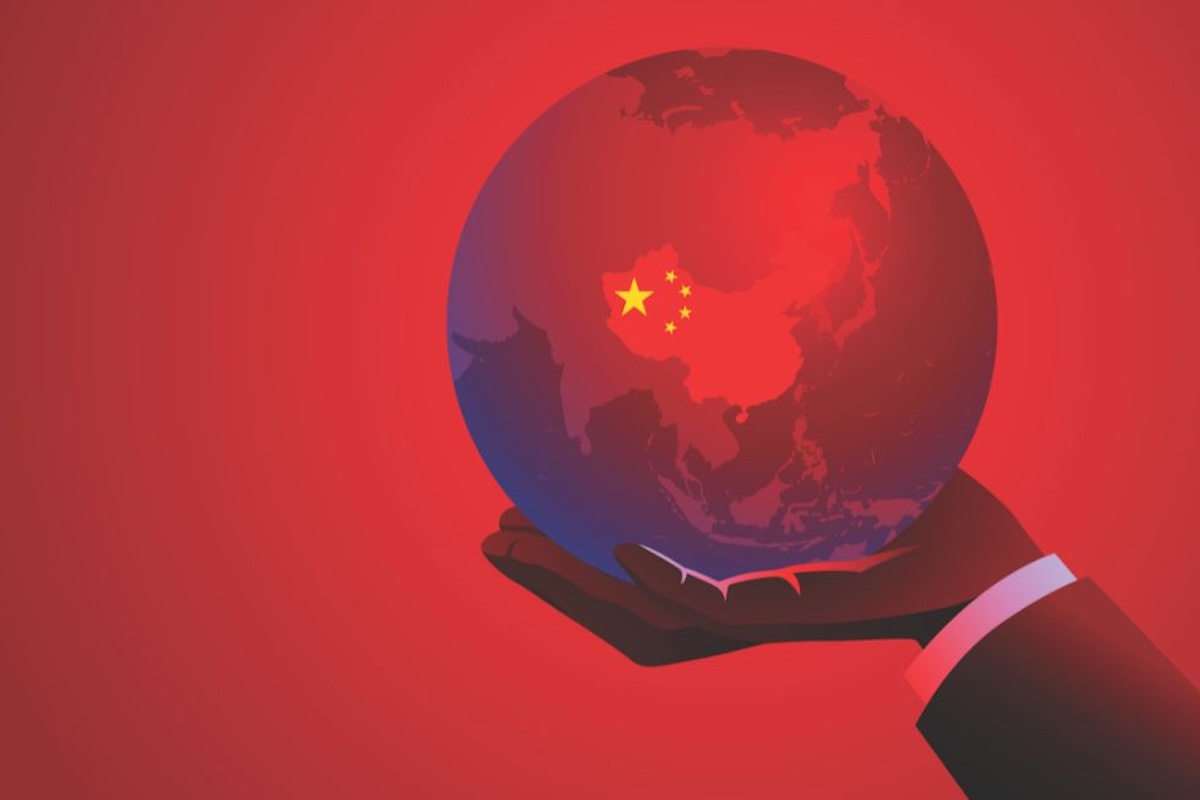
A recent Pew Research Centre survey found that people in most of the 36 countries surveyed now view China more positively than the United States. More respondents also expressed confidence in Xi Jinping than in Donald Trump on world affairs. The findings suggest that Beijing’s international standing has improved even as Washington’s global image has weakened. Yet beneath China’s growing international influence lies a striking paradox. As Beijing appears more confident abroad, it has become increasingly preoccupied with reducing dependence on the very global networks that enabled its rise. Why would a country that has benefited more than almost any other from globalization become increasingly wary of the system that fuelled its ascent? Most explanations point to strategic rivalry with the United States, export controls and intensifying technological competition. These factors matter, but they explain what China is doing more readily than why it is doing it. To answer the question, it is necessary to look beyond tariffs, semiconductors and geopolitics to how Beijing interprets its own rise. The answer lies not simply in China’s growing capabilities but in how it understands the relationship between globalization, dependence and national power. One globalization, two visions China’s accession to the World Trade Organization in 2001 encapsulated one of the defining bargains of the post-Cold War era. Yet Beijing and Washington entered that bargain with fundamentally different expectations. China did not resist globalization. On the contrary, it embraced it more enthusiastically than almost any other major economy. The difference lay not in participation but in purpose. For many Western policymakers, integrating China into the global economy was about more than economic growth. Markets, prosperity and participation in international institutions would gradually encourage political liberalization and closer alignment with the liberal international order. Beijing viewed the same process very differently. Economic openness was a means of generating the wealth and technological capabilities needed for national rejuvenation through industrial upgrading and economic transformation. Markets, investment and global integration were instruments for strengthening China’s technological and strategic capabilities rather than transforming its political system. Globalization was not an end state but one stage in a much longer national project. Both sides entered globalization believing it would be transformational. The West expected openness to reshape China politically; Beijing expected it to strengthen national development and reinforce long-term political stability. Neither expectation was entirely misplaced. Globalization made China wealthier, more technologically sophisticated and more deeply integrated into the global economy while reinforcing, rather than diluting, the state’s capacity to shape national development. As China’s capabilities grew, however, Western expectations of political convergence collided with Beijing’s strategy of self-strengthening and national rejuvenation. Using globalization to build capabilities China’s development strategy reflected this vision. Rather than allowing markets alone to determine its trajectory, Beijing used globalization to acquire technology, upgrade manufacturing, climb value chains and strengthen domestic firms. Access to foreign capital, export markets and international production networks formed part of a broader strategy of capability accumulation in which the state remained central to guiding economic transformation. Apple’s deep integration into China’s manufacturing base illustrates this approach. Its supply chains did far more than create export capacity. They diffused production expertise, engineering capabilities and supplier networks that strengthened China’s broader industrial base. China became the world’s manufacturing hub and accumulated vast industrial capabilities. It moved beyond assembling products to building industrial ecosystems capable of designing, manufacturing and improving increasingly sophisticated technologies. These ecosystems emerged through sustained interaction between state policy, firms, universities, research institutions and global production networks. The outcome was one that few Western policymakers had anticipated. Rather than socializing China into the liberal international order, globalization strengthened state capacity, accelerated technological learning and fostered industrial ecosystems capable of reshaping global competition. Huawei’s resilience despite years of American export controls, BYD’s emergence as a global electric-vehicle leader and CATL’s dominance in advanced electric-vehicle batteries reflect the same reality: China is no longer simply participating in globalization; it is helping shape some of its most strategically important industries. In doing so, China challenged a central assumption of the post-Cold War era. Interdependence generated technological leadership and strategic leverage without producing political convergence. Governments increasingly came to view supply chains not simply as engines of efficiency but as sources of resilience, capability and geopolitical influence. Globalization did not end. It became political. From capability to vulnerability China’s success, however, also revealed a paradox. The same globalization that accelerated its rise created new forms of strategic vulnerability. Access to global markets, advanced technologies and international production networks enabled China to accumulate unprecedented industrial capabilities, but these same networks also exposed critical sectors to external leverage. Beijing increasingly concluded that national power depended not only on domestic capabilities but also on who ultimately controlled the technologies and networks on which those capabilities depended. That logic became visible earlier this year when Manus AI, a Chinese artificial intelligence start-up, reportedly restricted access to its platform for users in several countries while citing compliance with United States export-control regulations. Whether the restrictions reflected legal necessity or commercial caution matters less than what the episode revealed. Even a Chinese company operating at the technological frontier remained embedded within international regulatory and technological structures shaped by others. Strategic dependence could persist even after technological advancement. The lesson had already been reinforced by Huawei. Despite its having become one of the world’s leading technology companies, years of American export controls exposed its dependence on foreign semiconductors, software and advanced manufacturing equipment. Similar concerns extended to semiconductor fabrication, biotechnology, financial infrastructure and other sectors increasingly viewed as foundational to national security. Beijing’s concern was not simply that access might be interrupted, but that dependence itself could become an instrument of strategic leverage. This marked a fundamental shift in how Chinese policymakers understood globalization. Interdependence was no longer seen only as a source of opportunity and mutual gain but also as a source of asymmetric vulnerability that could be exploited during periods of geopolitical tension. The challenge was therefore not to withdraw from globalization but to reduce exposure in sectors where external dependence carried unacceptable strategic risks. From Beijing’s perspective, the objective is not to reject globalization but to reshape the terms on which it participates – remaining globally connected while ensuring that the foundations of national development cannot be constrained by external actors. When globalization became political China’s reassessment of dependence was not unique. It reflected a broader shift in how governments understood globalization. For much of the post-Cold War era, markets were expected to allocate resources efficiently while firms optimized for cost and scale. Governments instead began evaluating economic openness through a different lens: national resilience, technological leadership and strategic capability. Governments increasingly came to view firms not simply as commercial actors but as repositories of critical technologies and industrial capabilities. The question was no longer simply how to attract investment but which capabilities countries could afford to lose. Economic interdependence came to be understood not only as a source of mutual benefit but also as a source of dependence, leverage and vulnerability. The result has been a more selective form of globalization. Cross-border investment, technology transfers and market access are increasingly conditioned by considerations of national security and economic resilience. The United States combines export controls with industrial policy to protect critical technologies. Europe now frames trade through the language of de-risking and economic security. Japan’s intervention in the proposed acquisition of Makino Milling by a South Korean private equity firm, together with the controversy surrounding Nippon Steel’s bid for US Steel, reflected the same concern: Even transactions among allies are increasingly judged through the lens of strategic industrial capability. Perhaps most revealingly, China itself has moved in the same direction. Even while encouraging firms to expand globally, Beijing has simultaneously sought to reduce dependence on foreign technologies and retain control over capabilities it considers strategically vital. The emerging divide is not between globalization and deglobalization. It is between competing efforts to redesign globalization around resilience, technological leadership and national capability while remaining deeply connected to the global economy. For three decades, the central question was whether globalization would change China. China’s rise has largely answered that question. The more important question today is what kind of globalization is now emerging. The next phase is likely to remain deeply interconnected, but it will also be more selective, more strategic and shaped by competing national models of development. China’s rise did not simply produce a more powerful state. It transformed how globalization itself is understood. Xi Jinping’s call at this week’s World Artificial Intelligence Conference for greater international cooperation in AI, alongside stronger governance and a larger Chinese role in shaping global standards, captures this emerging vision. Beijing is not abandoning globalization; it is seeking to reshape its rules. G Venkat Raman, PhD, is a professor of humanities and social sciences at the School of Government, Peking University
How China’s rise changed the logic of globalization
Full Article
Original Source
Read the full article at Asiatimes →KhanList aggregates and links to publicly available news content. We do not host full articles from third-party sources. Always verify important information with original sources.