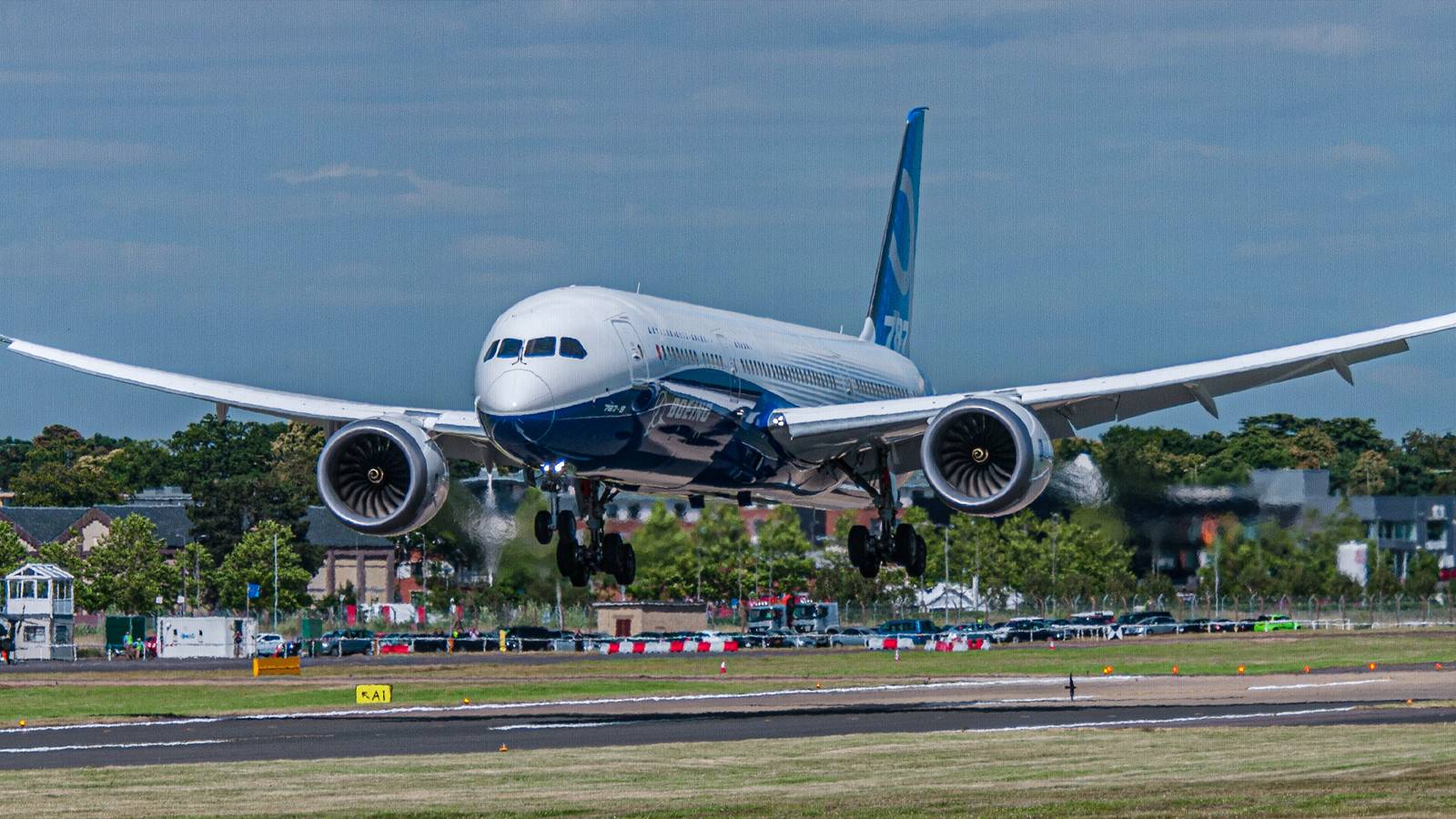
Published Jul 31, 2026, 3:00 PM EDT Passionate about promoting aviation and the beauty of flight, Antonio loves to take photos, read, and write about airplanes and helicopters as well. Based in Palermo, Italy , he is a frequent airshow visitor. Boeing returned its entire 787 Dreamliner fleet to service within about four months of its 2013 grounding, despite never identifying a single confirmed manufacturing defect behind the two lithium-ion battery failures that triggered the crisis. Rather than redesigning the aircraft's electrical architecture or changing the battery chemistry, Boeing assumed a battery could fail again and engineered a containment system that prevented a single faulty cell from threatening the airplane. That decision, more than proving exactly what caused the original failures, is why the Dreamliner has never faced another fleetwide grounding over its batteries. This article explains how Boeing developed that solution, why regulators accepted it without a definitive root cause, and what technical changes were made to the 787's battery system before the aircraft returned to passenger service. It also examines what investigators ultimately concluded about the 2013 incidents and why the certification strategy adopted then continues to protect every Dreamliner flying today. Two Fires, Nine Days Apart, And A Fleet Grounded Worldwide The first incident happened on January 7, 2013, when ground crews at Boston's Logan Airport spotted smoke pouring from the auxiliary power unit battery of a parked Japan Airlines Boeing 787 Dreamliner. As Scientific American reported at the time, investigators traced the event to a short circuit inside one battery cell that triggered thermal runaway, a chain reaction in which one overheating cell drags its neighbors down with it. You can read more about what specifically caused those fires in Simple Flying's own breakdown of the incident. Nine days later, on January 16, an All Nippon Airways 787 made an emergency landing in Takamatsu Airport (TAK), Japan, after its cockpit warned of a battery fault and the crew reported a burning smell. Because the main and APU batteries on both aircraft were identical, the FAA ordered the entire US-registered fleet out of the sky the following day, a step regulators had not taken with a commercial jet since the McDonnell Douglas DC-10 groundings of 1979. What made the situation especially difficult was that, per the NTSB's Airworthiness Factual Addendum, investigators never conclusively pinned down which single manufacturing flaw caused either short circuit, even after months of laboratory teardown. Inspectors did trace some irregularities to the battery manufacturer's Japanese production line, but nothing rose to a smoking-gun explanation for both events. Boeing could not simply patch one identified defect and move on. It had to design a solution that would hold up regardless of the exact failure mode, because nobody could say for certain what that mode had been, or whether it might resurface in a different form down the line. Why Boeing Chose Containment Over A Redesign Rather than wait for a definitive root cause, or rebuild the 787's electrical architecture, Boeing pursued what Aviation Today described as a "defense in depth" approach: assume a cell can fail again, and engineer everything around it so that failure stays contained and harmless. The strategy set aside the question of what had triggered the two incidents and focused entirely on managing the consequences of a repeat event, a pragmatic bet that let Boeing move in weeks rather than the years a ground-up overhaul would have required. That mattered because the 787 leans on lithium-ion batteries more heavily than any airliner before it. The aircraft's "more electric" architecture replaces much of the traditional pneumatic bleed-air system with electrically driven equipment, trading some fuel burn for a heavier reliance on batteries and generators, a tradeoff Simple Flying has explored in detail when covering the Dreamliner's fuel efficiency and range flexibility. Touching that architecture, rather than working around it, would have meant re-certifying systems well beyond the battery itself, an undertaking that could easily have stretched into years rather than months. Line up the two versions of the system side by side, and the pattern is clear: Boeing changed almost everything surrounding the battery while leaving its own chemistry alone. The cells were still made of lithium-cobalt-oxide, exactly as before, but were given far more physical spacing and added insulation so that heat from one failing cell could no longer spread easily to its neighbors. The charging electronics were hardened and given tighter voltage limits, closing off another potential trigger for overheating. Most visibly, the battery went from sitting openly in the electronics bay to being sealed inside a stainless-steel containment box, with a titanium tube added to vent any smoke or gas directly overboard rather than into the aircraft. Same Chemistry, Different Neighborhood: What Changed Inside The Battery According to Battery University's review of the fix, Boeing left the battery's lithium-cobalt-oxide chemistry exactly as it was, resisting pressure to switch to a less energy-dense but more thermally stable chemistry. Instead, engineers gave each of the battery's eight cells more physical spacing and added insulation between them, so that if one cell did enter thermal runaway, the heat could no longer easily jump to its neighbors and turn a single-cell event into a cascading fire. Boeing also hardened the battery's charging system and tightened its voltage limits, closing off another possible trigger for overheating even though investigators had already ruled out overcharging as the cause of the original incidents. That represented a major shift in the way the battery was treated. The original design relied heavily on the battery itself remaining stable under all operating conditions. The redesigned system assumed the opposite: that even a properly manufactured lithium-ion cell could eventually experience an internal failure, and that the aircraft therefore needed multiple layers of protection between one damaged cell and the rest of the airplane. In plain terms, the original certification had not fully accounted for what happens when, not if, a single cell fails. The 2013 redesign built that assumption directly into the hardware instead of leaving it to chance or to a battery manufacturer's quality control alone. The Stainless-Steel Box And Titanium Vent Tube That Changed Everything Credit: Shutterstock The most visible change, and the one most often pictured in coverage of the fix, was a rugged stainless-steel containment box built around the entire battery. Where the original design left the battery open to the surrounding electronics bay, the new box was engineered to physically contain a worst-case thermal runaway event, fire, smoke, and off-gassing included, rather than simply hoping enhanced insulation would prevent one from occurring in the first place. Paired with the box was a titanium vent tube, designed to channel any smoke, heat, or vented gases directly overboard, away from the cabin and away from the surrounding airframe structure. Even if both new safeguards, added spacing and a sealed box, somehow failed to stop a runaway event entirely, the vent tube ensured the consequences stayed outside the aircraft rather than inside it. None of this required Boeing to change how the battery powered the aircraft's systems day to day. The fix worked around the battery's existing role in the 787's electrical architecture rather than reducing that role, preserving the fuel and weight advantages the more-electric design was built to deliver in the first place, a tradeoff Simple Flying explored when covering how the Dreamliner defied its early turbulence to become 2025's best-selling widebody. How The FAA Approved The Fix In Weeks, Not Years Credit: Shutterstock By February 2013, Boeing had already proposed its containment-based solution to regulators, as NPR's coverage of the certification process detailed, and spent the following weeks running tests to demonstrate the redesigned battery system could withstand a worst-case failure without endangering the aircraft. The FAA formally signed off on the package on April 19, 2013, clearing the way for airlines to begin retrofitting aircraft already in their fleets rather than waiting for new-build replacements. Those tests reportedly included deliberately triggering a short circuit in a single cell to confirm the new spacing, insulation, and steel enclosure could keep the resulting heat and gas away from adjacent cells and from the surrounding structure. Only after regulators saw the worst case play out safely, again and again, did they sign off on the design. Airlines installed the modification kits over a matter of weeks per aircraft, and the fleet was fully back in the air within roughly three to four months of the initial grounding order, a remarkably short timeline for a safety response of this scale. That speed depended entirely on the retrofit strategy: because the fuselage, wiring, and electrical architecture stayed unchanged, technicians could install the new battery box and vent hardware without extensive structural rework. The story did not end cleanly, however. A later NTSB report, as CNN's coverage of its findings noted, criticized gaps in the original 2007 certification and testing process that allowed the vulnerable battery design through in the first place, even as it confirmed the containment approach itself had proven durable in the years since. What The Fix Left Behind Credit: Shutterstock More than a decade later, the containment strategy has held. The 787 has not faced another fleet-wide grounding over its battery system, even as the aircraft went on to become one of the best-selling widebodies in Boeing's history, with more than 1,800 orders and over 1,100 deliveries by the mid-2020s. The lithium-ion battery, so briefly the aircraft's biggest liability, quietly became a permanent and largely unremarkable part of the Dreamliner's electrical system, rarely mentioned in the same breath as the production and delivery troubles that came to define the program's next decade. The episode also reshaped how regulators think about certifying novel battery-dependent systems on commercial aircraft, an influence visible in a later engineering review published in MDPI Energies, which stressed containment and cascading-failure analysis over chemistry alone as the real lesson of the 787 saga. Boeing's bet, that a battery failure was survivable if engineered correctly rather than avoidable if predicted perfectly, became something close to an industry template, one later echoed in how electric vehicle and drone manufacturers approach battery-pack safety: assume a cell will eventually misbehave, and design the enclosure around that certainty rather than around the hope that it never happens. For an aircraft once nicknamed after its early troubles, the 787 offers a different lesson in engineering. Rather than waiting for absolute certainty, engineers focused on ensuring that any future battery failure would remain contained. More than a decade later, that containment strategy, not the search for one final answer, has defined the Dreamliner's safety record.
How Boeing Fixed The 787 Dreamliner's Battery Problem Without Permanently Grounding The Fleet
Full Article
Original Source
Read the full article at Simpleflying →KhanList aggregates and links to publicly available news content. We do not host full articles from third-party sources. Always verify important information with original sources.