
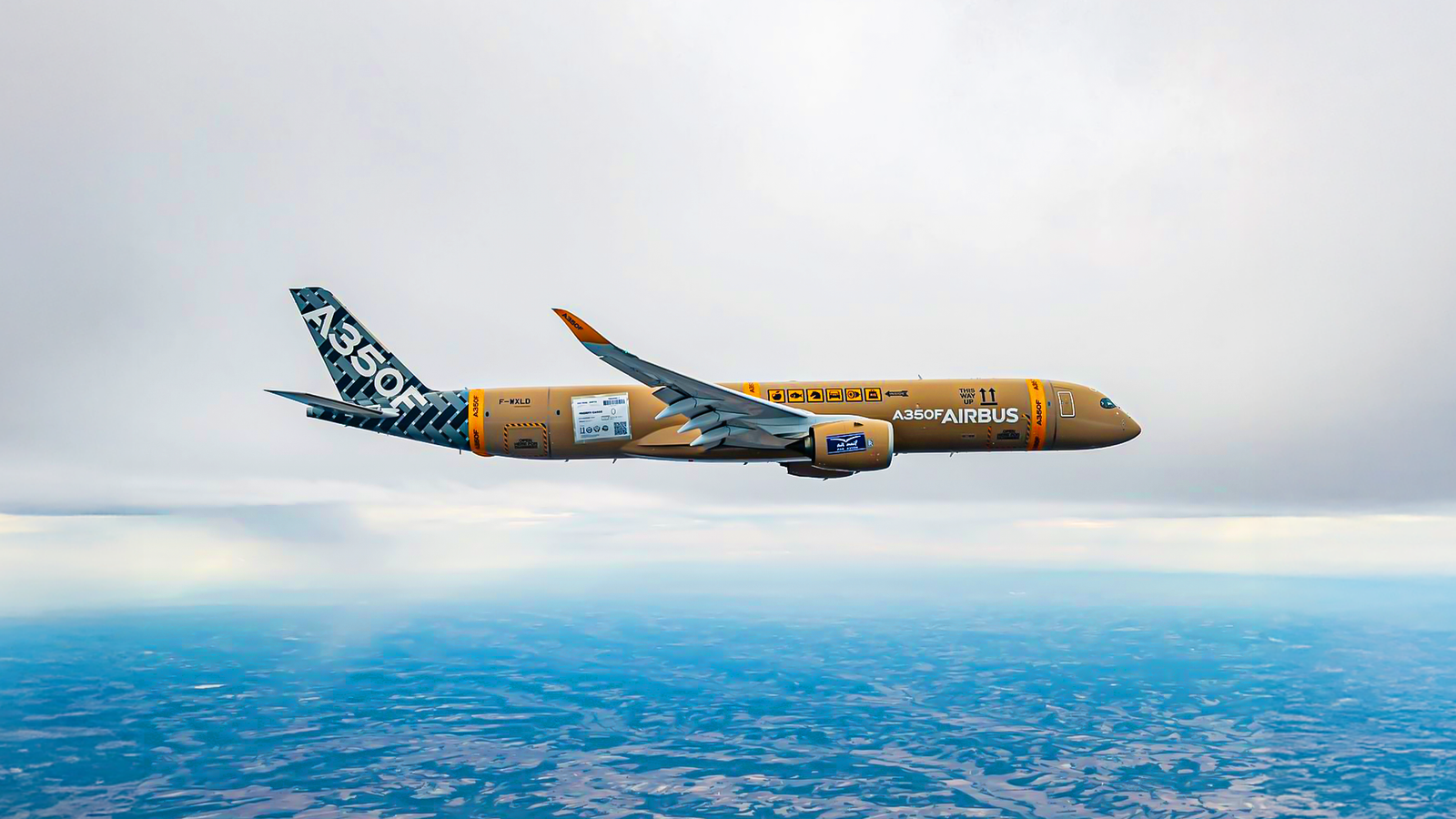
Credit: Airbus, Simple Flying Published Oct 25, 2026, 5:00 PM EDT With a Master’s degree in Air Transport Management, Viviana brings her passion for aviation to Simple Flying, while specialising in managing Time-Critical Aircraft on Ground (AOG) situations. Sign in to your Simple Flying account For decades, Boeing has dominated the large-freighter market, with its iconic 747 Freighter and highly successful 777F leaving Airbus struggling to establish a meaningful presence in the segment. Now, that dominance faces a serious challenge. The Airbus A350F has secured 115 orders, compared with 81 for Boeing's next-generation 777-8F, marking a significant turnaround for a manufacturer whose previous dedicated freighter struggled to attract customers. On September 29, the A350F completed its maiden flight, bringing Airbus one step closer to its target of certification and first deliveries in the second half of 2027. With higher payload capacity than the current 777F, improved fuel efficiency, and a wider main-deck cargo door, the A350F promises cargo operators a compelling alternative. However, Boeing's established market position and the forthcoming 777-8F mean the battle is far from decided. Can Airbus turn its early commercial momentum into a lasting challenge to Boeing's freighter dominance? Boeing Has Dominated Large Freighters For Decades Credit: Markus Mainka | Shutterstock Boeing has dominated the widebody freighter market for decades, building its position with iconic aircraft such as the 747F, 767F, and 777F. While the 747 became synonymous with long-haul air cargo, the 777F established itself as a leading twin-engine freighter, offering operators a combination of payload capacity, range and operating efficiency. Together, these aircraft helped Boeing establish a strong presence among the world's largest cargo airlines. Airbus, by contrast, has historically struggled to gain a foothold in the dedicated freighter market. Its previous offering, the A330-200F, secured just 38 orders, reflecting the difficulties of competing against Boeing's established product portfolio. One of Boeing's advantages is the large market for passenger-to-freighter (P2F) conversions. Aircraft such as the 767 and 747 have long been converted into freighters, letting operators gain cargo capacity without buying an entirely new aircraft. This is a massive advantage for airlines. By retaining much of the original airframe, engines, and avionics, conversions can offer a more affordable alternative to factory-built freighters, although they still require substantial structural modifications and certification. However, Airbus is now finally taking a different approach. Rather than introducing another A330 derivative, the manufacturer has developed the A350F as a new-generation widebody freighter designed to compete directly with Boeing's largest twin-engine cargo aircraft. With advances in materials, fuel efficiency, and cargo-loading capabilities, Airbus hopes to challenge a market position Boeing has maintained for decades. But what makes the A350F different enough to succeed where its predecessor struggled? The A350F Offers More Than Just Improved Fuel Efficiency Credit: Antoine Houzelstein | Shutterstock The A350F offers a maximum payload of 111 tonnes, exceeding the current 777F's 103.7 tonnes, with a range of approximately 8,700 kilometers at maximum payload. Its 4.3-meter-wide main-deck cargo door, which Airbus describes as the largest in its class, is designed to accommodate oversized shipments, including aircraft engines. The aircraft also features an optimized cargo floor layout, allowing greater flexibility in pallet positioning and weight distribution. According to Airbus, the A350F offers 11% more cargo volume than its comparator, giving operators more flexibility on long-haul freight routes. Efficiency is another major selling point. Built using more than 70% advanced materials, including composites and titanium, the A350F benefits from a lighter structure, with Airbus citing a maximum take-off weight up to 46 tonnes lower than the current 777F. The manufacturer also claims that the aircraft can reduce fuel consumption and associated CO₂ emissions by up to 40% compared with older-generation freighters. Beyond fuel efficiency, the A350F benefits from its commonality with the established A350 passenger family, sharing 100% of engine spares and tooling, 99% of airframe tooling and 98% of spares. This could allow airlines already operating the A350 to streamline maintenance, reduce spare-parts inventories and minimize additional investment. Airbus is also targeting high operational reliability, drawing on the maturity of the existing A350 passenger fleet. Specification Airbus A350F Boeing 777F Boeing 777-8F Maximum payload 244,713 pounds (111 tonnes) 227,076 pounds (103.7 tonnes) 260,145 pounds (118 tonnes) Main Deck Cargo Door Width 14.1 feet (4.3 meters) 11.9 feet (3.65 meters) 12.2 feet (3.73 meters) Status Flight Testing In Service Development Expected Release 2027 2009 2022, now 2029 However, all these performance and efficiency figures remain manufacturer claims rather than independently verified results from commercial freighter operations. While the A350F's specifications suggest a potentially competitive alternative to Boeing's established freighters, its real-world performance will only become clear after entering service. For now, the more immediate question is whether airlines are sufficiently convinced by these promises to order the aircraft. Airlines Are Already Placing Their Orders Credit: Dutsadee | Shutterstock Airbus' growing order book suggests that airlines are increasingly willing to consider an alternative to Boeing's established freighter portfolio. By the end of August 2026, the A350F had accumulated 115 firm orders, including 34 secured during the first eight months of the year. This represents an increase of approximately 42% from the 81 orders recorded at the beginning of 2026. The aircraft has already surpassed the commercial performance of Airbus' previous purpose-built freighter, the A330-200F, which attracted just 38 orders throughout its production program. Meanwhile, Boeing had recorded 81 net orders for the competing 777-8F through July 2026, giving Airbus a 34-aircraft lead based on the available reporting figures. Among the A350F's customers, Atlas Air stands out as particularly significant. The New York-based cargo operator, currently reliant on Boeing aircraft, ordered 20 A350Fs in March 2026, making it the type's largest customer. Deliveries are scheduled between 2029 and 2034, supporting the airline's long-term fleet expansion and the gradual retirement of its aging Boeing 747-400 freighters. Other customers include Air China Cargo, Etihad Airways, STARLUX Airlines, and AviLease, each ordering 10 aircraft. Interestingly, Azerbaijan's Silk Way West Airlines has committed to both manufacturers, ordering two A350Fs and two Boeing 777-8Fs, showing that some operators value access to both competing platforms. However, Airbus' early order advantage does not necessarily translate into long-term market dominance. The two manufacturers face different delivery schedules, existing customer relationships, and fleet replacement requirements. While Airbus claims a substantial share of the next-generation large-freighter market, Boeing retains an extensive installed fleet and established relationships with major cargo operators. The A350F may be attracting considerable commercial interest, but Boeing's position in the wider freighter market remains much stronger than the order comparison alone suggests. Boeing Is Not Giving Up Its Freighter Stronghold Credit: Feri_Davat | Shutterstock Despite the A350F's growing order book, Airbus is still far from challenging Boeing's overall position in the global freighter market. Boeing's current 777F remains an established aircraft with a substantial operational footprint, while an exemption from US emissions requirements allows the manufacturer to continue producing up to 35 additional aircraft beyond 2027 as development of the next-generation 777-8F progresses. Boeing's future freighter is expected to carry up to 260,145 pounds (118 tonnes) of cargo, approximately seven tonnes more than the A350F. This extra capacity could appeal to operators that prioritize maximum payload, especially at airports where securing additional departures is difficult. Several major cargo operators have already committed to the 777-8F, including Qatar Airways Cargo with 34 orders, Cargolux with 10, China Airlines and Korean Air with eight each. Boeing also benefits from its extensive existing customer base. Atlas Air operates a Boeing-only fleet of approximately 93 aircraft. Similarly, FedEx Express, one of the world's largest cargo airlines, operates approximately 477 aircraft, including around 300 Boeing jets. Such established fleets represent decades of investment in maintenance infrastructure, spare parts, crew training and operational procedures, potentially making a transition to another manufacturer more complex and costly. Although the A350F has secured 115 orders compared with 81 for the 777-8F, this does not mean Airbus has overtaken Boeing in the wider freighter market. Nevertheless, Boeing faces an important challenge: timing. With the 777-8F now expected to enter service in 2029 or later, Airbus could gain a meaningful head start if the A350F achieves its targeted certification and first deliveries in the second half of 2027. For cargo airlines planning fleet replacements, the deciding factor may therefore be less about which aircraft offers the highest payload and more about which manufacturer can deliver when capacity is needed. Airbus' Biggest Advantage Over Boeing May Be Time Credit: Skycolors | Shutterstock Cargo airlines cannot always afford to delay replacing aging aircraft simply because a more capable model is expected to arrive later. If Airbus achieves certification and first deliveries of the A350F in the second half of 2027, it could gain a significant head start over Boeing's competing 777-8F, which is now expected to enter service in 2029 or later. With Boeing's next-generation freighter facing delays, Airbus has an opportunity to attract customers whose fleet replacement requirements cannot wait indefinitely. This is most likely why Atlas Air invested in Airbus' fleet rather than Boeing. So far, the A350F program appears to be progressing towards its planned entry into service. On September 29, the first flight-test aircraft, MSN700, departed Toulouse with five Airbus test personnel aboard. During the four-hour-and-ten-minute maiden flight, the aircraft reached an altitude of 25,000 feet and an indicated airspeed of 340 knots. The flight marked the beginning of an intensive certification campaign expected to last more than nine months. Meanwhile, the second test aircraft, MSN701, is progressing through final assembly, with Airbus preparing to expand its flight-test activities ahead of the planned 2027 certification and first deliveries. However, entering service first does not necessarily guarantee long-term commercial success. Airbus must still complete certification, demonstrate the aircraft's operational capabilities and establish a reliable production and delivery schedule. Any setbacks could narrow its advantage over Boeing, while further delays to the 777-8F could strengthen Airbus' position. With both manufacturers approaching critical milestones, the next few years could determine whether the A350F's early commercial momentum translates into a lasting shift in the large-freighter market. The Real Test Of Airbus' Freighter Ambitions Begins In 2027 Credit: Antoine Houzelstein | Shutterstock The A350F's significance isn't necessarily that it will replace Boeing as the dominant freighter manufacturer, but that it could challenge its longstanding dominance in the large-freighter market. Greater competition between the two manufacturers could give cargo airlines more choice, stronger negotiating power, and access to more competitive aircraft offerings. However, much of the A350F's promised performance rests on Airbus projections and marketing rather than proven commercial operations. Its success will depend on whether Airbus meets its 2027 delivery target, how quickly production increases, and whether its order book continues to grow. Equally important will be Boeing's ability to bring the competing 777-8F into service without further significant delays. If Airbus can translate its early commercial momentum into reliable deliveries and competitive operating performance, the large-freighter market could shift from Boeing's near-monopoly towards a genuine duopoly, with both manufacturers competing for a greater share of the market. For cargo operators, the biggest change may not be which manufacturer comes out ahead, but finally having a credible alternative when making their next major fleet investment.
How Airbus' New Clean Sheet Freighter Challenges Boeing’s Dominance In The Cargo Sector
Full Article
Original Source
Read the full article at Simpleflying →KhanList aggregates and links to publicly available news content. We do not host full articles from third-party sources. Always verify important information with original sources.