
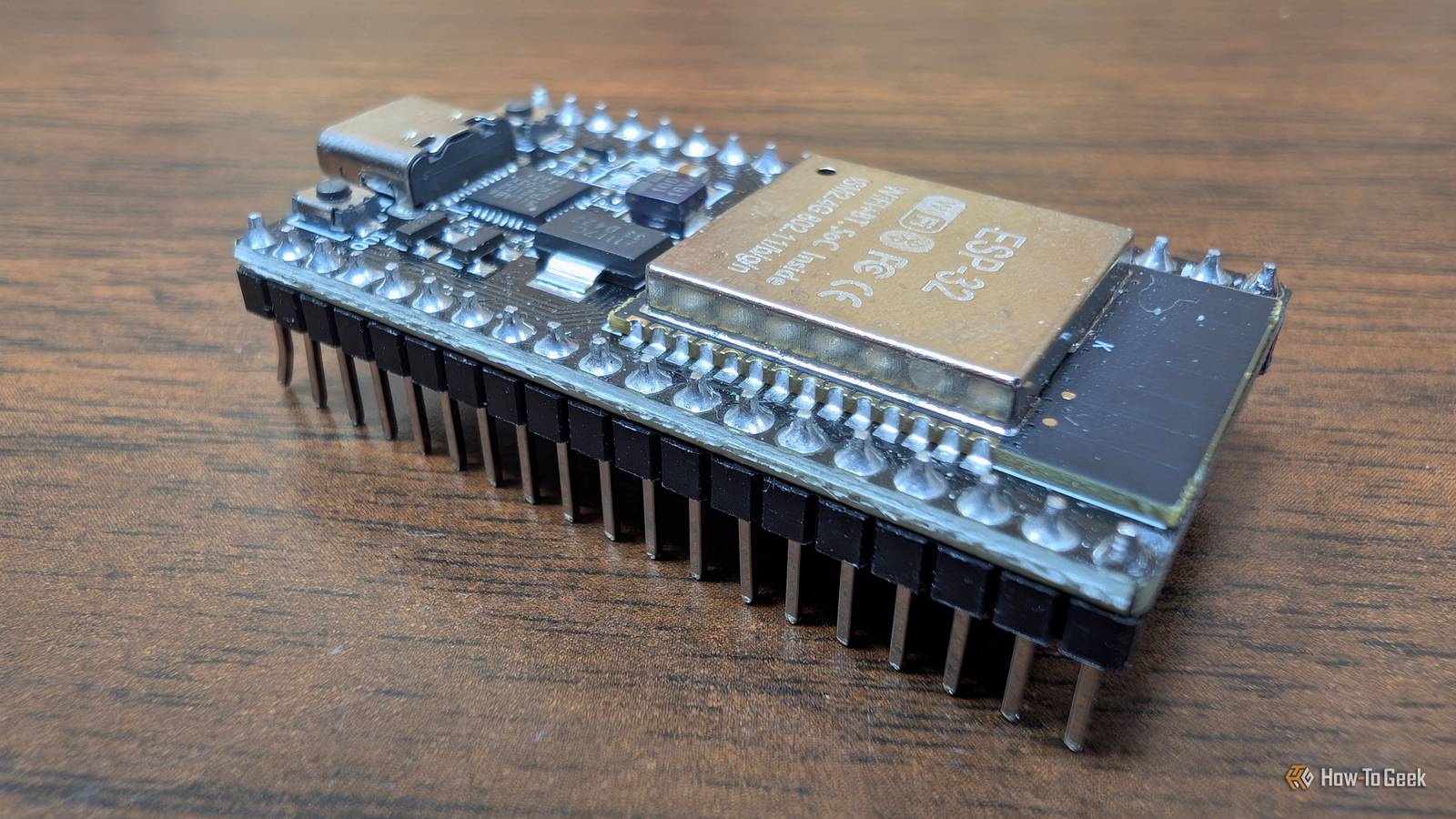
Published Sep 12, 2026, 8:30 AM EDT Nick Lewis is an editor at How-To Geek. He has been using computers for 20 years --- tinkering with everything from the UI to the Windows registry to device firmware. Before How-To Geek, he used Python and C++ as a freelance programmer. In college, Nick made extensive use of Fortran while pursuing a physics degree. Nick's love of tinkering with computers extends beyond work. He has been running video game servers from home for more than 10 years using Windows, Ubuntu, or Raspberry Pi OS. He also uses Proxmox to self-host a variety of services, including a Jellyfin Media Server, an Airsonic music server, a handful of game servers, NextCloud, and two Windows virtual machines. He enjoys DIY projects, especially if they involve technology. He regularly repairs and repurposes old computers and hardware for whatever new project is at hand. He has designed crossovers for homemade speakers all the way from the basic design to the PCB. Nick enjoys the outdoors. When he isn't working on a computer or DIY project, he is most likely to be found camping, backpacking, or canoeing. You can buy a small ESP32 microcontroller for a few dollars—less than a Starbucks coffee. When you combine it with a special LoRa radio, you can create a device that can send encrypted text messages between locations without relying on a cellular service, Wi-Fi, or satellite data. Whether you're an avid outdoorist or someone that just wants a backup form of communication in the event of an outage, an ESP32 LoRa setup is a cost-effective way to do it. How do an ESP32 and a LoRa module let you text? A small radio and one open-source app At its simplest, the ESP32 board and the LoRa module come together to form a wireless mesh network with other LoRa devices running the same software. The LoRa module is specifically designed to trade low-data rates for incredible range without much power draw. Meshtastic firmware handles the complicated part. It manages encryption, routing, and the transmission protocol without requiring a central server. All you have to do is connect your phone to a node, and the messages you send go out to the network. Every node acts as a repeater, so the network grows as you add more people. If you and a friend can't reach each other, you can either add a node in the middle to act as a relay or convince another friend that lives between you to start using it too—then their device can act as the relay. Because everything is encrypted end-to-end, you don't have to worry about your messages being read by anyone that intercepts your messages or acts as a relay. Build your own or buy it? You can assemble your own ESP32 LoRa radio if you want. Popular choices include the ESP32-C3 SuperMini and a SemTech LoRa module. You can get the entire thing put together with just a bit of soldering. However, if you're not interested in spending an afternoon soldering, there are a ton of pre-built options available today. The Seeed XIAO ESP32-S3 kit is the size of a quarter and snaps together. The Heltec Wi-Fi LoRa V3 is another popular option and includes an OLED screen. If you need extra power for greater range, you can upgrade to the Heltec V4. Whatever your specific hardware choice, most of the options come in at less than $20 to get started. ESP32 and a LoRa radio beat the other off-grid options The infrastructure is open-source and community-run Meshtastic and the associated hardware provide a very cost-effective alternative to satellite communication in many locations. Satellite devices require monthly subscriptions and your data gets routed through infrastructure owned by a corporation. Meshtastic doesn't have any recurring costs and doesn't require any kind of account. It also addresses a few problems with other "off grid" communications, like walkie-talkies. They don't allow you to store a message they receive; if you aren't around to hear it, you miss it. Meshtastic messages are securely stored on-device, and you can view them whenever you feel like it. Your phone still serves as the primary interface. You connect it to the Meshtastic node over Bluetooth, and the mestastic app allows you to send messages. It isn't some obscure network either. There are thousands of nodes nationwide, and the coverage is pretty comprehensive—when I tested it in my area, I was able to send messages from almost anywhere. Getting the best range out of a $15 radio The key thing to remember when trying to maximize your range is that height is literally paramount. If you have the choice, install your node in a second story window, on a mast, or even up in a tree. You can also opt for more sophisticated antennas that are better—in theory, you could build an antenna out of a few strips of aluminum, but it wouldn't work very well. They can transmit data too A little bit of text goes a long way Credit: Tim Brookes / How-To Geek If sending messages isn't what you want to do, the exact same setup can also power remote sensing stations. You can relay information about the temperature, humidity, precipitation, or any other sensor you care to attach to an ESP32 board. I recently had a conversation with someone who was running a project to monitor the radiation levels in the environment. So far, he hasn't found anything alarming, but it is still an interesting project. You could also use it to build something that monitors water quality if you were so inclined. You could do almost anything you imagine with it; you're just limited by the sensors you attach. You can get emergency communication for less than $20 For the cost of a few fast-food meals, you can own a private, encrypted communication layer that no carrier can throttle or bill. While it is limited to text and dependent on line-of-sight, the real payoff is autonomy. You aren't just using a tool; you're building the infrastructure. Start with a two-node kit, find a high spot for a repeater, and join your local mesh.
How a $2 ESP32 and a LoRa module let you text off-grid with no internet or cell signal
Full Article
Original Source
Read the full article at Howtogeek →KhanList aggregates and links to publicly available news content. We do not host full articles from third-party sources. Always verify important information with original sources.