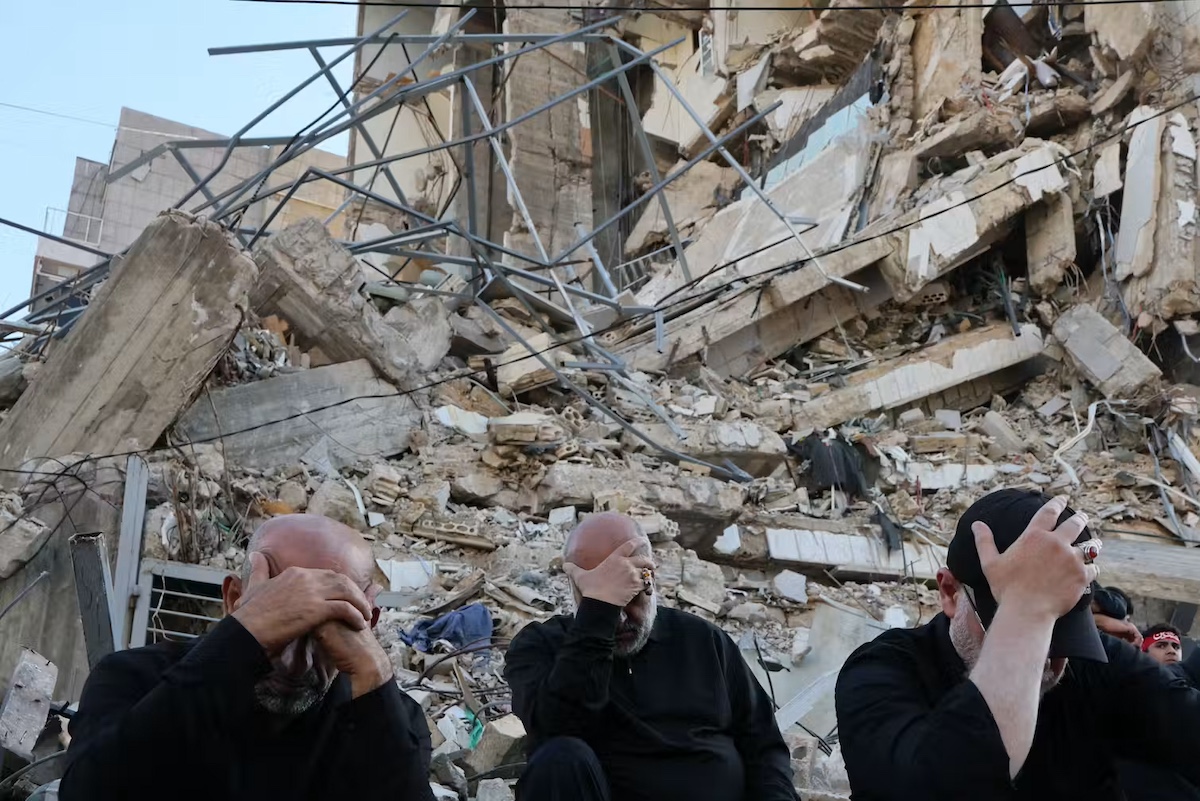
Hamas announced this month it would dissolve its government in Gaza to transfer control to a US-backed Palestinian committee. This was one of the mandates of the US-brokered peace deal between Israel and Hamas last year. While this means Hamas will not be operating in a governance role in the strip, it does not necessarily mean its military wing will be dissolved or disarmed. The move could just be symbolic, a way for Hamas to rebrand itself. Critics say a true transfer of power in Gaza would require dismantling Hamas’ security apparatus. Regardless of how it plays out, Hamas appears to be taking a step back in Gaza. Will Hezbollah now follow its lead in Lebanon? Hezbollah under pressure Since the start of Israel’s war on Gaza, Hezbollah and Hamas have projected a united front as part of Iran’s axis of resistance. Iran and Hezbollah share a support base. Image: Vahid Salemi / AP via The Conversation Like Hamas, Hezbollah has suffered significant leadership and military losses during the war. However, it has still been able to maintain its organizational cohesion and military capability. Israel and Hezbollah agreed to a tenuous ceasefire in 2024, but this fell apart earlier this year after the US and Israel launched their war against Iran. Last month, Israel and Lebanon signed another ceasefire agreement – without Hezbollah – that called for the militant group to disarm. However, Hezbollah’s leader said his group would continue fighting until Israeli troops withdrew from Lebanon. With pressure now building on Hezbollah, the group will need to recalibrate its role in both Lebanon and the region. Specifically, it will have to re-examine the tenuous balance it strikes between its military activism, political legitimacy and strategic position as part of Iran’s proxy network. There are a number of scenarios for how this could play out. Political transformation Hezbollah may seek to transform itself into a purely political organization in Lebanon, relinquishing its military wing altogether. This would give the group new legitimacy in the region and improve its relationship with the Persian Gulf states in particular. However, it would also fundamentally alter Hezbollah’s core ideological identity – the group emerged in the 1980s as an armed militia to liberate southern Lebanon from Israeli occupation – and its relationship with Iran. This seems unlikely in the short term, given Hezbollah continues to receive significant military, diplomatic and political support from Iran. In the eyes of Hezbollah supporters, Israel’s ongoing military operations in Lebanon also demonstrate a continued need for a military wing. Becoming just a political party would also end Hezbollah’s ability to sit on the fence in Lebanon. The group has long enjoyed the ability to criticize the Lebanese government for being corrupt without being held accountable itself. As yet another party with no policy platform or political program, it could fail miserably. Re-branding its military wing Instead of relinquishing its armed wing, Hezbollah could rebrand it as a national necessity to deter against further Israeli attacks. This could be successful if the group portrays itself as compensating for Lebanon’s weak army, leaning into its narrative of resistance. But this would only be achievable if the Lebanese people continue to see Israel as the principal threat and Hezbollah as a nationalist organization. And this appears to be shifting. Hezbollah’s popularity has diminished recently due to the number of wars it has dragged Lebanon into. Many Lebanese also believe Hezbollah is prioritizing Iran’s regional agenda over Lebanon’s national interests. If Hezbollah’s public support continues to erode, the group could become increasingly marginalized. Afraid to criticize the group in the past, some of Hezbollah’s core supporters in Lebanon’s Shiite community may become even more disillusioned with it. This may accelerate if the party loses its ability to provide financial support to its base. For some Lebanese, this is the main reason they back the organization in the first place. If Hezbollah becomes more marginalized, pressure to disarm would come from within Lebanese society itself – not just the international community. Maintaining the status quo Lastly, the ceasefire agreements between Israel and Lebanon could falter, leading to renewed fighting between Hezbollah and Israel. This could result from the renewed hostilities between Iran and the US in recent days, Hezbollah’s continued rejection of any agreement between Israel and Lebanon, or its refusal to disarm. Lebanon’s government has been under extreme pressure from the US and Israel to disarm the group by whatever means necessary. But the specter of another devastating civil war has so far prevented its army from disarming the group by force. Iran plays a role in this. Even though Hezbollah has tried to project an image of operating semi-autonomously from Iran, its future very much depends on Tehran – and how necessary the Iranian regime believes Hezbollah continues to be. For the time being, Hezbollah remains a vital asset to Iran’s strategic defense. Until that changes, Hezbollah is not going anywhere. Mariam Farida is lecturer in security studies, Macquarie University This article is republished from The Conversation under a Creative Commons license. Read the original article.
Hezbollah faces a reckoning as support wanes in Lebanon
Full Article
Original Source
Read the full article at Asiatimes →KhanList aggregates and links to publicly available news content. We do not host full articles from third-party sources. Always verify important information with original sources.