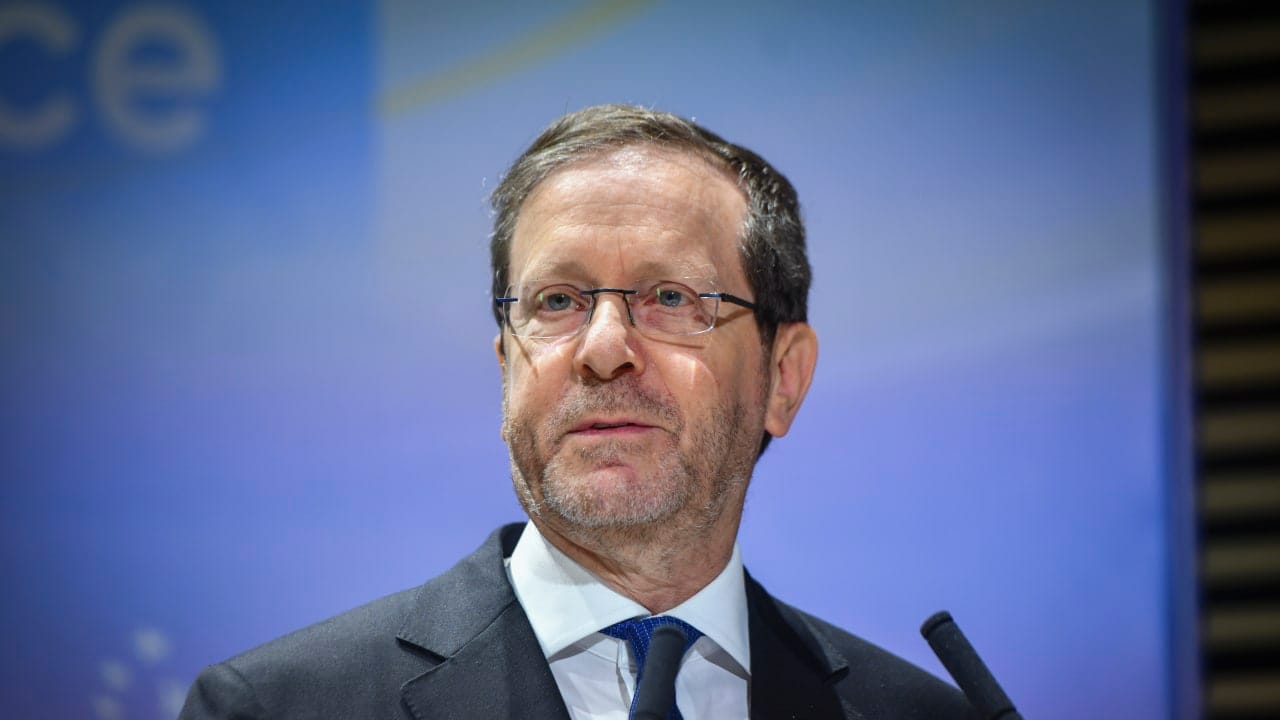
ByGIORGIA VALENTE/THE MEDIA LINEJULY 21, 2026 18:38Two unusual media appearances involving Saudi Arabia and Israel have revived questions about whether the countries are cautiously reopening channels as Iranian attacks place growing pressure on Gulf security.For more stories from The Media Line go to themedialine.orgOn July 16, Israeli President Isaac Herzog gave an exclusive interview to Al Arabiya English, telling the Saudi-based outlet that he wanted rapprochement between Israel and Saudi Arabia and expressing respect for Crown Prince Mohammed bin Salman. Herzog said it was his “dream” to see peace between the two countries and raised the possibility of direct negotiations supported by Washington.Three days later, Abdullah bin Ghanem Al-Qahtani, a former major general in the Royal Saudi Air Force who is now a security and strategic affairs analyst, appeared on Israel’s Channel 12. He described Iran’s attacks across the region as a grave threat that could not go unanswered while also saying Israel must address the Palestinian issue.Appearances by prominent Saudi figures in Israeli media remain rare. Their timing has drawn attention because Iranian attacks on Gulf infrastructure are testing Saudi Arabia’s long-standing effort to maintain dialogue with Tehran while relying on the United States and other partners for security.The crisis could strengthen the case for regional defense cooperation, including quiet coordination with Israel, without necessarily bringing the kingdom closer to formal diplomatic relations.Saudi Crown Prince Mohammed bin Salman receives The Emir of Qatar, Sheikh Tamim bin Hamad Al Thani ahead of an exceptional meeting of the Gulf Cooperation Council (GCC), the first in-person meeting of Gulf leaders since their states became a front in the Iran war, in Saudi Arabia, April 28, 2026. (credit: Bandar Algaloud/Courtesy Saudi Royal Court/Reuters)Return to pre-October 7 relationsThe two appearances have revived comparisons with the period before October 7, 2023, when Saudi-Israeli normalization was being publicly discussed as part of a broader US-brokered package involving security arrangements and other bilateral agreements.Those negotiations were disrupted by the Gaza war, and Riyadh has continued to make normalization contingent on progress toward Palestinian statehood. A Saudi source familiar with the matter, who requested anonymity because of the sensitivity of the matter, told The Media Line in May 2026 that the kingdom still required a clear and irreversible pathway toward statehood.The renewed media contacts do not demonstrate that negotiations have resumed. They indicate that public communication of the kind seen during the gradual Saudi-Israeli rapprochement before October 7 is again possible.Cyril Widdershoven, a geopolitical and energy analyst and director at Strategy International in Cyprus, views Herzog’s interview as a possible signal that Saudi-Israeli engagement is not completely off the table.Significance of renewed Saudi-Israeli media contact “It was politically significant because of the platform, timing, and message,” Widdershoven told The Media Line.He said Al Arabiya is part of the Saudi media landscape and argued that giving Herzog a platform to discuss peace and praise the crown prince could have been intended to gauge public and regional reactions. Widdershoven acknowledged that the interview did not demonstrate an official change in Saudi policy.Asked whether rapprochement channels were reopening, he distinguished political signaling from formal diplomacy.“The interview should be interpreted as political signaling rather than proof of an active normalization process,” he said. “Saudi Arabia can use such media engagement to remind Washington and Israel that rapprochement remains possible.”Riyadh can also use the prospect of normalization as leverage in seeking US security guarantees and civilian nuclear cooperation while pressing Israel over Gaza and Palestinian statehood, Widdershoven said.“Saying that pre-October 7 negotiations have fully restarted would go too far,” he added. “Saying that communication channels and strategic calculations are being quietly reactivated would be reasonable.”Impact of escalations in the US-Iran war on Saudi-Israeli relationsYet the assumption that Iranian attacks will automatically push Saudi Arabia and the wider Gulf closer to Israel is far from universally accepted.Abdulaziz Alshaabani, a Saudi political analyst, told The Media Line that the escalation has placed national security ahead of any debate over relations with Israel.“In my view, it is still too early to conclude that the Gulf has abandoned diplomacy with Iran or that a fundamental regional realignment has taken place,” Alshaabani said. “Recent events have reinforced one clear priority: national security has become more important than any discussion about relations with Israel.”His assessment offers another reading of Gulf policy: Attacks on critical infrastructure may increase the need for stronger defenses without ending diplomatic engagement with Tehran.“This is my personal assessment, but I believe many in the Gulf remain committed to diplomatic solutions, including initiatives that Saudi Arabia has consistently supported,” Alshaabani said.That position reflects an important difference between the security calculations of Israel and those of the Gulf states. Israel has approached Iran primarily as a direct strategic and military adversary, while Gulf governments have attempted to contain the confrontation through diplomacy and prevent their territories from becoming battlefields between larger powers.“At the same time, the recent escalation has strengthened the perception that Israel has been more willing to sustain confrontation with Iran despite the potential risks to Gulf security and regional stability,” Alshaabani said.Iran has expanded the scope of attackIran’s expanding attacks across the Gulf are making that balancing act more difficult. Recent strikes have moved beyond military bases and energy installations to threaten infrastructure on which civilian life directly depends.According to Kuwait’s Ministry of Electricity, Water and Renewable Energy, an Iranian strike on July 17 hit a power generation and water desalination facility, damaging several electricity-generating units and starting a fire. Authorities activated emergency plans, extinguished the blaze, and began repairs while monitoring the stability of the national power grid.The attack was particularly sensitive because Kuwait produces more than 90% of its drinking water through desalination.Water infrastructure had already been struck elsewhere in the conflict. Bahrain’s Interior Ministry said an Iranian drone damaged a desalination plant on March 8. Bahrain’s Electricity and Water Authority said the damage did not interrupt water or electricity services.Iranian forces have also claimed attacks on US military facilities in Gulf countries, including Bahrain, Qatar, and Kuwait. On July 20, Bahraini authorities again sounded missile-alert sirens and urged residents to seek shelter, while Kuwait said its air defenses were responding to another incoming Iranian barrage.The escalation is no longer confined to whether Gulf governments should support Washington or remain outside a direct confrontation with Tehran. It now concerns the protection of electricity, water supplies, energy exports, ports, and other infrastructure sustaining daily life.Gulf countries may take harder security positionsWiddershoven described the Gulf approach as strategic hedging rather than strict neutrality: maintaining dialogue with Tehran while relying on Western security guarantees.“The new Iranian attacks on Kuwaiti power and desalination infrastructure, taking into account also the strikes against Bahrain and other Gulf targets, increasingly show that this balance becomes untenable,” he said.Diplomatic channels are likely to remain open, he added, but the attacks have exposed the limitations of engagement without credible deterrence.“Once Iran threatens civilian water, electricity, ports and energy assets, the engagement can no longer be treated as sufficient protection,” Widdershoven said.A harder security posture would not necessarily mean that Gulf governments are preparing for war with Iran. Widdershoven said the more likely response would involve integrated air and missile defenses, shared radar and intelligence networks, expanded naval patrols, stronger cyber capabilities, and better protection for ports, desalination plants, and energy infrastructure.Saudi Arabia’s response could help determine whether the crisis produces a formal regional realignment or another adjustment to the kingdom’s policy of maintaining relations across competing geopolitical camps.Effects of Iranian threats on security cooperationFor Washington and Israel, the Iranian threat strengthens the case for greater regional security integration. Israeli systems and operational experience against Iranian missiles and drones could become more relevant to Gulf defense planning if attacks on civilian and strategic infrastructure continue.Riyadh, though, remains constrained by the Palestinian question and the kingdom’s broader objective of preserving strategic autonomy rather than joining a single geopolitical camp.Widdershoven believes those competing pressures could produce limited security cooperation before political normalization.“The most likely trajectory is therefore security convergence before diplomatic normalization: discreet intelligence cooperation, air-defense coordination, and shared threat monitoring first, with formal political relations remaining conditional,” he said.Alshaabani cautioned against assuming that such an alignment is already taking shape. In his assessment, the conflict has reinforced the need to protect Gulf security and prevent further regional escalation rather than encouraging new political alignments.Herzog’s Al Arabiya English interview and Al-Qahtani’s Channel 12 appearance are better understood as signs that public channels remain available than as evidence of imminent normalization.Iran’s attacks may give Saudi Arabia and Israel stronger reasons to cooperate on security, but Riyadh’s investment in diplomacy with Tehran and its insistence on progress toward Palestinian statehood remain in place. For now, the kingdom appears to be keeping its options open as the Gulf’s traditional strategy of geopolitical hedging becomes harder to sustain.Follow us on Google
Herzog, Saudi official interviews revive Saudi-Israel ties amid Iran strikes on Gulf - analysis
Full Article
Original Source
Read the full article at Jpost →KhanList aggregates and links to publicly available news content. We do not host full articles from third-party sources. Always verify important information with original sources.