
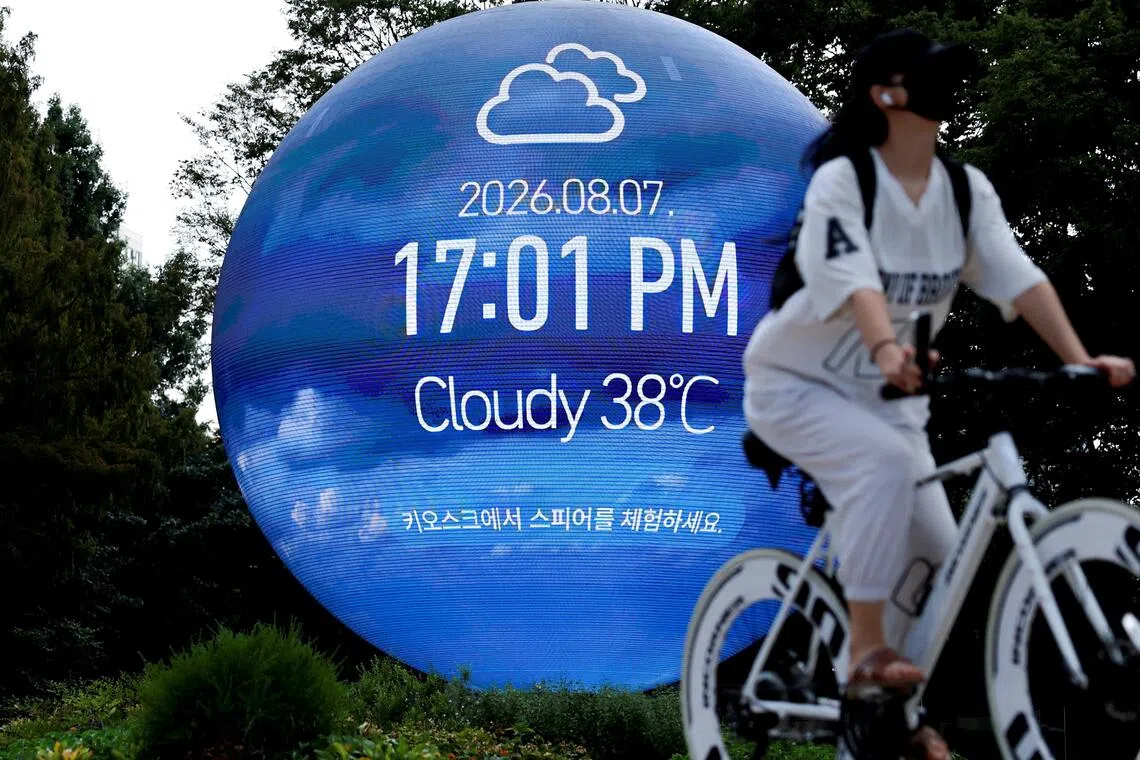
SEOUL – South Korea recorded 34 suspected heat-related deaths through August, nearly four times the nine reported in 2022, as the country endured its third-hottest summer on record.The annual toll rose to 32 in 2023 and 34 in 2024 before falling to 29 in 2025, according to Korea Disease Control and Prevention Agency data obtained by Representative Heo Jong-sik of the Democratic Party of Korea. A total of 138 deaths were recorded over the five years.The increase has coincided with an unprecedented run of extreme summer heat. The past three summers were the three hottest since nationwide weather records began in 1973, according to the Korea Meteorological Administration.The average temperature from June up till August 2026 was 25.4 deg C, 1.7 degrees above the 1991-2020 average. Only 2025 and 2024 were hotter, with average temperatures of 25.7 deg C and 25.6 deg C, respectively.Older people accounted for most of the heat-related deaths. Of the 138 recorded since 2022, 101, or 73.2 per cent, involved people in their 60s or older.The total included 20 people in their 60s, 27 in their 70s and 54 aged 80 or older. Those in the oldest age group accounted for 39.1 percent of all deaths during the five years.In 2026, 16 of the 34 deaths, or 47.1 per cent, involved people aged 80 or older.The oldest person to die was a 101-year-old woman living in Gangneung, Gangwon province, while the youngest was a 28-year-old man in Busan. Both had underlying cardiovascular conditions and died of heatstroke, according to the data.Seoul and North Jeolla province recorded the highest numbers of deaths in 2026, with six each. Busan, Incheon and South Gyeongsang province reported four each.No heat-related deaths were recorded in Jeonnam-Gwangju, Daegu, Daejeon, Ulsan or Sejong.“With deaths from heat-related illnesses among the oldest age groups increasing, vulnerable people require particular attention,” Heo said.“We need to establish a protection system that can manage high-risk groups and respond quickly when they face a crisis.” THE KOREA HERALD/ASIA NEWS NETWORK
Heat-related deaths in South Korea nearly quadruple in five years
Full Article
Original Source
Read the full article at Straitstimes →KhanList aggregates and links to publicly available news content. We do not host full articles from third-party sources. Always verify important information with original sources.