
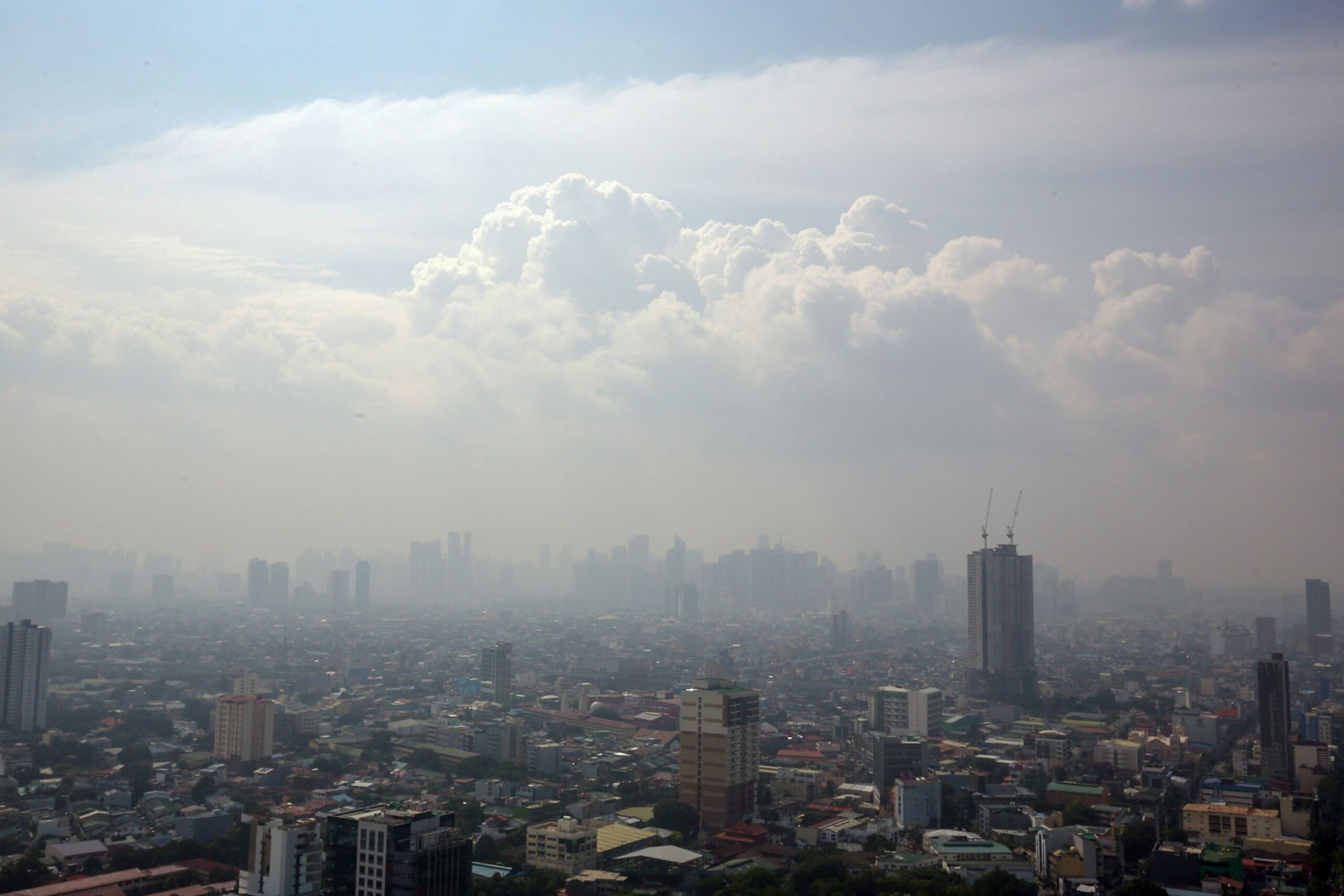
AIR QUALITY. Haze blankets the Metro Manila sky on September 1, 2026, due to smoke from forest fires in Kalimantan, Indonesia. The Manila local government advises residents to take precautions and wear face masks when going outdoors. Rappler Here's what you should know about air quality indexes and how they help identify the health risks brought by haze Haze is a form of air pollution caused by smoke, dust, and moisture that can lead to serious health risks, especially for individuals with respiratory diseases. The Department of Health lists symptoms related to haze exposure, including difficulty breathing, coughing, and chest pains, and advises affected individuals to seek medical attention. Air quality indexes categorize pollution levels from 'Good' to 'Emergency,' providing guidelines for public safety and recommendations for limiting outdoor exposure during high pollution periods. This is AI-generated. Read the article for full context. Report any errors. MANILA, Philippines – It may look like a harmless fog blanketing the skies, but haze carries small particles in the air that can lead to serious health risks. Here’s everything you need to know about haze, how to protect yourself from its effects, and how air quality indexes help in measuring risks. What is haze? Haze is smoke, dust, moisture, and vapor in the air that affects visibility. It originates from large-scale forest or land fires. These fires create very fine particles with a diameter of 2.5 micrometers (PM2.5) or smaller that go into the air. Unlike coarse particles that dissolve in the atmosphere within hours, fine particles can stay in the atmosphere for up to weeks and can travel for hundreds to thousands of kilometers. These often grow in size as humidity increases and affect air quality by filling the atmosphere with high concentrations of fine particles. This poses health risks, especially for those with respiratory diseases. How does haze affect health? Haze is a form of air pollution that leads to health risks when particles are inhaled. According to the Department of Health, it could lead to the following: difficulty breathing coughing chest pains watery eyes or excessive tearing itchy nose worsening of respiratory disease The health department advises people experiencing these symptoms to proceed to the nearest health center for treatment. What are air quality indexes? The Department of Environment and Natural Resources-Environmental Management Bureau (DENR-EMB) reviewed air quality indexes in compliance with the Philippine Clean Air Act of 1999. In 2020, it formulated the PM2.5 air quality index breakpoints, which are divided into six levels from cleanest to most polluted. It is used to inform the public about potential health risks. Below are the air quality indexes, their corresponding colors, and cautions to follow: Good (Green) – air quality is clean and safe Fair (Yellow) – safe but with a presence of pollution Unhealthy for sensitive groups (Orange) – people with respiratory disease should limit outdoor exposure Very Unhealthy (Red) – avoid traffic-heavy areas, and people with respiratory disease should stay indoors and rest as much as possible; trips are encouraged to be postponed, and the use of vehicles is restricted Acutely Unhealthy (Purple) – people should limit outdoor exposure, and those with respiratory disease should stay indoors and rest as much as possible; unnecessary trips should be postponed, motor vehicle use may be restricted, and industrial activities are limited Emergency (Maroon) – everyone must stay indoors with windows and doors closed unless heat stress is possible; motor vehicles are only allowed for emergencies, and industrial activities (except those vital for public safety and health) are limited How to protect yourself from the haze Here are some tips from the health department to avoid the risks brought by haze: Stay indoors as much as possible. Wear a KN95 face mask if going outside. Close all doors and windows and use a wet cloth to cover their crevices. Use headlights or fog lights when traveling, especially during nighttime. Stay away from low-lying areas where smoke and suspended particles may settle. Public events in open areas may continue but must observe air quality before deciding whether to push through or cancel. Using masks is also encouraged in classrooms, with teachers keeping a close eye on sick students or those with existing heart and lung conditions. When the haze worsens, vulnerable people (elderly, pregnant, with health conditions) should be stopped from doing long outdoor work. – Rappler.com How does this make you feel? Loading
Haze and air quality index: Things to know
Full Article
Original Source
Read the full article at Rappler →KhanList aggregates and links to publicly available news content. We do not host full articles from third-party sources. Always verify important information with original sources.