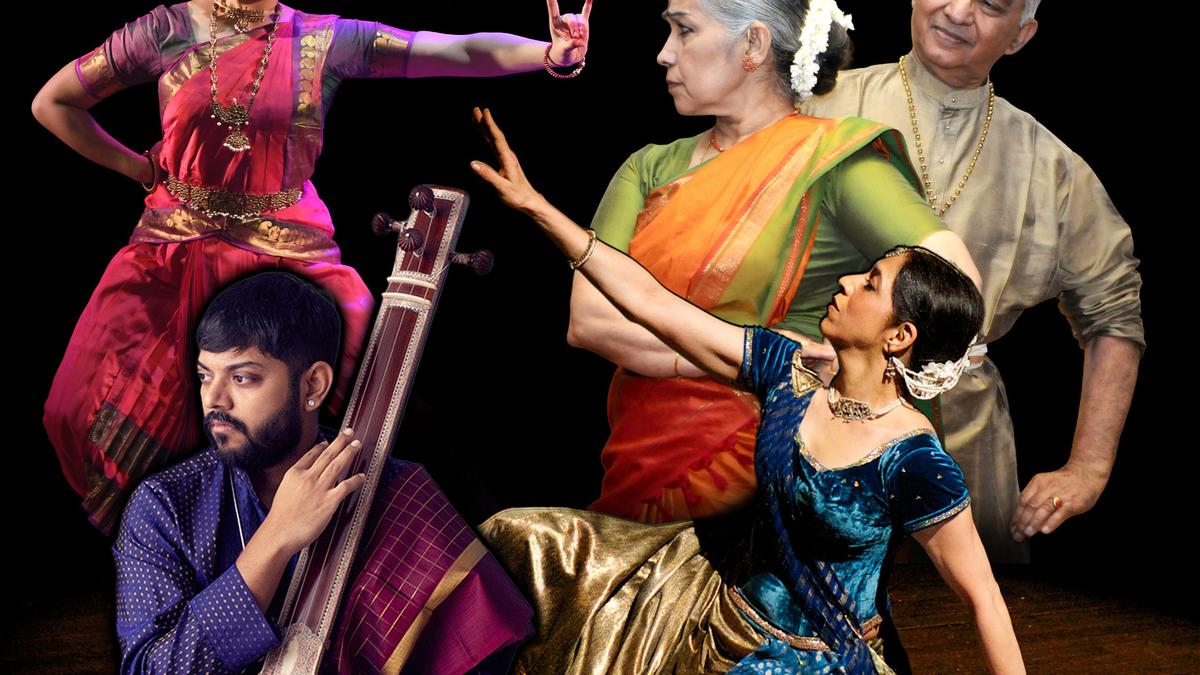
This year’s Guru Purnima felt markedly different. Coming in the wake of a major student-led protest and an unusual moment of collective introspection, it highlighted a generational shift with young people demanding to be heard and asserting their agency. That impulse is also reshaping the guru-sishya parampara in Indian classical arts, where the teacher-disciple relationship is becoming less hierarchical and more interactive.Social media has accelerated this change, much like it recently helped build the narrative around Gen-Z across the country.Yet, not every guru sees technology as central to this transformation. Veteran Bharatanatyam natyacharyas Shantha and V.P. Dhananjayan point to the enduring value of personal connections. “Training in dance is not limited to teaching technique; it’s also about emotional mentorship. The trust that develops between teacher and student over the years is more valuable than technical accomplishment or stage success. I witnessed this during the workshop we conducted in Virginia, U.S., for 25 years. I looked forward to those sessions as much as the participants did.”For the Dhananjayans, such experiences embody the essence of the guru–shishya bond, one defined by a lifelong sense of belonging. The Dhananjayans at their dance institution, Bharatakalanjali. | Photo Credit: K.V. Srinivasan Having trained at Kalakshetra, they say living on campus with guru Rukmini Devi meant learning far beyond the classroom — a formative journey that influenced their lives and artistry. Yet, their teaching philosophy has evolved with the times. “The guru-sishya parampara may not be a practical model today, as the relationship has undergone a drastic transformation,” says Dhananjayan. “A guru can no longer place himself on a pedestal. You have to keep the channels of communication open and create an atmosphere where learning becomes easier and more exciting. We adapted to that reality early on.”While some gurus adapted to these changing equations, Kumudini Lakhia, among the country’s most progressive dance educators and choreographers, held radical views on training at a time when unquestioning obedience was expected of disciples. A 2016 photograph of Kathak guru Kumudini Lakhia with students at her Ahmedabad-based dance school, Kadamb | Photo Credit: Vijay Soneji In a 2016 interview with The Hindu, the Kathak exponent, who passed away last year, spoke about how the rigour of the guru-sishya parampara, which required disciples to fall in line, often left her feeling claustrophobic. “After performing as a soloist for many years, I designed a distinct vocabulary for group choreography. And this was about 70 years ago, when the maharajs’ (male gurus) diktat couldn’t be defied,” she had said.Kumudini adopted the same approach with her own students, allowing to express themselves without fear and think critically. Her foremost disciple, Aditi Mangaldas, who has carried that legacy forward through her own groundbreaking Kathak choreographies, says: “Kumibehn’s aim was never to create clones or encourage mindless replication. I truly understood the significance of that when I launched my own dance company.”Reflecting on the teacher-disciple relationship, Aditi says it must be constantly reassessed. “Every generation brings its own energy, prompting change and allowing the art form to evolve. This generation, even while learning a traditional art, insists on dialogue. They don’t want to be talked down to. As gurus, we cannot pretend to know everything. My dance company is full of Gen Z artistes, which means you have to be prepared to answer tough questions. But that’s not dissent; it means they are engaging with the art.” The role of the guru today is even more important, says Rithvik Raja | Photo Credit: K. Pichumani Unprecedented access to information has empowered students to think independently. Says Carnatic musician Rithvik Raja, “A student can access several recordings, books and lectures with a few clicks. The guru is therefore no longer the sole custodian of knowledge. But information is not the same as wisdom. The role of the guru today is perhaps even more important, not as an invincible authority, but as someone who helps cultivate discernment, aesthetic sensitivity and the ability to listen deeply.”Explaining that respect and questioning are not opposites, Rithvik, for whom the ideal guru-sishya relationship is neither hierarchical nor transactional, says, “The finest teachers I have known have encouraged questions, disagreement and independent thinking. They have taught me not what to think, but how to think. Likewise, the best students are not those who imitate perfectly, but those who engage honestly and eventually find their own voice.”Referring to the recent student protests, Rithvik says they are a reminder that young people deserve the freedom to express dissent. “That principle should extend to every space, including artistic ones. But agency also comes with the responsibility to listen and to recognise that not every disagreement is oppression, just as not every exercise of authority is justified.” The nature of both guru and sishya’s roles has changed, says Meera Sreenarayanan | Photo Credit: Manjunath H S Today, the very foundations on which the guru-sishya system rested have changed. Institutional training, social media and global mobility have impacted both teaching and learning. “Though students can now access information at the click of a button, it does not necessarily translate into the sustained immersion that was the hallmark of the traditional learning setup. At the same time, gurus are no longer just keepers of a lineage; they are also performers, administrators, entrepreneurs and public figures. The nature of both roles has changed,” says young Bharatanatyam artiste Meera Sreenarayanan.Meera believes that before asking whether the guru-sishya dynamic has changed, we must first ask whether the conditions that once defined a guru or a sishya still exist. “Perhaps what many of us have today is a mentoring relationship. That does not diminish the value of the traditional system. But without mutual commitment, trust and accountability, the guru-sishya relationship risks becoming merely a title rather than a lived practice,” she says.
Guru Purnima special: How Gen Z is redefining the rules of learning in classical arts
Full Article
Original Source
Read the full article at Thehindu →KhanList aggregates and links to publicly available news content. We do not host full articles from third-party sources. Always verify important information with original sources.