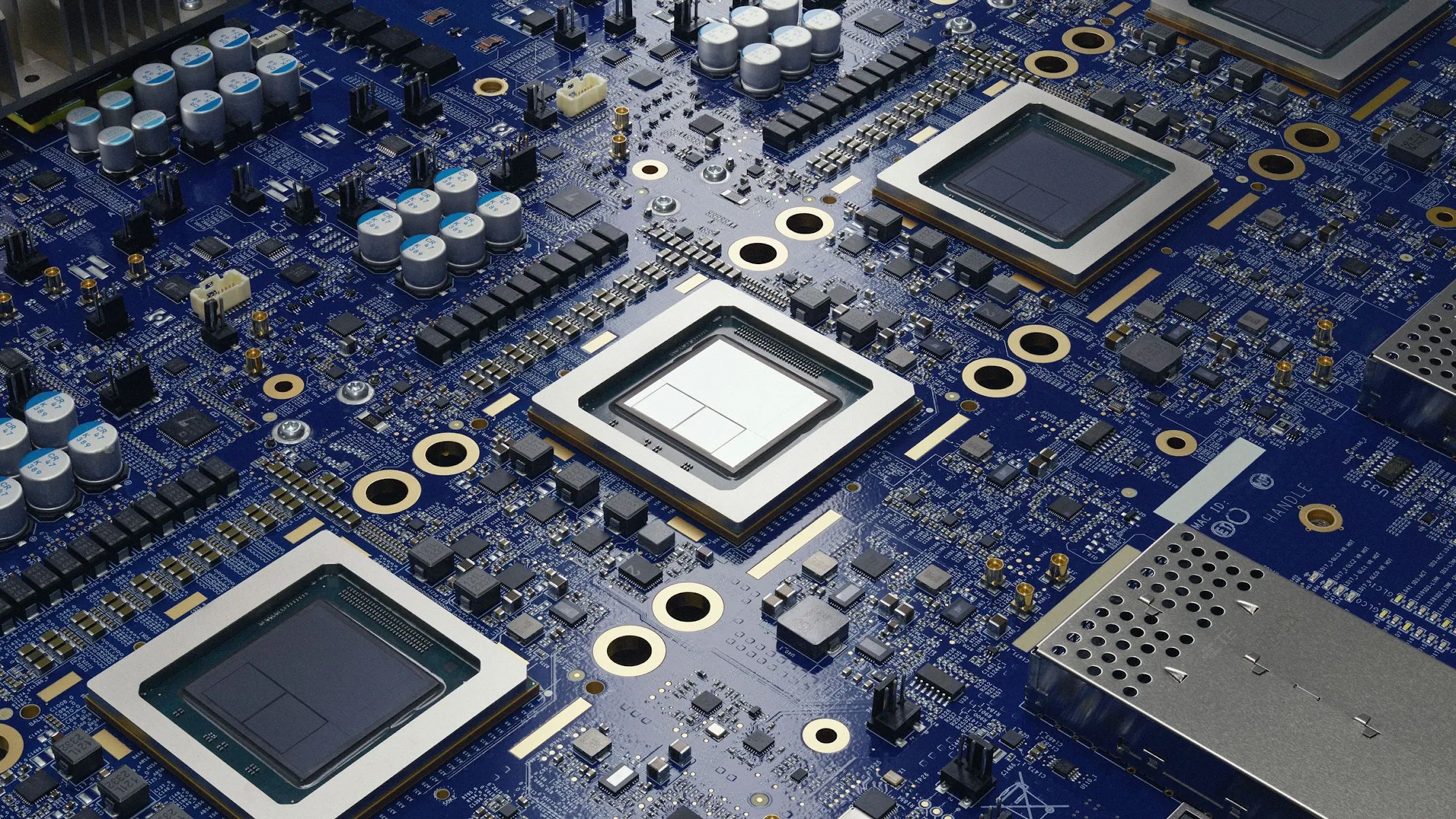
(Image credit: Google) Google was among the first hyperscalers to develop its own custom AI processors about a decade ago and has been steadily ramping their deployment since then. The company seems to be so confident about its TPU v9 due in 2028 that it intends to order 12 – 15 million of such processors, according to a Fubon Research note to clients published by Sean. If the information is correct, Google may not only produce more or a comparable number of AI accelerators than Nvidia, but may also need to use Intel Foundry to meet its goals.Tom's Hardware Premium Roadmaps"Based on our checks, Google plans to have 12 – 15 million TPUs in 2028," the paper reads. "Entering 2028, Google’s TPUs will enter the V9 generation with four compute dies, suggesting that their capacity consumption will more than double in 2028 versus 2027."Fubon estimates that Nvidia supplied 8.2 million data center AI GPUs in 2026 and is on track to increase the number to 12.4 million in 2028. If Fubon is correct about Google's plans to produce 12 – 15 million 9th-generation TPUs in 2028, then the company may produce more, or at least a comparable number of AI accelerators, than Nvidia in 2028.TSMC is not enoughHow the performance of Google's v9 TPUs will stack against Nvidia's Rubin and Rubin Ultra is something that remains to be seen, but the fact that Google intends to use four compute chiplets on these AI accelerators clearly points to the fact that the company bets big on the performance of these processors. Meanwhile, building an AI accelerator with four large compute chiplets is a major engineering effort, which Google seems to have accomplished."Although we do not have the detailed allocation yet, we think it is difficult to reach Google’s target with TSMC alone, and Intel's supply is a must by 2028," the paper continues.Researchers from Fubon are not sure whether Google's allocations at TSMC will be enough to meet the company's demand for 12 – 15 million 9th Generation TPUs, so they think that Google will have to use Intel Foundry's capacity to meet its volume goals. Over the past few months, we have seen reports claiming that Intel had landed orders to make three million TPUs for Google following months of Google's testing of Intel's advanced packaging technologies. Indeed, if Google wants to make its silicon at Intel Foundry, usage of Intel's advanced packaging services makes great sense. It should be noted that when compute chiplets are developed, they must be developed with their packaging technology in mind, as Intel's EMIB/EMIB-T and TSMC's CoWoS-L are incompatible.World's largest consumer of AI acceleratorsIf the information about Google's plans to produce 12 – 15 million TPUs in 2028 is correct (note that the difference between 12 and 15 is 20%, which is huge) and Google will indeed deploy more AI accelerators annually than Nvidia sells to the entire market, it would mark a dramatic shift in the AI hardware landscape. It will not only make Google the world's largest consumer of AI accelerators (as the company will unlikely cease buying Nvidia hardware), it will eventually make Google the owner of the world's most capable AI hardware fleet. Whether or not Google will use its overwhelming AI compute capacity primarily for its own services, or will lend the majority to other is something that remains to be seen.Get Tom's Hardware's best news and in-depth reviews, straight to your inbox.Meanwhile, for Google's rivals, the milestone will underscore the growing importance of vertically integrated AI infrastructure, where cloud providers design chips tailored to their own software stacks, workloads, and data centers instead of purchasing off-the-shelf GPUs.Yet, Google's surpassing Nvidia in unit shipments would not necessarily diminish Nvidia's dominant position. AI demand continues to expand so rapidly that both companies could increase deployments simultaneously, but Google will simply grow faster, at least till Nvidia ups production of its AI accelerators with Feynman and Feynman Ultra in 2029 – 2030. After all, Nvidia's AI GPUs are sold out. What Nvidia should worry about is not the volumes of TPUs that Google can deploy, but rather the fact that these processors do rely on a software stack that rivals Nvidia's CUDA, the company's main competitive advantage. Follow Tom's Hardware on Google News, or add us as a preferred source, to get our latest news, analysis, & reviews in your feeds. Anton Shilov is a contributing writer at Tom’s Hardware. Over the past couple of decades, he has covered everything from CPUs and GPUs to supercomputers and from modern process technologies and latest fab tools to high-tech industry trends.
Google could build more AI accelerators than Nvidia sells in 2028, analyst claims — could push the company to use Intel Foundry to meet its goals
Full Article
Original Source
Read the full article at Tomshardware →KhanList aggregates and links to publicly available news content. We do not host full articles from third-party sources. Always verify important information with original sources.