
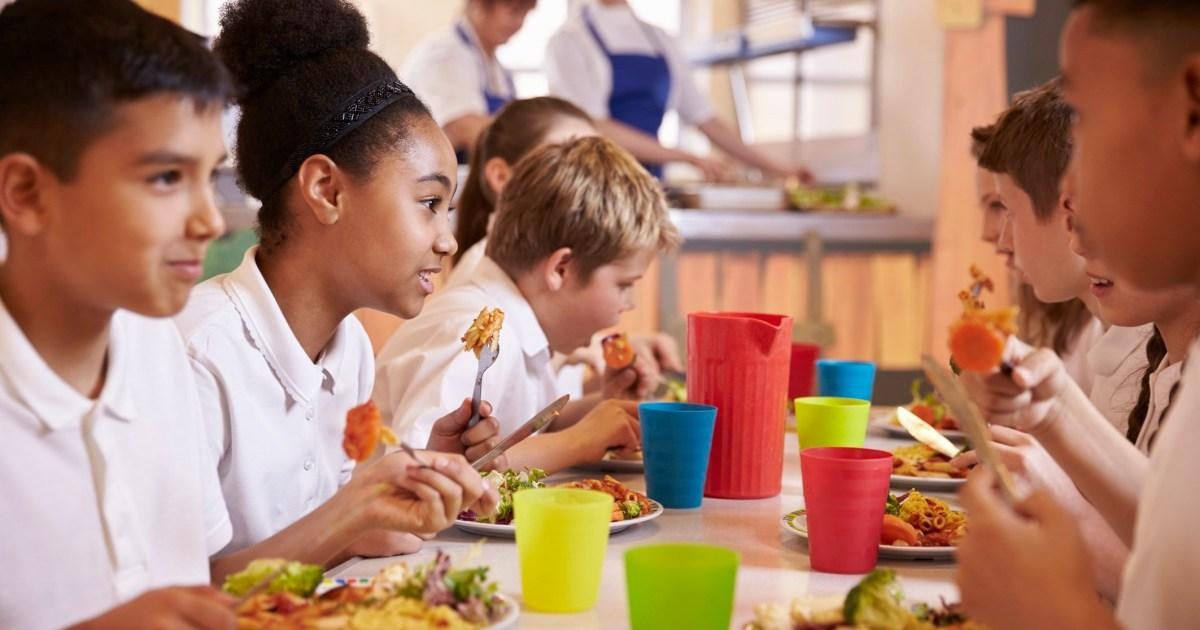
| Senior Lifestyle Reporter Published September 14, 2026 12:22pm Updated September 14, 2026 12:22pm School dinners are undergoing a major shake-up (Picture: Getty Images) School dinners across England will look very different in 2027, as the government introduces new food rules. School food standards are getting a major shake-up for the first time in more than a decade, and as part of this, there’ll be a crackdown on sugary and salty food and drink, as well as deep-fried food. Certain foods are being banned completely from school canteens, and guidance is being introduced for how often specific products should be served to children throughout the week, with restrictions on items such as pastry and processed meats. According to the Department for Education, the changes are designed to ‘help children develop healthy eating habits and ensure they have the energy and nutrition they need to get the most from their whole school day’. This comes as research has found that around one in three children leave primary school overweight or obese, while tooth decay is the leading cause of hospital admissions among those aged five to nine. Here’s everything you need to know… The rules apply to primary and secondary schools (Picture: Getty Images) Which food and drinks will be banned in schools? Fried eggs Deep-fried foods – dishes such as fish and chips can still be served, but the ingredients will need to be baked, not fried Breakfast pastries No snacks except for nuts, seeds, vegetables and fruit with no added salt, sugar or fat (applies across the whole school day) No sweets or chocolate products, including chocolate spread such as Nutella (applies across the whole school day) No chocolate-coated products (applies across the whole school day) Breakfast pastries will be banned as well as sugary cereal like Coco Pops (Picture: Shutterstock / MaraZe) Salt cannot be added to cooking water for pasta, rice, and other starchy foods, and no salt should be added to food after it has been cooked (applies across the whole school day). Instead of salt, food should be flavoured with herbs, spices, garlic, vegetables and fruits Products that list partially hydrogenated fat or oil on the label should be avoided, e.g. French fries, crisps, commercial baked goods, and spreads Drinks containing preservatives, flavourings, colourings and sweeteners should be avoided Sugary breakfast cereal with added sugar and salt, e.g. Frosties and Coco Pops No cakes, biscuits, pastries or desserts except yoghurt or fruit-based desserts containing at least 50 per cent fruit. Permitted desserts can only be served at lunchtime No flavour enhancers such as MSG or E621, which can be very high in sodium Fried eggs are also being cut from school menus, plus deep-fried food (Picture: Shutterstock / LightField Studios) Which foods will be restricted and how often can they be served? Starchy food cooked in fat or oil cannot be served more than two days per week (applies across the whole school day) Baked beans cannot be served more than once a week, and schools are urged to use low-sugar/low-salt varieties Processed meat or poultry products (e.g. sausages, sausage rolls, ham, burgers, and chicken nuggets) that meet the legal requirements should be served no more than once a week in primary schools and twice each week in secondary schools (applies across the whole school day) No more than two portions of food that are deep-fried, batter-coated or breadcrumb-coated each week (applies across the whole school day) No more than two portions of food that include pastry each week(applies across the whole school day) Ketchup and other condiments should no longer be available in bottles. These are limited to sachets or portions of no more than 10g/one teaspoonful No more than 150ml serving of fruit or vegetable juice Combination drinks (a beverage featuring more than one ingredient) should be limited to a portion size of 330ml Fruit and vegetable combination drinks should be at least 45 per cent fruit or vegetable juice Foods high in fat, sugar and salt such as pizza and cakes are restricted or not permitted to be served at times other than lunch Bread with no added fat or oil must be available every day. It needs to be higher in fibre, and different types of bread should be served, including wholegrain. Bread is restricted if it is cooked in fat or oil No savoury crackers or breadsticks outside of lunch, and these must be served with fruit, vegetables, or dairy food Schools will be serving more whole grains (Picture: Getty Images/Tetra images RF) What can you expect to see more of on school menus? Plenty of fruit and vegetables, with two different coloured fruits and veg on offer each day Salad Starchy foods not cooked in fat or oil, such as pasta, rice. Three or more different starchy foods should be served each week Wholegrains, including wholegrain bread and pasta Lower fat milk and lactose reduced milk Plain soya, rice or oat drinks enriched with calcium Frozen yoghurt as an alternative to ice cream Oily fish Non-processed meat or poultry Non-dairy protein Pulses including chickpeas and lentils Meat-free alternatives such as soya and tofu Seeds and nuts with no added salt, sugar or fat Plenty of still and carbonated water Fermented yoghurt drinks Malt loaf Fruit bread Porridge Lean red meat, e.g. beef and lamb Dried fruits such as apricots, figs and raisins Do you support these changes? Sign up to Metro's The Slice newsletter for your guide to what's on in London, with trusted reviews, offers and giveaways. When will the changes be made and how will they be monitored? The new school food standards, which have been developed with nutritionists and public health experts, will come into effect for millions of children from September 2027. Secondary schools will be given until September 2028 to implement some of the changes. The Department for Education has said it will work with the Food Standards Agency to create a plan to monitor schools. Further details are expected in the coming months. Ask Metro Use AI to go deeper into the stories you care about – powered by Metro and trusted publications. As part of this, schools will be expected to publish their menus and food policies online, and nominate a school food governor to hold them to account for what is served. Education Secretary Lucy Powell said: ‘These are once-in-a-generation changes that will transform school food for children across the country. ‘From our historic expansion of free school meals to the rollout of free breakfast clubs and new school food standards, we are making sure that every child has access to the healthy meals we know children need to learn, grow and succeed. ‘No child should spend the school day hungry, and no family should have to struggle to put food on the table. This is what change looks like: healthier food, fuller stomachs and a fairer start for every child.’ Deals of the Day Topman’s new-season collection has arrived and prices start at just £10 An Instagram mattress left me with back pain – this one completely changed my mind Book Val d'Isère, Val Thorens and Tignes for less in Club Med's ski sale Save 25% on red light therapy masks, sauna blankets and sleep gadgets in Bon Charge sale The viral LED face mask with over 350 lights that's currently discounted by £100 The changes have already garnered support from charities, campaigners, nutritional experts and the Association of School and College Leaders (ASCL), as well as celebs such as chef Jamie Oliver and actress and The Food Foundation ambassador Dame Emma Thompson. What should a healthy, balanced diet include? According to the Department for Education, it should consist of: Plenty of fruit and vegetables Plenty of unrefined starchy foods Some meat, fish, eggs, beans and other non-dairy sources of protein Some milk and dairy foods A small amount of food and drink high in fat, sugar and salt Do you have a story you’d like to share? Get in touch by emailing MetroLifestyleTeam@metro.co.uk Arrow MORE: ‘Toasted skin’ is the itchy condition every parent should know about Arrow MORE: I got stranded in the world’s greatest food city, where every meal was £12 or less Arrow MORE: ‘I thought I had a best friend until DNA test revealed who she really was’ The Slice Your free newsletter guide to the best London has on offer, from drinks deals to restaurant reviews.
Full list of food and drinks being banned in schools across England
Full Article
Original Source
Read the full article at Metro →KhanList aggregates and links to publicly available news content. We do not host full articles from third-party sources. Always verify important information with original sources.