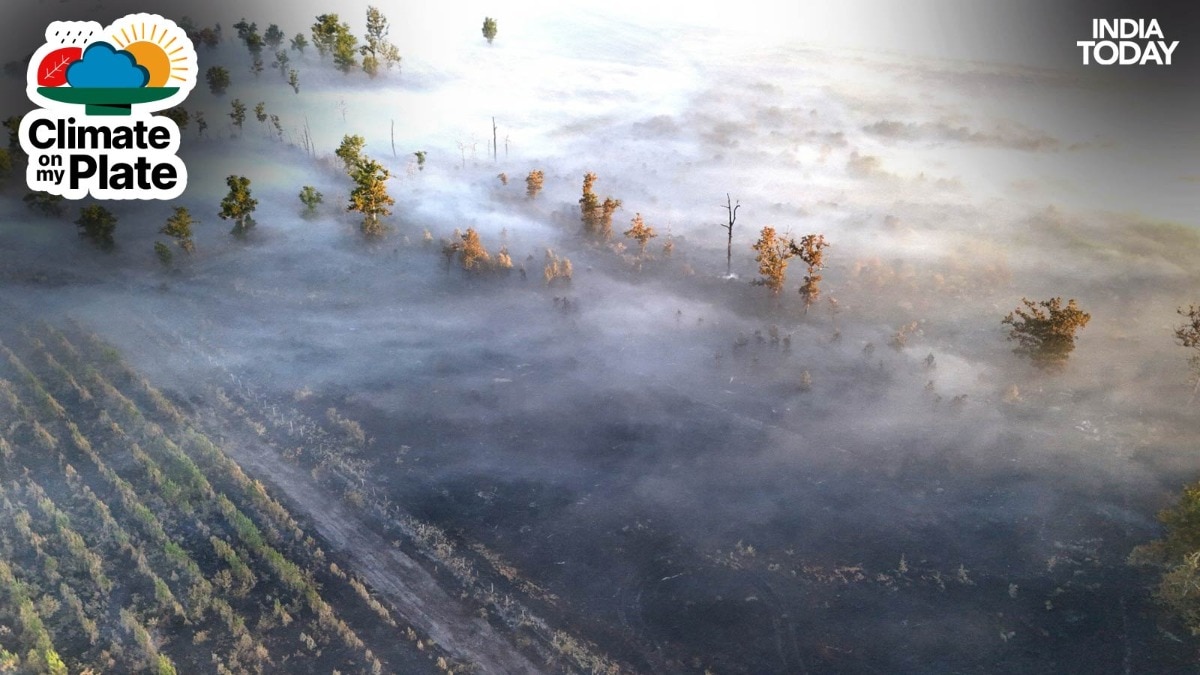
French vineyards have escaped the flames for now, but scientists say the threat still persists. Here's how climate change is hitting everything from grape harvests to changing chemistry in one of the world's most celebrated wine regions.A drone view shows smoke and fog above burnt forest affected by a wildfire in France. (Photo: Reuters)The raging wildfires sweeping through southwestern France have forced over millions to flee, scorched vast stretches of forest, and pushed firefighters into one of the country's biggest firefighting operations since World War II.As flames edged dangerously close to one of the world's most famous wine-producing regions, one question continues to bubble up among wine lovers. Will Bordeaux burn and with it the premium grapes and bottles of wine? A vineyard is seen in Bordeaux, France. (Photo: Unsplash) The reassuring news is that Bordeaux's vineyards have, so far, escaped direct damage.Wine producers said that the vines remain largely untouched by the fires, even as surrounding forests continue to burn. But the bigger story is not about this week's flames. It's about the changing climate that made such fires more likely and what that means for the future of the wine in your glass. A customer holds a bottle of Chteau du Cauze, a French Bordeaux wine. (Photo: AP) VINEYARDS vs CLIMATE CHANGEBordeaux, in southwestern France, is synonymous with premium wines. The region's mild climate has long been ideal for growing grapes such as Cabernet Sauvignon and Merlot. But now climate change has set its sight on the wine region. The ongoing fires have been fuelled by repeated heatwaves, unusually dry vegetation and prolonged drought. Firefighters tackle a blaze as wildfires rage near Le Las, outside Bordeaux, France. (Photo: AP) French President Emmanuel Macron described the current wildfire crisis as the country's worst since World War II, with nearly 42,000 hectares burned in the Landes region and around 2,20,000 people evacuated.Scientists said these conditions are becoming increasingly common as global temperatures rise.The Intergovernmental Panel on Climate Change (IPCC) has identified southern Europe as one of the world's climate change hotspots, where warming is increasing the likelihood of intense heatwaves, droughts and extreme wildfire weather. Trees burn as a wildfire rages near Marcheprime, outside, Bordeaux, France. (Photo: AP) For wine-makers, the impact extends well beyond the immediate threat of flames.Hotter summers can cause grapes to ripen earlier, accumulate more sugar, lose acidity and ultimately alter the taste, aroma and alcohol content of wine.SMOKE HITS THE HARVESTEven if vineyards never catch fire, wildfire smoke can still leave its mark. The rising sun appears through smoke from burning wildfires near Bordeaux, France. (Photo: AP) Researchers have shown that grapes exposed to dense smoke can absorb compounds known as volatile phenols.These compounds may remain hidden until fermentation, when they are released and give the wine unpleasant smoky, burnt or ashy flavours, which is a problem known as smoke taint.The phenomenon became widely documented after major wildfires in Australia and California, where some vineyards lost entire vintages despite escaping the flames themselves. Firefighters work to suppress flames as wildfires rage outside Bordeaux, France. (Photo: AP) Researchers at the Australian Wine Research Institute have spent years developing methods to detect and reduce smoke taint, but preventing exposure remains the best solution.There is no evidence that Bordeaux's current vintage has suffered widespread smoke taint from this week's fires. But experts increasingly view it as another climate-related risk that wine-producing regions around the world may have to confront more often.CLIMATE REACHES YOUR WINE GLASSThe challenges facing Bordeaux are part of a much larger global trend. Freshly grown grames are seen at a vineyard in Bordeaux, France. (Photo: Unsplash) A landmark study published in the Proceedings of the National Academy of Sciences warned that climate change could significantly impact traditional wine-growing regions by the end of the century, forcing vineyards to adapt by changing grape varieties, relocating or adopting new farming practices.More recent reviews have found that vineyards across Europe are already experiencing earlier harvests, warmer growing seasons and more frequent climate extremes, from droughts to heatwaves.These changes are altering grape chemistry and making wine production increasingly unpredictable. A planted forest smoulders as wildfires rage near Marcheprime, outside Bordeaux, France. (Photo: AP) For now, Bordeaux's vineyards remain standing.But the fires burning around them are a reminder that climate change is at our doors, knocking, threatening to break in. The slew of impacts includes steadily changing the landscapes that produce some of the world's most celebrated foods and drinks.The future of Bordeaux wine may depend less on whether flames reach the vines this summer, and more on whether growers can continue adapting to a climate that is warming year after year.#ClimateOnMyPlate- EndsPublished On: Jul 29, 2026 09:43 IST
French wildfires haven't reached Bordeaux's vineyards yet. Its smoke has
Full Article
Original Source
Read the full article at Indiatoday →KhanList aggregates and links to publicly available news content. We do not host full articles from third-party sources. Always verify important information with original sources.