
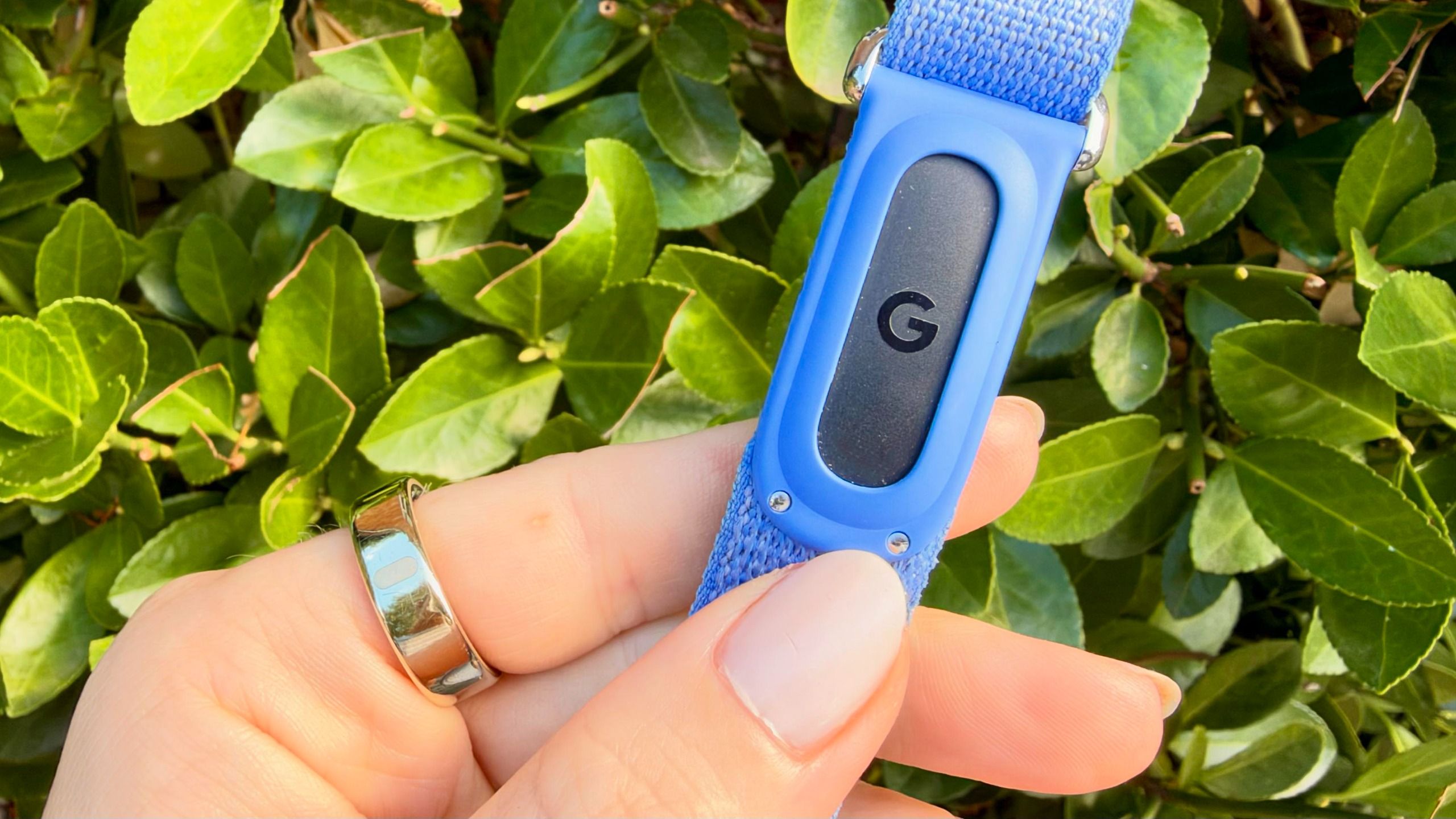
(Image credit: Future) 2026 is the year of the screenless tracker, and as a health editor, I’m here for it. These discreet devices are designed to sit unnoticed on your pulse points and track your steps, stress, workouts, and cycle, without the constant buzz of WhatsApp notifications or emails.Two big releases this year are the $99 Fitbit Air, an excellent, affordable tracker that’s comfortable to wear, and the $399 Oura Ring 5, which is the smallest and lightest smart ring on the market. I’ve been wearing both for five months, and below, I’ve broken down which I’d pick based on all my testing. The Fitbit Air is a popular screenless tracker which tracks your heart rate, sleep, and calories, amongst so much more. The Oura Ring 5 is the smallest and lightest smart ring on the market, starting at $399 Fitbit Air vs Oura Ring 5: Counting calories One of the main reasons people buy a fitness tracker is to keep track of their health goals. If losing weight is your goal, you’ll know that the best way to do this is to be in a calorie deficit — in other words, burning more calories than you consume.As a health writer, I’m here to tell you that none of the best fitness trackers are particularly good at this. No wearable can directly measure your metabolic activity, oxygen uptake, or heat production to fully understand your true calorie burn; instead, they take a fairly educated guess.A lot of the algorithms are based on your age, sex, weight and height, but won’t account for biological differences like your Basal Metabolic Rate (BMR) and body composition (muscle burns more energy at rest than fat).I’d take all readings with a pinch of salt and instead look at how active you were week on week, how many workouts you fit in, or whether you’re eating a healthy, balanced diet to fuel the movement you’re tracking.Winner: It’s a tieGet instant access to breaking news, the hottest reviews, great deals and helpful tips. (Image credit: Future)Fitbit Air vs Oura Ring 5: Counting steps Again, steps aren’t the best metric for how healthy we are, but they are a good place to start and something a lot of people care about. After five months of testing, I’d say the Fitbit Air is more accurate for my daily step count compared to the Oura Ring.Ways to make the Oura Ring more accurate in tracking your steps are to ensure you’re wearing the ring the right way — the sensors should be on the bottom of your finger. Your ring should be tight enough to track your data, but not so tight it’s cutting off circulation. It’s also a good idea to connect your ring to the Apple Health app on your iPhone or the Android Health app.Winner: Fitbit Air (Image credit: Dan Bracaglia/Tom's Guide)Fitbit Air vs Oura Ring 5: Design and comfort Both of these devices are extremely comfortable to wear. The Fitbit Air is far smaller and lighter than the Whoop 5.0 or the Garmin Cirqa; plus, unlike the Whoop and Cirqa, it doesn’t stay wet for hours on your wrist.That said, the winner here is the Oura Ring 5, which really does disappear on your finger. It looks like jewelry, and it would be the device I recommend to anyone who doesn’t want to be seen wearing a fitness tracker. The Oura Ring 5 also comes out on top for hygiene, as it’s really easy to clean and you’re never going to have to worry about the band getting smelly or dirty.Winner: Oura Ring 5 (Image credit: Future)Fitbit Air vs Oura Ring 5: Battery life Again, this one is pretty much a tie. The Fitbit Air gives you seven days of battery life from a single charge. The Oura Ring 5 gives you up to nine days of battery life, depending on the size of your ring. I wear a size 8 and find I get about a week between charges.Either way, you’re charging both trackers a lot less than your Apple Watch.Winner: It’s a tieFitbit Air vs Oura Ring 5: Sleep Far from just being an interesting thing to look at every morning, how well you sleep is actually as important as how much you move. Experts say sleep rivals diet and exercise as a core pillar of longevity; the American Heart Association, for example, uses sleep data as a metric for heart and brain health.Both trackers do a good job of making it easy to understand how well you’re sleeping. Both give you a sleep score out of 100, a breakdown of the different stages of sleep you’ve entered, and tips on how to improve your quality. That said, Oura goes far deeper, and to get the same level of sleep insights from the Fitbit Air, you have to pay for a Google Health membership.Winner: Oura Ring 5 (Image credit: Sanuj Bhatia / Tom's Guide)Fitbit Air vs Oura Ring 5: Stress and recovery Again, this is a tough one, as both devices do a pretty good job of looking at how well your body copes with stress over the day. Neither goes into as much detail as the Whoop, which largely focuses on your overall strain score, but both definitely have a focus on resilience.I’d say the Oura tips it slightly, but this one is hard to call. I’d also say that if you do subscribe to the Google Health membership, Fitbit’s AI health coach is the best I’ve used. It doesn’t just regurgitate your workouts; instead, it gives you actionable advice based on how well you’ve slept, how hard you’ve pushed yourself, and the recovery data the device has collected.Winner: It’s a tieFitbit Air vs Oura Ring 5: Female health tracking This one is easy — the Oura Ring 5. Oura has always been a leader in terms of menstrual tracking, pregnancy tracking, and now menopause features. Heck, my Oura Ring 3 knew I was pregnant weeks before I did.It’s also compatible with Natural Cycles, allowing you to use the ring with the app to plan or prevent pregnancy. At the time of writing, the Fitbit Air isn’t compatible with Natural Cycles, and while it has the ability to track your skin temperature, it’s not using this data as part of its menstrual tracking features.Winner: Oura Ring 5 (Image credit: Future)Fitbit Air vs Oura Ring 5: PriceAnother super easy one: for $99, the Fitbit Air is the screenless tracker I’d recommend to most people. If you’re not bothered about the deeper sleep insights or AI health coach, it’s also a one-time purchase, compared to the ongoing subscription you’ll need with the Oura Ring.Winner: Fitbit AirFitbit Air vs Oura Ring 5: Which should you buy?So, which should you buy? If you’re on a budget, you don’t really care about wearing a watch and a screenless tracker, and you don’t need female health tracking features, the Fitbit Air is the obvious choice.You don’t need a subscription to get all you need from the device, and it’s super lightweight and comfortable to wear. If you do pay for the subscription, the Gemini-powered health coach is the best I’ve used.If you want to wear a beautiful watch to the office, or no watch at all, and still track your health metrics, the Oura Ring 5 is the obvious choice. It looks stunning, it’s easy to clean, and it gives you tonnes of data. If you forced me to choose, I’d still pick the Oura every time, but it is undeniably more of an investment. Follow Tom's Guide on Google News and add us as a preferred source to get our up-to-date news, analysis, and reviews in your feeds. More from Tom's GuideCan the $99 Fitbit Air beat the $799 Apple Watch Ultra 3 at fitness tracking? I manually counted 4,500 steps to find outI walked 4,000 steps with the Apple Watch Ultra 3 vs Samsung Galaxy Watch Ultra 2 — and the winning margin was razor-thinOura vs Whoop vs Fitbit Air — 5 questions to ask yourself before buying a screen-free fitness tracker Jane McGuire is Tom's Guide's Fitness Managing Editor, which means she looks after everything fitness-related - from running gear to yoga mats. An avid runner, Jane has tested and reviewed fitness products for the past ten years, so knows what to look for when finding a good running watch or a pair of shorts with pockets big enough for your smartphone.
Fitbit Air vs Oura Ring 5 — from counting calories and steps to tracking sleep and stress, which screenless tracker should you buy?
Full Article
Original Source
Read the full article at Tomsguide →KhanList aggregates and links to publicly available news content. We do not host full articles from third-party sources. Always verify important information with original sources.