
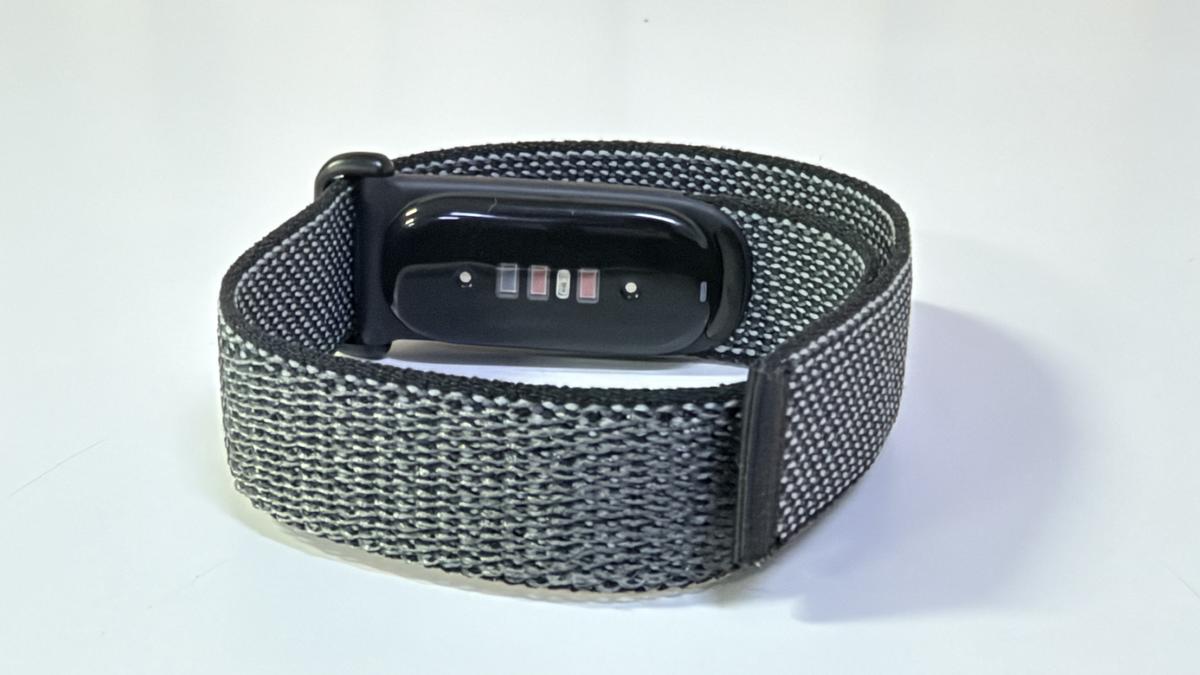
I remember Fitbit as a slim tracking device worn on the wrist, from a time when fitness bands were about counting steps and monitoring activity, long before the smartwatch craze took over. Over the years, wearables have evolved into mini smartphones, complete with displays, notifications and apps.With the Fitbit Air, Google brings back some of that original simplicity in a new avatar. Priced at ₹13,999 in India, this screenless tracker focuses on health monitoring, sleep insights and activity tracking, with Google Health and Gemini-powered coaching adding a layer of intelligence. It is designed to stay out of the way while keeping tabs on your health throughout the day.After spending time with it, the question is whether this return to the basics works for today’s fitness-focused users. Let’s find out.DesignThe Fitbit Air takes a different approach to wearable design by keeping the hardware compact and unobtrusive. The tracking module weighs just 5.2 grams, while the device weighs around 12 grams with its band. It has a small, pebble-shaped sensor housed inside a woven fabric strap, giving it the appearance of a simple wristband rather than a conventional smartwatch. There is no display or physical button, which keeps the design clean and minimal.Comfort is one of the Fitbit Air’s biggest strengths. Its lightweight construction makes it comfortable to wear throughout the day and while sleeping. The woven band sits gently on the wrist, while its adjustable fastening helps achieve a secure fit for continuous tracking. This matters for a device designed to collect health data around the clock, rather than something you wear only during workouts. The tracker also has a detachable sensor module, allowing you to change bands without replacing the device.The Fitbit Air has a small status LED that responds to a firm double-tap. A white light indicates sufficient battery, while red signals that the charge is low. It also includes a vibration motor for silent alarms and reminders. The tracker offers water resistance up to 50 metres, making it suitable for swimming, although the fabric band needs proper drying after water exposure. Google offers the tracker in Obsidian, Berry, Lavender and Fog, with interchangeable band options.Features and Google HealthThe Fitbit Air relies on the Google Health app for almost everything beyond collecting data. Once paired with a smartphone, it tracks activity and health metrics in the background and syncs them to the app. The dashboard brings together steps, sleep, heart rate, readiness and cardio load, making it possible to review daily activity without needing a screen on the wrist.The app offers plenty of information, although understanding some of the metrics takes time. Its separate sections for Today, Fitness, Sleep and Health make it easier to explore individual readings. You can also connect supported health services and devices. Another useful feature is the ability to keep the Fitbit Air and a Pixel Watch connected to the same account. This works well if you prefer a smartwatch during the day but want a lighter tracker for sleeping.Google Health Coach, powered by Gemini, is one of the more interesting additions. Available through a Google Health Premium subscription, it interprets health data, suggests workouts, explains recovery scores and helps create personalised fitness plans. Instead of simply presenting numbers, it aims to explain what they mean and how you can act on them. However, some recommendations can feel generic, and the feature needs refinement before its guidance consistently feels personal. It should also be treated as a wellness tool, and not a substitute for medical advice.Google includes a three-month Premium trial with the Fitbit Air. After that, the subscription costs ₹499 per month or ₹4,999 annually. Basic activity tracking, sleep information and several recovery metrics remain available without a subscription, which means you can continue using the core features without an ongoing payment.Usage and Health TrackingThe Fitbit Air’s screenless design makes the experience genuinely distraction-free. You do not have notifications appearing on your wrist or a display encouraging you to check it repeatedly. The tracker collects information quietly, leaving the phone app to handle the analysis. This approach works particularly well for people who want to monitor their health without adding another source of digital interruptions.Sleep tracking is one of the more detailed parts of the experience. The Fitbit Air automatically detects sleep and daytime naps, so you do not have to start a session manually. During testing, it recorded sleep duration and estimated the time spent in deep, REM and light sleep. It also highlighted periods of restlessness and time spent awake. The presentation makes it easy to see how the night unfolded, although sleep stages remain estimates rather than clinical measurements.The app also records resting heart rate, heart-rate variability and readiness scores. These readings can help you follow patterns over time, especially as the tracker builds a baseline from your personal data. During the initial testing period, some recovery metrics did not yet have an established range. This meant the insights were less useful at first, but they became easier to interpret in the context of ongoing tracking.Heart-rate data is presented through graphs that show how readings change during an activity. This makes it easier to understand workout intensity and review a session afterwards. However, automatic workout recognition was less consistent. On some occasions, the app detected movement but labelled it as a possible activity and asked for confirmation. The ability to edit the recorded session helps, but more accurate automatic identification would make the experience smoother.Overall, the Fitbit Air offers a detailed view of activity, sleep and recovery in a compact device. Its tracking information is easy to access, and the app gives you several ways to understand your daily patterns. The main limitation is that some insights need more historical data, while automatic workout recognition and AI coaching still have room to improve.Battery LifeBattery life is another advantage of the Fitbit Air’s screenless design. Google claims up to seven days of use on a single charge, depending on settings and usage. During testing, the tracker lasted around seven days on a full charge, matching the company’s claim. This reduces the need to interrupt daily wear for charging, and makes continuous health monitoring more convenient.The Fitbit Air supports fast charging, with Google claiming that a five-minute charge provides up to a day of use. A full charge takes around 90 minutes. The included charging cable connects to the sensor module through pogo pins, so you need to remove the tracker from your wrist while charging. You can check the exact battery percentage in the Google Health app, while a double-tap on the tracker provides a quick LED indication of the remaining charge.VerdictThe Google Fitbit Air brings the traditional Fitbit idea into a new avatar, focusing on health tracking rather than smartwatch features. Its lightweight design is comfortable enough for all-day and overnight wear, while its screenless approach creates a distraction-free experience. Detailed sleep tracking, heart-rate monitoring, recovery metrics and a week-long battery life make it a useful companion for people who want to understand their daily activity without constantly interacting with a device.The Google Health app adds depth to the experience, although automatic workout recognition and Gemini-powered coaching still need refinement. The ₹13,999 price also means you are paying for a dedicated screenless tracker rather than a conventional smartwatch with a display and additional features. For users who prioritise comfortable, continuous health monitoring and prefer to check their data on their phone, the Fitbit Air makes a compelling case. It brings the essence of the old Fitbit into a cleaner, more modern form, with the software experience now playing a central role.
Fitbit Air Review | Screenless companion for easy health monitoring
Full Article
Original Source
Read the full article at Thehindu →KhanList aggregates and links to publicly available news content. We do not host full articles from third-party sources. Always verify important information with original sources.